Aluminum Profile Cutting Machine: Cost per Accepted Cut and Hidden Installation Costs
Contents
This guide addresses aluminum profile cutting machine cost guide for cost per accepted cut and hidden installation costs. A useful cost comparison starts with the part that leaves the aluminum profile cutting machine process in acceptable condition. Purchase price is only one input. Tooling, setup, material losses, handling, utilities and service can change the economic result, especially when the order mix differs from the aluminum profile cutting machine supplier demonstration.
For cost per accepted cut and hidden installation costs, the practical starting point is cross-section drawings, finished lengths, required angles, alloy and surface finish. Define the back fence, support surface and defined long-point or short-point length, then verify the result through cut length at the stated datum. This keeps the aluminum profile cutting machine decision tied to the parts and production conditions that the factory actually needs.
Aluminum Profile Cutting Machine: define the accepted output before calculating cost
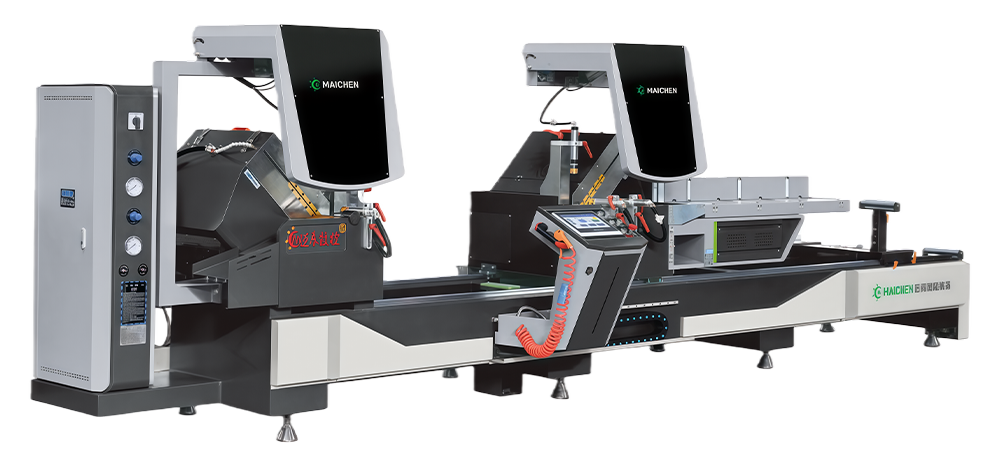
For an aluminum profile cutting machine, use accepted cut components per staffed shift as the aluminum profile cutting machine output basis. The operation covers locating, clamping and sawing profiles to length and angle, but the purchasing calculation should end at a clearly defined handoff. State whether the accepted part includes inspection, identification and transfer. If one quotation stops at machine discharge and another includes those tasks, their unit costs cannot be compared directly.
Start with a recent production batch or a planned batch supported by drawings. Count aluminum rails, frame members and curtain-wall sections, separate accepted pieces from rework, and record staffed time. A small measured batch is more useful than a large forecast assembled from unrelated catalog speeds. Keep the same inspection criteria for the current process and the proposed investment.
Build a complete acquisition and installation scope
The quoted aluminum profile cutting machine should be itemized with an aluminum-suitable blade, stable clamp pads and continuous profile supports. Ask which items are standard, which are application-specific and which will be supplied locally. Add delivery, unloading, positioning, utility connections, commissioning and initial operator training to the budget. Keep optional items separate so that removing an option does not silently remove a required operation.
Installation also uses production space and staff time. Review the material route, maintenance access and the point where completed work is collected. If the existing process must continue during installation, include temporary handling and the practical changeover plan. Use written scope descriptions rather than assuming that a broad term such as turnkey includes every local activity.
Two quotations can show the same blade diameter but very different usable cutting envelopes. A broad section may fit at ninety degrees and interfere at a miter angle. Request a cross-section overlay at every production angle before treating blade size as proof of fit.
Separate fixed, variable and workload-dependent costs
For the aluminum profile cutting machine, fixed costs may include ownership, agreed software charges and scheduled service commitments. Variable costs include consumed tooling, energy and production material lost during setup or rejection. Workload-dependent costs include changeovers, inspection and programming. Keeping these groups separate makes the effect of a smaller order book visible.
The most relevant operating losses are length drift, open miters, burrs or marks on finished surfaces. Record their actual frequency and cause before assigning savings to a new machine. If the dominant loss comes from incoming material or a downstream step, do not count its full removal as an equipment benefit. Retain a conservative case in which that loss continues until an application trial demonstrates otherwise.
Separate the cutting envelope from the aluminum profile cutting machine travel. Travel says where a head can move. The actual envelope depends on blade approach, fence geometry, guards and clamps. A profile with a projecting lip also needs support that avoids twisting it during clamping. Check the released part because clamp pressure can temporarily hide distortion.
Compare configurations on the same work package
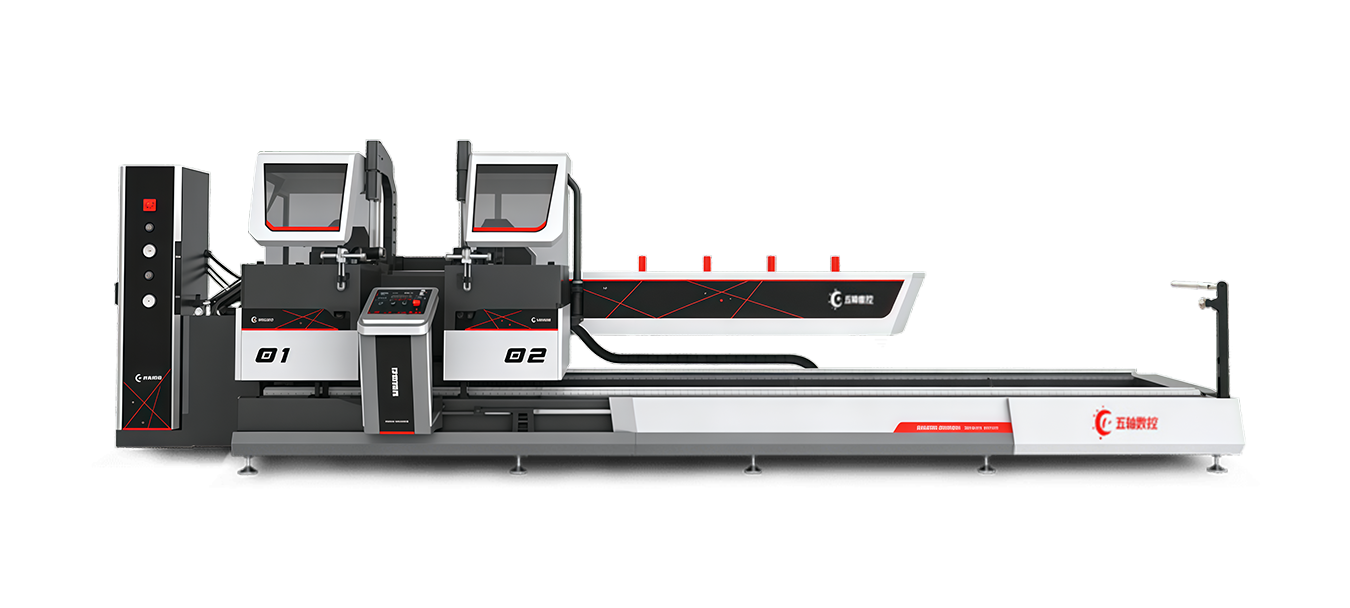
Evaluate the aluminum profile cutting machine against these process choices: General adjustable-angle saw; CNC positioning double-head saw; Automatic feeding and sorting saw center. Each choice changes the balance between setup, handling, flexibility and machine investment. Request the same the widest section, a thin-wall finished section and the shortest component at each required angle for every trial. A different sample can make an expensive configuration appear faster simply because it was given easier work.
Prepare a side-by-side scope table and mark missing items explicitly. Then compare measured labor involvement, accepted output and recurring consumables. If a supplier proposes a different process route, evaluate it as a separate alternative with its own assumptions instead of blending the better features of two incompatible configurations.
| Process choice | Potential role | Evidence to request |
|---|---|---|
| General adjustable-angle saw | A focused route where the workload is stable and manual tasks are defined. | Cut length at the stated datum on the widest section, a thin-wall finished section and the shortest component at each required angle |
| CNC positioning double-head saw | A route to compare when repeated setup or handling affects the accepted output. | Angle at both ends before and after a family change |
| Automatic feeding and sorting saw center | A broader configuration to evaluate against the actual application and support needs. | Burrs and visible-face damage during a representative complete run |
Model utilization without counting savings twice
The annual cost of an aluminum profile cutting machine depends on how much accepted work actually uses it. Estimate output at conservative, expected and high utilization using the same technical process. A machine that replaces an operation may free labor time, but that time becomes a financial saving only when the business can reduce paid hours or redeploy it to useful work.
Use a simple calculation: annual ownership and operating cost divided by annual accepted output. For an investment comparison, annual net benefit equals verified avoidable cost plus supported additional contribution, less new recurring cost. Do not add labor savings and extra output as if the same released hour could generate both benefits independently.
Use a transparent worked example
Consider a purely illustrative aluminum profile cutting machine proposal with 30,000 currency units of annual fixed cost and 0.40 currency units of variable cost per accepted output unit. At 50,000 accepted units, the combined figure is 1.00 per unit. At 100,000 units, it is 0.70. These are arithmetic examples, not Maichen prices or promised operating costs.
Replace the example with your own invoices, staffing records, measured trial results and the correct definition of accepted cut components per staffed shift. Run a second case with more changeovers and fewer accepted units. If the aluminum profile cutting machine investment only works at the most optimistic utilization, identify the customer demand and operational changes required to reach that condition before approving it.
Published saw angles and minimum lengths differ between configurations. Confirm them on the selected aluminum profile cutting machine model drawing rather than combining values from several product pages.
Test the cost assumptions during acceptance
An aluminum profile cutting machine cost model should be revised after a representative aluminum profile cutting machine trial. Time loading and positioning time or the next machining station, record rejected material and count operator interventions. Keep loading, cleanup and inspection visible. A demonstration edited to show only cutting or forming time cannot validate the staffing and output assumptions used in the aluminum profile cutting machine investment decision.
Retain the aluminum profile cutting machine trial program, material batch, tooling list and inspection record together. If the final aluminum profile cutting machine configuration changes, identify which cost assumptions must be retested. A larger tool magazine, revised gripper or additional identification system may improve one part of the calculation while adding another recurring or maintenance requirement.
Prepare a cost-focused application review
Send Maichen the cross-section drawings, finished lengths, required angles, alloy and surface finish and explain which cost currently limits the aluminum profile cutting machine process. For an aluminum profile cutting machine, a useful aluminum profile cutting machine discussion starts with the back fence, support surface and defined long-point or short-point length and ends with the accepted handoff. Ask for a configuration that addresses the measured loss and an alternative with a smaller initial investment where that remains technically suitable.
The decision should leave a clear record: selected process, included tooling, site responsibilities, expected workload and the evidence needed to release the aluminum profile cutting machine investment. Revisit the assumptions after commissioning using the same output definition. This turns the estimate into a management tool instead of a one-time justification for the purchase.
Relevant Maichen equipment and the next step
To develop this aluminum profile cutting machine cost guide review, explore Integrated CNC Precision Cutting Saw, Heavy-Duty Internal Swing Precision Cutting Saw, Aluminum Profile Curve CNC Precision Cutting Saw Machine. Compare the listed configuration of each model and confirm the tooling, working range and automation options needed for your parts. Request an application trial on the proposed configuration before finalizing the process.
For cost per accepted cut and hidden installation costs, compare the wider Cutting Equipment range and send the technical team cross-section drawings, finished lengths, required angles, alloy and surface finish. Include the current constraint and the required accepted cut components per staffed shift so the proposal can address the production task.
For additional material background, consult the Aluminum Association selected 2009 extrusion tolerance tables. Use the current agreed material and product drawings for acceptance; a general reference does not replace application-specific limits.
Discuss your application with Maichen. Use the form below to request a cost comparison with tooling, installation and recurring scope separated, or contact the technical team. Include the widest section, a thin-wall finished section and the shortest component at each required angle as the proposed review case so the discussion can start with representative work.
Frequently asked questions
What belongs in an aluminum profile cutting machine investment budget?
For an aluminum profile cutting machine, include the selected machine, an aluminum-suitable blade, stable clamp pads and continuous profile supports, delivery, installation, commissioning, training and the recurring resources required by the accepted process. Obtain configuration-specific figures rather than assuming an advertised machine price includes all of them.
How is aluminum profile cutting machine cost per accepted part calculated?
Divide the relevant ownership and operating cost by accepted cut components per staffed shift over the same period. Keep rework, setup and material losses visible, and avoid counting the same released labor hour as both a cost reduction and an independent output gain.
Does a cheaper aluminum profile cutting machine always lower production cost?
No. A lower initial price may be attractive, but missing tooling, more handling or frequent changeovers can increase the cost of accepted work. Compare complete scope and a representative application trial.
Can an aluminum profile cutting machine guarantee labor savings?
No. Automation can change the labor required by the workflow, but the financial result depends on staffing, utilization and how released time is used. Confirm the actual manual tasks in a complete timed trial.
What information is needed for an aluminum profile cutting machine quotation?
Send cross-section drawings, finished lengths, required angles, alloy and surface finish, the required output and the installation constraints. Maichen can then review a suitable aluminum profile cutting machine configuration and identify options or application tests needed for a meaningful quotation.