





CNC Aluminium Machine Guide for Profile Processing
Table of Contents
Introduction
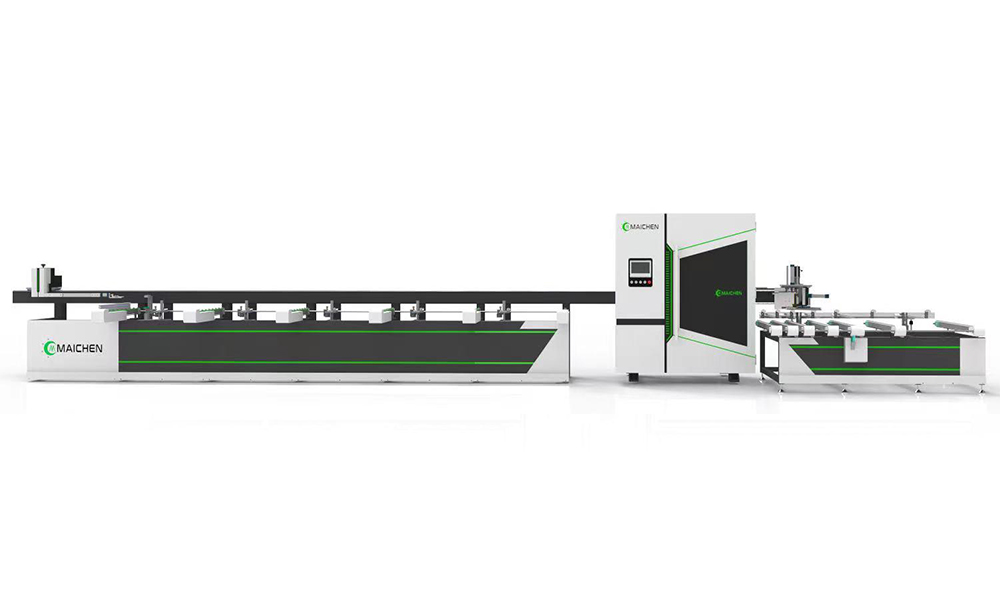
A cnc aluminium machine is increasingly important in the production of window, door, curtain wall, and industrial aluminum profiles. Modern profile components often require much more than basic cutting. Holes, slots, grooves, end-face features, hardware positions, and multi-side machining may all need to be completed with consistent dimensional relationships.
Computer-controlled machining helps manufacturers organize these operations around digital processing data rather than repeated manual positioning. However, selecting the right CNC configuration requires more than simply comparing the number of axes. Profile geometry, machining surfaces, spindle access, clamping, tooling, workpiece length, and the sequence of operations all influence whether a machine is suitable for a particular production process.
Understanding these factors makes it easier to determine how CNC technology can support accurate and repeatable aluminum profile machining.
What Is a CNC Aluminium Machine?
A CNC aluminium machine is a computer-controlled machining system configured to process aluminum components or extruded profiles. Depending on its structure, it may perform drilling, milling, slotting, routing, tapping, end-face machining, or several of these processes within one controlled setup.
The wider concept of computer numerical control is based on controlling machine movements through programmed instructions. In aluminum profile processing, those instructions define coordinates, tool paths, spindle actions, feed movements, and other machining operations.
This is particularly useful for long extruded sections because many features must maintain precise relationships with the profile ends, reference surfaces, and hardware positions.
Why Aluminum Profiles Need Specialized CNC Processing
Aluminum extrusions differ from many conventional machined components. They are often long, hollow, relatively thin-walled, and produced in complex cross-sectional shapes. Architectural profiles may also have visible finished surfaces that require careful handling during machining.
These characteristics create several technical challenges.
Long profiles need stable support across the machine bed. Thin walls require controlled clamping so the section remains secure without unnecessary deformation. Chips must be removed efficiently because aluminum particles can accumulate around cutting tools and workholding areas.
Machine access is another important consideration. A feature positioned on the top surface may be straightforward to process, while holes or grooves on the side or underside may require profile rotation, an additional controlled axis, or a different spindle orientation.
For this reason, CNC equipment for aluminum profiles should be evaluated according to the actual geometry of the workpiece rather than only its overall dimensions.
Common Operations Performed on a CNC Aluminium Machine
A modern cnc aluminium machine can support several machining operations depending on its spindle, tooling system, control configuration, and axis arrangement.
Drilling is commonly used for hardware mounting holes, connector positions, drainage features, and assembly points. Milling can produce slots, pockets, grooves, and irregular openings that cannot be created with a conventional drilling cycle.
Some profile components also require end-face machining where material must be removed from the end of an extrusion so it can connect correctly with another profile.
When several operations are required on the same component, combining them within one CNC setup can help maintain the positional relationship between individual features.
Three-Axis, Four-Axis, and Five-Axis CNC Machining
Axis configuration determines how the cutting tool and workpiece can move relative to each other.
A three-axis system generally controls movement along the X, Y, and Z directions. This configuration can handle many holes, slots, pockets, and contours when the required features are accessible from one main orientation.
Adding a rotary axis expands machining access. Four-axis equipment can rotate the profile or machining system so additional surfaces become accessible without repeatedly removing and realigning the workpiece.
Five-axis systems provide even greater control over tool orientation and can be useful for complex angles, end-face features, or components requiring access from several directions.
More axes are not automatically better. The most appropriate configuration is the one that matches the actual profile geometry and machining sequence.
Why Multi-Side Machining Matters
Door and window profiles frequently require machining on multiple surfaces.
For example, one surface may contain handle or hinge features, another may require connection holes, while an additional side may contain drainage or assembly openings. If the profile must be removed and repositioned for each surface, every setup creates another opportunity for alignment variation.
Multi-side CNC machining can reduce this repeated handling. When several surfaces are processed using one established reference system, the relationship between holes, grooves, and other features can remain more consistent.
The advantage is therefore not simply completing more operations. It is maintaining machining references throughout the process.
Workholding Is as Important as CNC Control
Accurate programmed coordinates cannot compensate for an unstable workpiece.
Long aluminum profiles need reliable positioning and support before machining begins. If a profile shifts while a cutting tool enters the material, the finished feature may no longer match its programmed location.
Clamping forces must also be appropriate for the extrusion. Excessive force may distort a thin-wall section, while insufficient force can allow vibration or movement.
A well-designed CNC profile machining process therefore considers clamping position, support length, profile cross-section, tool access, and the sequence in which machining features are completed.
Consistent workholding helps turn programmed accuracy into actual workpiece accuracy.
Spindle Performance and Tool Selection
The spindle is one of the key systems within an aluminum CNC machine because it determines how the cutting tool interacts with the workpiece.
Aluminum is generally machinable at relatively high spindle speeds, but successful processing still depends on appropriate tool geometry, feed conditions, spindle stability, and chip evacuation.
Sharp tools are particularly important. A worn cutting edge can increase cutting resistance and contribute to burr formation or inconsistent surfaces.
Different features may also require different cutters. Drilling, slotting, pocket milling, routing, and end-face work place different demands on the tool.
For components requiring several machining operations, an automatic tool-changing system can help move between tools while maintaining the same workpiece setup.
How Automatic Tool Changing Supports Complex Profiles
A simple profile may require only one type of machining tool. More complex window, door, or industrial profiles can require several.
One cutter may create mounting holes, another may mill elongated slots, while another is used for wider openings or profile-specific features. Manually changing tools between every operation can interrupt the machining sequence.
An automatic tool changer allows the CNC program to call the required tool as the machining process progresses.
For example, MCS CNC’s 4-Axis CNC Aluminum Profile Machining Center combines multi-axis profile processing with CNC-controlled drilling and milling capabilities. The broader configuration illustrates how axis movement, spindle control, and tooling can work together when aluminum profiles require several machining features.
CNC Programming and Repeatability
CNC programming converts component requirements into defined machining movements.
Once hole locations, slots, tool paths, and machining sequences are established, the same processing logic can be repeated across matching components. This is particularly useful for door and window manufacturing, where multiple frame or sash parts may use recurring machining patterns.
Programs can also be adapted when profile dimensions or hardware arrangements change.
The important benefit is not simply automation. Digital processing creates a repeatable reference for how a component should be machined, reducing dependence on repeated manual measurement.
Program management becomes increasingly valuable as a factory handles a larger number of profile series and component variations.
Reducing Repeated Profile Repositioning
Every time a profile is removed and relocated, its machining reference must be established again.
For basic workpieces this may not be a significant challenge. For components containing several related features, however, repeated repositioning can influence dimensional consistency.
A CNC system capable of reaching several machining surfaces can reduce these interruptions.
One-clamping processing is especially useful when holes and slots on different surfaces must align with each other. Maintaining the same reference position throughout several operations supports better geometric consistency.
This principle becomes increasingly important as component complexity grows.
Managing Chips During Aluminum Machining
Aluminum machining can generate large quantities of chips, especially during milling and slotting operations.
Effective chip evacuation helps maintain a cleaner cutting zone and prevents loose material from interfering with the cutting tool, fixture, or profile surface.
Machine design, spindle orientation, extraction arrangements, lubrication methods, and routine cleaning procedures all influence chip management.
For architectural aluminum, loose chips also require attention because they can become trapped between a profile and support surface, potentially leaving marks on visible areas.
Chip control should therefore be considered part of both machining performance and material handling.
Preventing Burrs and Poor Edge Quality
Burr formation can occur around drilled holes, milled openings, slots, and cut edges when machining conditions are not properly matched.
Several factors influence the result, including tool sharpness, feed conditions, spindle operation, profile wall thickness, machine rigidity, and workpiece support.
Thin sections can be particularly sensitive near the exit side of a machining operation. A stable profile and suitable tool path help control material removal as the cutter leaves the workpiece.
Rather than relying on downstream correction, a stronger machining strategy focuses on controlling burr formation during the CNC process itself.
CNC Aluminium Machines in Window and Door Manufacturing
Window and door profiles contain many features associated with handles, locks, hinges, corner connections, drainage paths, fasteners, and structural joints.
Different frame systems may place these features in different locations. CNC processing provides the flexibility to adapt machining coordinates to each component specification.
A production sequence might begin with profile cutting, continue through drilling and milling, and then move into joining and assembly.
The range of MCS CNC aluminum profile processing machinery reflects this wider workflow, covering cutting, drilling and milling, profile machining, corner processing, bending, and integrated manufacturing systems.
This relationship between individual machines is important because the quality of one processing stage can affect everything that follows.
Standalone CNC Processing vs Integrated Automation
A cnc aluminium machine can operate effectively as a standalone machining station. However, modern manufacturing increasingly connects individual processes through digital production information.
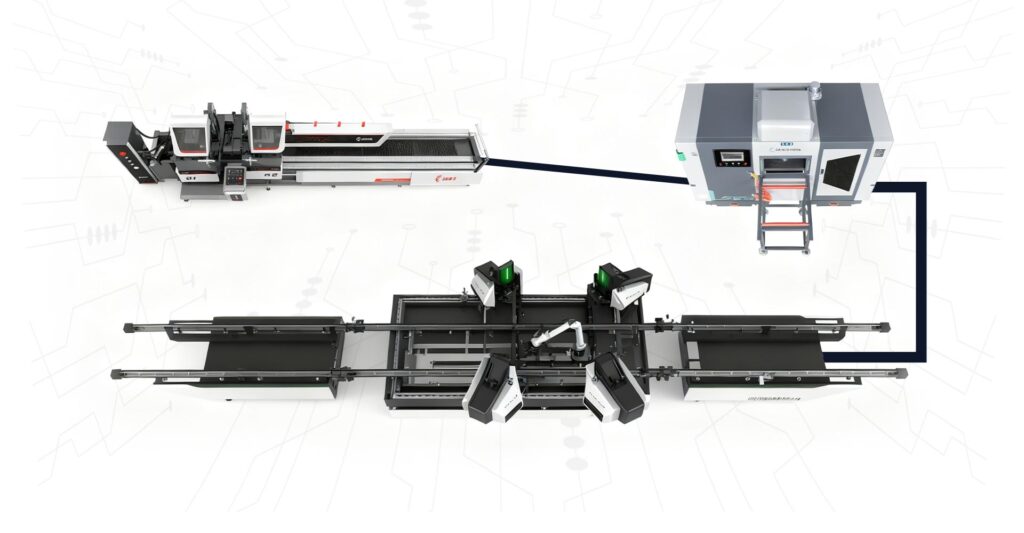
A component may move from cutting to drilling and milling with its processing requirements already defined. More advanced workflows can use identification systems to associate each profile with the correct machining program.
This reduces the need for operators to repeatedly interpret component information at every station.
Integrated automation is most useful when it improves control of the production flow rather than simply adding more equipment. The goal is to connect cutting, machining, material handling, and assembly around reliable processing data.
Factors to Evaluate Before Choosing a CNC Configuration
The correct CNC configuration begins with understanding the parts that need to be produced.
Profile length is one factor, but it should not be considered alone. Manufacturers should also evaluate profile cross-section, required machining surfaces, feature complexity, tool access, clamping positions, spindle requirements, and the sequence of operations.
Another important question is how frequently specifications change. A production environment handling many window and door systems may benefit from flexible programming and efficient changeover between machining patterns.
The required level of automation should also match the surrounding workflow. A highly automated CNC machine provides the strongest benefit when material flow, processing data, and downstream operations are organized to support it.
How CNC Machining Supports More Consistent Assembly
The effects of CNC processing extend beyond the machining station.
When holes, slots, and connection features are positioned consistently, later assembly becomes easier to standardize. Components can align more predictably with hardware, connectors, and adjoining profiles.
Accurate machining also helps maintain the relationship between profile length and feature position. This is particularly important for door and window components where several individual sections must come together to form a complete frame.
For this reason, CNC accuracy should be evaluated according to the finished assembly requirements rather than only by individual machining features.
Building a Complete Aluminum Profile Processing Workflow
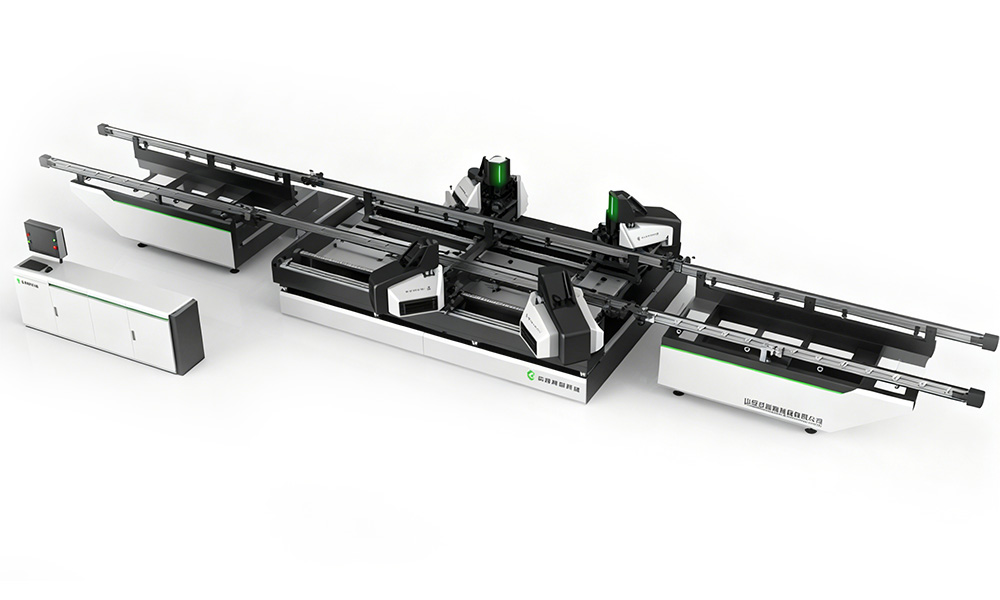
A CNC machine performs only one part of a broader manufacturing process.
Aluminum profiles may pass through cutting, drilling, milling, end-face processing, punching, bending, joining, and assembly depending on the finished product.
The most efficient workflow is one in which these processes share consistent dimensional references and production information.
Cutting should establish the correct starting geometry. CNC machining should create hardware and assembly features according to that geometry. Later joining operations should then be able to rely on the dimensional relationships created during earlier stages.
Viewing CNC equipment as part of this complete workflow helps manufacturers make better technical decisions than evaluating each machine independently.
Conclusion
A cnc aluminium machine provides a flexible platform for drilling, milling, slotting, and other controlled operations on aluminum profiles. Its effectiveness depends on much more than CNC programming alone.
Axis configuration, spindle performance, tooling, clamping, profile support, chip evacuation, machining access, and program management all influence the final result. For complex door, window, curtain wall, and industrial profiles, reducing repeated repositioning can also help maintain consistent relationships between features on different surfaces.
The most suitable CNC configuration is therefore determined by the actual component geometry and production workflow. By matching machine capabilities with profile requirements, manufacturers can create a more controlled, repeatable, and adaptable aluminum machining process.
FAQ
What can a CNC aluminium machine process?
It can process holes, slots, grooves, pockets, hardware openings, end-face features, and other machined details in aluminum profiles, depending on the machine configuration and tooling.
Is a four-axis CNC machine necessary for aluminum profiles?
Not always. Three-axis equipment may be suitable for features accessible from one primary orientation. A fourth axis becomes useful when the profile requires machining on additional surfaces without repeated manual repositioning.
Why is clamping important in aluminum CNC machining?
Aluminum profiles can be long and thin-walled. Stable clamping helps prevent movement during machining, while appropriate clamping force helps avoid unnecessary profile deformation.
What causes burrs during CNC aluminum processing?
Burrs can be influenced by tool wear, machining parameters, profile wall thickness, insufficient support, machine vibration, and cutting conditions.
Can CNC aluminum machining be integrated with an automated production line?
Yes. CNC processing can form part of a wider digital workflow linking cutting, drilling, milling, material identification, handling, and later assembly operations.