





Miter Saw vs Cut Off Saw: Key Differences
Table of Contents
Introduction
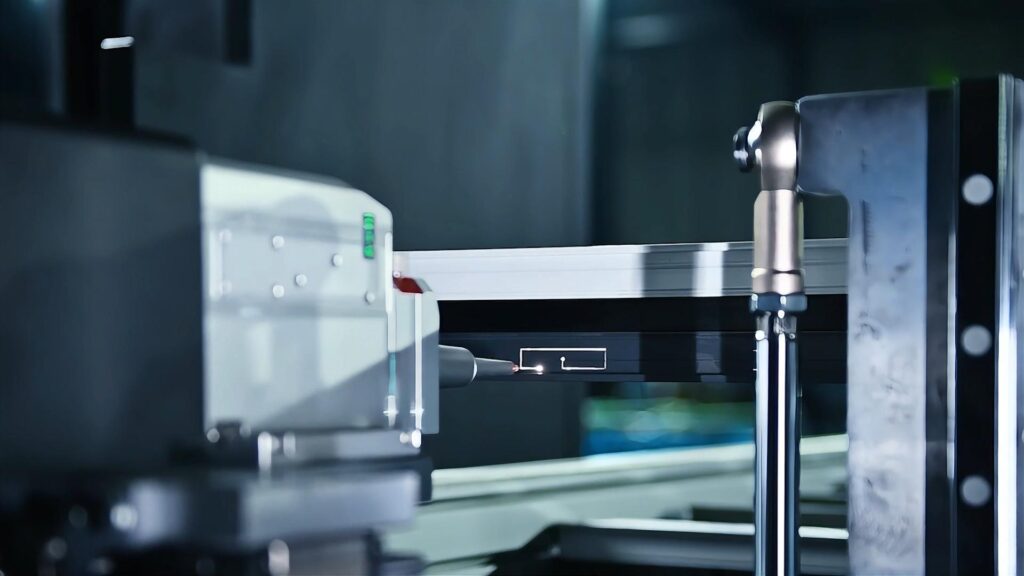
The comparison of miter saw vs cut off saw often appears simple at first, because both machines use a rotating blade to separate material. In practice, however, their cutting methods, angle flexibility, workpiece handling, blade configuration, and typical applications can be very different.
This distinction becomes especially important in aluminum door, window, and curtain wall fabrication. Profile cutting is not only about separating material to length. Many components require accurate 45° or 90° cuts, repeatable dimensions, stable clamping, and clean interfaces for later assembly. Choosing the correct cutting approach therefore depends on the profile geometry and the type of finished component being produced.
What Is a Miter Saw?
A miter saw is designed primarily for controlled crosscuts and angled cuts. Its defining feature is the ability to position the blade or cutting head at a selected angle relative to the workpiece.
The general miter saw concept includes machines capable of making accurate crosscuts and miter cuts by controlling the relationship between the blade and the material. Although many common miter saws are associated with woodworking, industrial versions can be configured for aluminum and other profile materials when the machine structure, blade, spindle, clamping system, and cutting parameters are designed for the application.
In aluminum window manufacturing, miter cutting is particularly important because frame and sash components frequently meet at angled joints.
What Is a Cut Off Saw?
A cut off saw is generally designed to separate material efficiently across its section. Depending on the equipment type, the cutting head may operate mainly at a fixed position or provide a more limited range of angle adjustment.
The term is broad and can refer to different cutting configurations. For profile fabrication, the important question is not the machine name alone but whether the saw can maintain the required length, angle, edge quality, and repeatability for the component being processed.
Straight cut off operations are common when profiles, bars, or sections need to be separated to defined lengths before drilling, milling, punching, bending, or assembly.
Miter Saw vs Cut Off Saw: Main Differences
The differences become clearer when the two cutting approaches are compared according to actual processing requirements.
| Factor | Miter Saw | Cut Off Saw |
|---|---|---|
| Main purpose | Straight and angled cutting | Material separation and straight cutting |
| Angle flexibility | Usually a major feature | Depends on machine configuration |
| Typical angles | Commonly includes 45° and 90° | Often focused on straight cutting |
| Door and window frames | Highly relevant | Useful for many straight profile sections |
| Joint preparation | Suitable for angled frame joints | More dependent on downstream machining |
| Repeatability | Depends on positioning and control system | Depends on positioning and control system |
| CNC integration | Available on industrial profile saws | Available on automated cutting systems |
The table shows why the two terms should not automatically be treated as interchangeable. The required profile geometry determines which cutting function matters more.
Why 45° Cutting Matters in Window and Door Frames
Many aluminum window and door frames use corner joints where two profiles meet at 45°. If the cut angle is inconsistent, the joint may show visible gaps or require additional adjustment during assembly.
For this reason, industrial profile saws often place strong emphasis on angle control. The Aluminum Profile Double-Head Precision Cutting Saw is designed for aluminum window and curtain wall profiles and supports both 45° and 90° cutting positions.
A dual-head configuration is particularly useful when two related cuts need to be produced while maintaining a controlled relationship between profile length and cutting angle.
Straight Cutting Is Still Essential
Not every aluminum profile requires a mitered end. Mullions, transoms, connectors, intermediate members, reinforcement components, and other parts may require straight cutting.
In these applications, the main priorities often include length consistency, stable support, controlled blade feeding, clean edges, and efficient material handling.
A cut off style operation may therefore be appropriate when the workpiece does not need an angled joint surface. This is why a modern door and window fabrication workshop usually requires more than one cutting strategy rather than relying on a single cutting method for every component.
Blade Selection Changes the Cutting Result‘
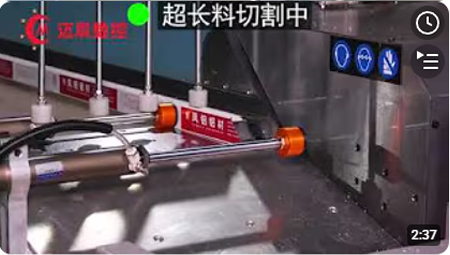
One of the most important differences between cutting applications is the blade itself.
Aluminum profile cutting normally requires a blade configuration suited to non-ferrous metal processing. Tooth geometry, blade diameter, tooth count, spindle speed, feed rate, and lubrication conditions can all affect edge quality.
A blade designed for another material may create excessive burrs, vibration, heat, or unstable cutting behavior when applied to aluminum profiles.
This means that the miter saw vs cut off saw comparison should never be based only on machine movement. Blade compatibility and cutting parameters are equally important.
Workpiece Clamping and Support
Long aluminum profiles require stable support before the blade enters the material. If the profile moves during cutting, even a well-positioned blade may not produce the intended result.
Clamping must hold the workpiece securely while avoiding unnecessary deformation of thin-wall sections. Long profiles also need adequate support so that their own weight does not affect alignment.
For precision applications, the machine bed, guides, clamps, positioning system, and feed mechanism all contribute to the final cut.
This is especially important when cutting frame components that will later be joined at corners. Small dimensional inconsistencies can become more visible after several profiles are assembled into one rectangular frame.
Single-Head vs Double-Head Cutting
Another important distinction is whether the machine uses one cutting head or two.
A single-head machine can be suitable for flexible individual cutting operations. However, producing two ends of the same frame component may require repositioning or additional handling.
Double-head saws can process both ends according to the required profile length and cutting angles. This helps improve consistency between related surfaces.
For manufacturers focused on aluminum door and window components, the broader cutting equipment range includes several configurations developed for different profile-cutting requirements, including double-head, CNC-controlled, fixed-angle, and specialized precision saws.
Manual Positioning vs CNC Positioning
The miter saw vs cut off saw question also changes when CNC control is introduced.
Traditional cutting equipment may depend heavily on manual measurement and stop adjustment. CNC systems can instead position the cutting unit or material according to programmed dimensions.
This becomes useful when production includes many different profile lengths. Digital positioning reduces repeated manual measurement and allows processing data to be changed according to the component specification.
For window and door fabrication, CNC positioning can also support more organized batch processing because each profile can be associated with a defined cutting dimension.
Which Saw Is Better for Aluminum Profiles?
There is no single answer because aluminum profiles are used in many different component types.
If the main requirement involves frame corners, angled joints, or frequent 45° cutting, a miter-capable machine is generally more suitable.
If the requirement focuses primarily on straight separation to length, a cut off configuration may be sufficient.
However, many modern aluminum fabrication environments require both functions. In these cases, a machine that supports both 45° and 90° cutting provides greater flexibility.
The final equipment configuration should reflect profile dimensions, angle requirements, workpiece length, production sequence, positioning method, blade specification, and downstream assembly needs.
How Cutting Accuracy Affects Later Processes
Cutting is usually one of the first major machining stages in aluminum door and window production. Errors created at this stage can affect several later operations.
An incorrect profile length may change hole positions relative to the ends of the component. An inaccurate 45° cut may affect corner joining. A rough cut surface may influence end milling or assembly quality.
This is why cutting equipment should be evaluated as part of the complete production workflow rather than as an isolated machine.
Good cutting preparation creates a more stable foundation for drilling, milling, punching, corner joining, and final frame assembly.
Applications in Door and Window Manufacturing
Different profile components may require different cutting strategies within the same production environment.
Outer frames and sashes often require accurate miter joints. Mullions and transoms may use straight end cuts before additional machining. Corner connectors require shorter and highly repeatable cuts. Curtain wall profiles may involve larger sections and different cutting angles.
The variety of these components explains why industrial profile cutting machines often include adjustable angles, CNC positioning, multiple saw heads, automated feeding, and dedicated clamping systems.
How to Evaluate the Right Cutting Method
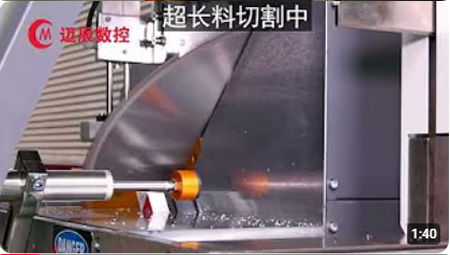
Before selecting a cutting method, manufacturers should examine the actual component drawings and production sequence.
Important questions include whether the profile needs a straight or angled end, how many angle changes are required, whether both ends must be processed, how consistently dimensions must be repeated, and what machining operations follow cutting.
The profile material and section geometry also matter. Thin-wall architectural extrusions behave differently from heavier solid sections, so clamping and blade selection should match the specific workpiece.
A technically suitable solution is therefore based on the complete cutting task rather than the machine name alone.
Conclusion
The miter saw vs cut off saw comparison is mainly a question of cutting geometry and production requirements. Miter saws are especially useful when profiles require controlled angled cuts, while cut off saws are commonly associated with efficient straight separation.
For aluminum door, window, and curtain wall fabrication, the distinction becomes more important because profile length and angle directly influence later assembly. Machines that combine stable clamping, accurate positioning, suitable blades, and flexible 45° or 90° cutting can support a wider range of profile applications.
Understanding the actual component geometry first makes it easier to determine which cutting configuration best fits the manufacturing workflow.
FAQ
What is the main difference between a miter saw and a cut off saw?
A miter saw is designed to support controlled angled cuts as well as straight cuts, while a cut off saw is generally more focused on separating material to length.
Can a miter saw cut aluminum profiles?
Yes, provided the machine, blade, spindle configuration, clamping system, and cutting parameters are suitable for aluminum processing.
Why are 45° cuts important for aluminum windows?
Many window and door frame corners are formed by joining two profiles with 45° ends. Accurate cutting helps maintain joint alignment and consistent frame geometry.
Is a double-head saw useful for window frame production?
Yes. A double-head configuration can process both ends of a profile while maintaining the required length and angle relationship between them.
Can one machine perform both straight and miter cutting?
Yes. Some industrial aluminum profile saws support both 45° and 90° cutting, allowing one machine to handle multiple component requirements.