How Does a Metal Cutting Saw Improve Precision and Productivity?
Table of Contents
Introduction
Cutting is often treated as one of the simplest stages in metal processing, but the quality of the first cut can influence almost every operation that follows. A part that begins with an inaccurate length, unstable angle, damaged edge or inconsistent end face may require additional correction during milling, drilling, assembly or inspection. For this reason, selecting and operating a metal cutting saw should be considered part of the overall manufacturing process rather than a separate preparation step.
Modern metal cutting equipment ranges from band saw systems and abrasive cutting machines to high-precision circular saws and automated CNC cutting systems. Each design approaches material separation differently, and the best solution depends on workpiece shape, material properties, required angle, cut quality, production rhythm and downstream processing requirements.
For profile and precision component production, the objective is usually more demanding than simply separating material. You need controlled feeding, reliable positioning, suitable blade selection, stable clamping and repeatable cutting conditions. When these elements work together, a metal cutting saw can provide consistent blanks and profiles that are easier to process accurately in later manufacturing stages.
This article explains the main cutting technologies, the factors that influence cutting quality, common applications, automation considerations and the practical criteria you should evaluate when selecting a saw for industrial metal processing.
What Is a Metal Cutting Saw?
A metal cutting saw is a machine or powered cutting system designed to separate metal workpieces using a blade, toothed cutting tool or abrasive cutting medium. Depending on the machine design, it may be used for bars, tubes, profiles, structural sections or prepared components.
Although different saw technologies use different cutting mechanisms, they share a common objective: remove enough material along a defined cutting path to separate the workpiece while maintaining acceptable dimensional accuracy and edge condition.
A bandsaw, for example, uses a continuous toothed band and is widely applied to metal stock such as bars and pipes. Circular saw systems instead use a rotating disc-shaped blade and can be configured for controlled straight or angular cutting. Abrasive systems remove material through abrasive action rather than conventional saw teeth.
For production planning, these technologies should not be viewed as interchangeable. Blade motion, workpiece support, cutting speed, chip formation, heat generation and machine rigidity all affect the final result.
How Does a Metal Cutting Saw Work?
The cutting process begins when the workpiece is positioned and restrained relative to the blade. The machine then moves the cutting tool through the material, or feeds the material toward the tool, at controlled cutting and feed conditions.
During cutting, each tooth or abrasive element removes a small amount of material. The efficiency of this process depends on maintaining appropriate contact between the cutting medium and the workpiece. If the feed is too aggressive for the material and blade configuration, cutting forces may increase and edge quality may decline. If cutting conditions are poorly matched in the opposite direction, productivity and blade performance may also suffer.
Industrial systems therefore rely on more than motor power. Feed control, blade rigidity, clamping pressure, material support, chip removal and cooling or lubrication can all contribute to a stable cut.
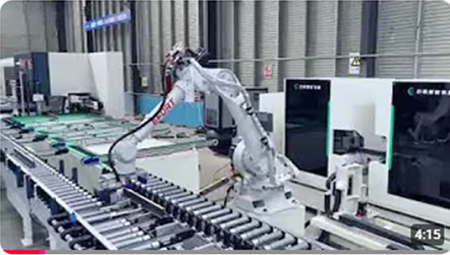
On an automated metal cutting saw, positioning becomes another important part of the process. A control system may move the workpiece or saw head to a programmed position before each cut. This reduces dependence on repeated manual measurement and helps establish a more consistent relationship between the required dimension and the actual cutting position.
Main Types of Metal Cutting Saw Systems
There is no single saw design that is ideal for every metal cutting application. Understanding the basic machine categories makes it easier to match the process to the workpiece.
| Saw Type | Cutting Principle | Typical Strength | Important Selection Factor |
|---|---|---|---|
| Band saw | Continuous toothed band | Long stock, bars, tubes and general cutting | Blade pitch, band speed and workpiece support |
| Circular metal saw | Rotating toothed blade | Clean, controlled straight or angle cuts | Blade design, rigidity and feed stability |
| Abrasive cut-off saw | Rotating abrasive wheel | Separation of hard or demanding material | Heat, wheel selection and edge condition |
| Double-head cutting saw | Two controlled saw heads | Profiles requiring repeatable length and angle cutting | Positioning, head alignment and clamping |
| CNC precision cutting saw | Programmed positioning and cutting | Repeatable production and controlled dimensions | Control system, feed accuracy and process integration |
The table shows why the word “saw” alone is not enough to define the right machine. A production line cutting long profiles to several programmed lengths has very different requirements from a workshop separating solid bar stock.
The workpiece should therefore define the technology, not the other way around.
Why Cutting Accuracy Begins Before the Blade Enters the Material
Cutting accuracy is often associated with the blade, but many dimensional problems begin before cutting actually starts.
Material must first be positioned correctly. If a long profile is poorly supported, it can sag, twist or move as it enters the cutting area. If the reference surface is inconsistent, programmed dimensions may not correspond reliably to the physical position of the workpiece.
Clamping then has to secure the material without introducing unwanted movement. Insufficient restraint can allow the workpiece to shift during blade engagement, while inappropriate clamping of thin-wall profiles may introduce deformation.
The blade itself must also approach the material through a mechanically stable path. Guide systems, bearings, saw-head rigidity and feed mechanisms influence whether the blade remains aligned as cutting forces change.
This is why a high-quality metal cutting saw should be assessed as a complete positioning, clamping and cutting system. Blade performance matters, but the blade cannot compensate for unstable material support or poor machine geometry.
How Blade Selection Affects Metal Cutting Quality
Blade selection should begin with the workpiece material and geometry.
A thin-wall profile, solid bar and hollow tube do not present the same cutting conditions. The number of blade teeth simultaneously contacting the material can change substantially as the blade passes through different sections of the workpiece. Tooth geometry and pitch therefore need to suit the cross-section being processed.
Blade material also influences cutting behavior and service conditions. A blade designed for one group of materials should not automatically be assumed suitable for another simply because the machine can reach the required rotational speed.
For circular saw applications, blade diameter, tooth configuration, kerf, rotational stability and machine spindle characteristics must work together. The most effective blade is not necessarily the most aggressive one; it is the blade that creates stable chip formation and acceptable edge quality under the machine’s intended cutting conditions.
In production, blade condition should also be monitored instead of waiting for obvious failure. Increasing burr formation, changing sound, declining surface quality or inconsistent cutting behavior can indicate that the process is no longer operating under the same conditions as the validated setup.
What Determines Cut Quality?
Cut quality is the result of several variables working together. Focusing on only one of them often leads to incomplete troubleshooting.
Blade sharpness and geometry influence how material is removed. Feed stability affects cutting load. Machine rigidity controls unwanted movement. Clamping determines whether the workpiece maintains its intended position. Chip evacuation prevents removed material from interfering with subsequent cutting action.
Heat also matters. Excessive thermal influence can affect the blade, workpiece edge and cutting consistency, particularly during continuous production. Depending on the saw technology and material, appropriate lubrication or cooling may support blade life, chip removal and process stability.
Workpiece geometry introduces another variable. Hollow profiles may alternate rapidly between thin sections, open spaces and thicker walls as the blade progresses through the cut. A stable cutting strategy therefore requires the machine and blade to cope with changing contact conditions without excessive vibration or movement.
Instead of asking whether a machine produces a “good cut,” it is more useful to define what good means for the next process. Important criteria may include length consistency, angular accuracy, edge condition, squareness, burr level and repeatability across a production batch.
Straight Cutting vs Angle Cutting
Straight 90-degree cutting is one of the most common operations, but many fabricated profiles require angled ends for assembly.
Angle cutting introduces additional geometric sensitivity because small changes in saw-head position, material alignment or clamping can affect the relationship between the two cut surfaces that will later meet during assembly.
For this reason, machines intended for repeated angular processing should provide controlled mechanical positioning rather than relying only on visual adjustment. The rigidity of the saw head at the selected angle also matters. An accurate setting has limited value if the cutting structure can move under load.
For applications that repeatedly alternate between straight and angled cutting, an integrated CNC precision cutting saw with controlled saw-head positioning provides an example of how 45° and 90° cutting can be integrated with guided machine movement and regulated feed.
The broader lesson is that angle capability should be evaluated together with repeatability. Being able to reach an angle once is different from reproducing it consistently through repeated production.
Why Clamping and Material Support Matter So Much
Clamping is one of the least visible but most influential parts of a metal cutting saw process.
When the blade first contacts the workpiece, cutting forces attempt to move the material. The fixture has to resist those forces while preserving the intended cutting reference. If the workpiece shifts even slightly, the resulting dimensional or angular error may appear only after cutting is complete.
Long profiles create an additional challenge because unsupported sections can act as levers around the cutting area. Proper infeed and outfeed support can reduce unnecessary movement and help keep the material aligned with the machine datum.
Thin-wall material requires a different approach. Excessive clamping force may distort the profile before the blade enters it. The machine may then produce a geometrically accurate cut on a temporarily deformed component, only for the profile to change shape after the clamps release.
Good workholding therefore means applying enough restraint in the correct locations while preserving the natural geometry of the workpiece.
Manual, Semi-Automatic and CNC Cutting Processes
Automation level should be selected according to the production task rather than treated as an indicator of machine quality.
Manual systems can remain practical when cutting requirements change frequently and production quantities are limited. Their performance, however, depends more heavily on operator measurement, positioning and process consistency.
Semi-automatic systems can automate specific operations such as blade feed or clamping while leaving material positioning under operator control. This can improve workflow without requiring a completely programmed process.
A CNC metal cutting saw becomes more useful when dimensions, angles or cutting sequences must be reproduced repeatedly. Programmed positioning reduces the number of manual measurement decisions between cuts and can improve process consistency when the machine, material support and cutting parameters are correctly configured.
Automation does not eliminate the need for process knowledge. It makes a validated process more repeatable. If blade selection, clamping or cutting parameters are incorrect, automation can simply reproduce the same problem more consistently.
How Metal Cutting Saw Technology Supports Downstream Machining
The quality of a cut blank affects more than the cutting station.
If a workpiece is cut consistently to length, downstream fixtures can use more predictable locating surfaces. If the cut face remains within the required squareness range, subsequent milling may require less corrective material removal. Cleaner edge conditions can also simplify handling and preparation for later operations.
This is particularly important in manufacturing processes where cutting is followed by drilling, milling, end machining or assembly. Each variation introduced at the saw can become an additional variable later in the process.
For example, a profile that is slightly long can often still be machined, but every additional correction consumes machine travel, tool time and process attention. A profile that is short cannot be restored through machining.
A well-controlled saw operation therefore protects the machining allowance required by the next stage. Rather than cutting as close as possible to an arbitrary target, manufacturers should define dimensions according to the complete process route and the features that will be created later.
How to Select a Metal Cutting Saw
Machine selection should begin with a representative group of real workpieces. Review the largest and smallest cross-sections, normal materials, wall thicknesses, required angles, target lengths and downstream operations.
The first question is cutting capacity. The machine must physically accommodate the workpiece, but maximum capacity should not be treated as the only criterion. A profile that fits within the nominal cutting area may still require additional space for clamps, supports or angular movement.
The second question is the required cut. Straight separation, repeated 45-degree cutting and automatically variable dimensions require different machine configurations. Production involving multiple programmed lengths may place greater emphasis on positioning control than a process that repeatedly cuts one fixed dimension.
Next, consider the required level of automation. If the work changes continuously, flexibility may matter more than automatic sequence length. If similar components are processed repeatedly, programmable positioning and automatic feeding may provide greater practical value.
Blade availability, maintenance access, chip management, material loading and operator access should also be reviewed. These factors may not dominate a specification sheet, but they influence the daily usability of the machine.
A structured approach to cutting equipment selection should therefore compare the machine against workpiece geometry, required precision, production rhythm and operating requirements rather than selecting from one specification in isolation.
Common Metal Cutting Saw Selection Mistakes
One common mistake is selecting equipment according to maximum cutting capacity while ignoring the parts processed most frequently. A machine designed around an extreme workpiece may be less efficient for the normal production range.
Another mistake is focusing almost entirely on motor power. Adequate power is necessary, but cutting stability also depends on the spindle or band system, guides, machine frame, clamping and feed mechanism.
Blade selection is sometimes treated as a consumable decision that can be solved after installation. In reality, blade characteristics form part of the cutting system. The machine operating range and the blades available for the intended material should be evaluated together.
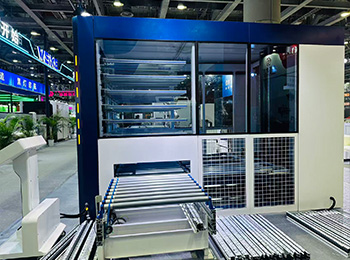
Material handling is another frequently underestimated issue. Long workpieces may require substantial support before and after the cutting zone. Without appropriate support, the theoretical positioning accuracy of the saw does not guarantee that the actual workpiece remains correctly aligned.
Finally, users sometimes assume that greater automation automatically produces greater accuracy. Automation improves repeatability of programmed actions, but the physical cutting process still depends on mechanical condition, blade quality, workholding and correct setup.
How to Improve Repeatability in Daily Cutting
Repeatable cutting begins with repeatable setup.
The locating surfaces used to position material should remain clean and undamaged. Clamps should engage the workpiece consistently. Support rollers or tables should maintain alignment rather than forcing the material into a different position as it moves.
Blade condition should be incorporated into routine process checks. Waiting until a blade produces visibly unacceptable parts may allow gradual quality changes to continue unnoticed. Operators should monitor burr formation, cutting sound, surface appearance and any change in the effort required to complete a cut.
Validated cutting settings should also be documented. For frequently processed workpieces, the machine program, blade type, clamping arrangement and relevant cutting parameters should be treated as one process rather than independent pieces of information.
Periodic verification with representative components is more useful than assuming programmed dimensions will remain correct indefinitely. Mechanical wear, blade replacement, fixture adjustment and maintenance can all influence the relationship between the machine setting and the finished workpiece.
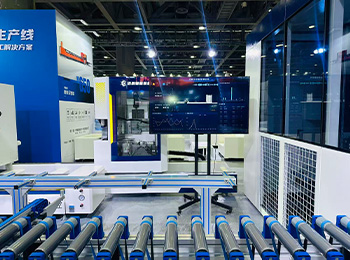
This is particularly important when the saw is positioned at the beginning of a larger automated production line, where an unnoticed variation can continue into many downstream components.
Maintenance Factors That Affect Cutting Performance
Maintenance of a metal cutting saw should focus on the elements that influence alignment, movement and cutting stability.
Guide surfaces and linear motion components should remain clean and maintained according to the machine requirements. Chips accumulated around reference surfaces or moving components can interfere with positioning and shorten component life.
Clamping elements should be inspected for wear and contamination. If a contact surface no longer seats consistently, the machine may appear to position correctly while the workpiece itself is not held at the same reference.
Saw blades should be installed correctly and inspected for damage. Blade replacement should also trigger a check of cutting quality because a new blade may not behave exactly like the worn blade it replaces.
Lubrication, coolant or mist systems, when used by the machine, should function consistently. Their purpose is not only to reduce heat but also to support predictable cutting conditions and chip management.
Preventive inspection is more effective when it focuses on process behavior. Changes in sound, vibration, burr formation, cutting time or dimensional stability may reveal developing mechanical or tooling issues before they result in obvious failure.
When Does a CNC Metal Cutting Saw Make Sense?
CNC control provides the strongest advantage when the cutting process contains decisions that must be reproduced repeatedly.
If material must be cut into several programmed lengths, automated positioning can reduce repeated manual measurement. If the process includes controlled angle changes, programmable positioning can improve consistency. If the saw forms part of a larger manufacturing cell, CNC control can help coordinate cutting with material handling and downstream operations.
The case is less about production volume alone and more about process repetition. Even a varied production environment can benefit from CNC cutting when part families share repeatable programs that operators can retrieve and run again.
However, control technology should remain matched to the work. Adding programming complexity to an application with one simple fixed cut may provide little practical advantage.
A useful selection principle is to identify where human adjustment currently introduces variation or unnecessary handling. If programmable motion can remove those repeated adjustments without creating disproportionate process complexity, CNC cutting becomes easier to justify technically.
Building a Better Metal Cutting Process
A good cutting process begins with the finished component rather than the saw.
Define what the next manufacturing operation needs from the cut blank. Determine allowable dimensional variation, angle requirements, surface condition, burr expectations and machining allowance. Then evaluate which cutting system can provide those conditions consistently.
Material geometry should be considered next. Hollow profiles, solid stock, tubes and irregular sections create different blade engagement conditions. The same cutting parameters should not automatically be applied across all workpieces.
Fixture and handling design should then be developed around the actual material length and cross-section. Stable support before and after the cut helps maintain the relationship between the workpiece and machine reference.
Finally, establish how the process will be verified. A stable metal cutting saw process is not one that produced one accurate component during setup. It is one that can reproduce an acceptable result through normal production while giving operators clear indicators when conditions begin to change.
This process-focused approach is more valuable than comparing machines through specification sheets alone.
Conclusion
A metal cutting saw has a direct influence on dimensional consistency, edge condition, angular accuracy and the stability of subsequent manufacturing operations. Its role extends well beyond separating one piece of material from another.
Reliable cutting depends on the interaction between machine structure, blade selection, workpiece geometry, clamping, material support, feed control and process verification. Automation can improve repeatability, but only when these underlying cutting conditions have already been properly defined.
The most suitable machine is therefore not automatically the fastest, largest or most automated system. It is the one that matches the normal workpiece range, required cutting geometry, production workflow and downstream processing requirements.
When machine selection begins with real components and a clearly defined cutting standard, the saw becomes an integrated part of quality control rather than simply the first machine in the production route.
FAQ
What is a metal cutting saw used for?
A metal cutting saw separates bars, tubes, profiles and other metal workpieces into required lengths or angles. Industrial systems may also provide controlled feeding, clamping and programmable positioning so that cut dimensions can be reproduced consistently before further machining or assembly.
What type of saw is best for cutting metal?
The best type depends on material, cross-section, required edge quality, angle and production process. Band saws are common for bars and tubes, while precision circular saw systems can suit controlled profile cutting. The machine, blade and workpiece should always be evaluated as one cutting system.
How can a metal cutting saw improve cutting accuracy?
Accuracy improves when positioning, clamping, blade movement and material support remain stable throughout the cut. CNC positioning can reduce repeated manual measurement, but machine rigidity, blade condition and correct setup are equally important for maintaining consistent dimensions and angles.
What should I check before selecting a metal cutting saw?
Accuracy improves when positioning, clamping, blade movement and material support remain stable throughout the cut. CNC positioning can reduce repeated manual measurement, but machine rigidity, blade condition and correct setup are equally important for maintaining consistent dimensions and angles.
Why does a metal cutting saw produce excessive burrs?
Burrs can increase because of blade wear, unsuitable tooth geometry, unstable feed, vibration, incorrect cutting conditions or insufficient workpiece restraint. Rather than changing one parameter immediately, inspect the blade, clamping, machine condition and material support together to identify the actual cause.