





CNC Drilling Machine Guide for Aluminum Profile Processing
Table of Contents
Introduction
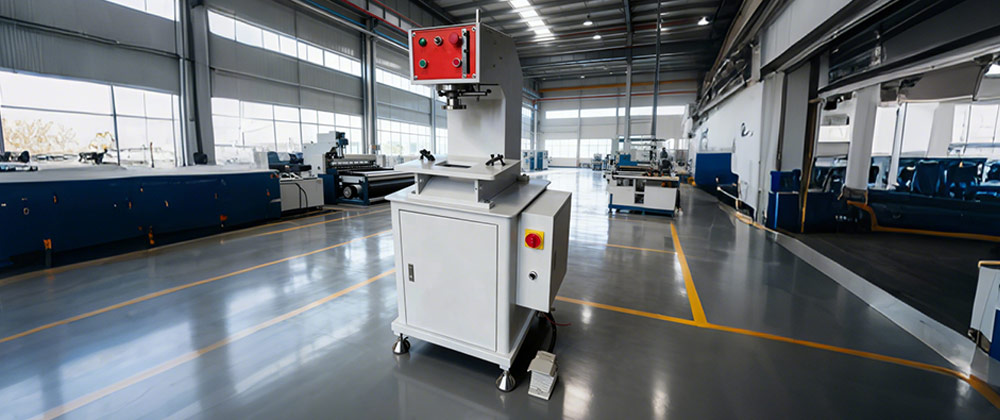
A cnc drilling machine plays an important role in modern aluminum profile processing, especially when manufacturers need consistent hole positions, repeatable machining patterns, and efficient handling of door and window profiles. Compared with highly manual drilling processes, CNC-controlled equipment allows machining parameters to be defined digitally and repeated across multiple workpieces with greater process consistency.
For aluminum door, window, curtain wall, and industrial profile fabrication, drilling rarely exists as an isolated operation. Holes are often combined with slots, grooves, mounting positions, and other machined features. Understanding how CNC drilling works, what affects machining accuracy, and how different equipment configurations support production requirements can therefore help manufacturers develop a more reliable profile-processing workflow.
What Is a CNC Drilling Machine?
A CNC drilling machine uses computer numerical control to coordinate tool movement, workpiece positioning, spindle operation, and machining parameters. Rather than relying entirely on repeated manual positioning, the machine follows programmed instructions to produce holes at defined locations and dimensions.
The underlying CNC concept is part of the wider development of numerical control, in which machine tools operate according to coded instructions. In practical aluminum profile processing, this allows repetitive hole patterns and other machining features to be produced according to predefined processing data.
Modern CNC equipment can also combine drilling with milling functions. This is particularly useful for aluminum profiles because window and door components often require more than simple round holes. Hardware mounting positions, elongated slots, drainage features, lock-related openings, and connection details may require several machining operations on the same workpiece.
Why CNC Drilling Matters in Aluminum Profile Processing
Aluminum profiles often contain long, relatively narrow sections with precise geometric requirements. Even a small positioning deviation can affect later assembly, particularly when holes must align with hardware, fasteners, connectors, or adjoining profile sections.
CNC-controlled drilling improves repeatability because machining positions are generated from defined coordinates rather than repeatedly measured by hand. Once the appropriate processing program has been prepared, the machine can reproduce the same pattern across multiple profiles.
This becomes increasingly important when a workshop handles multiple window or door specifications. Profile dimensions, hardware positions, and machining patterns may change between projects, so flexible parameter control helps the production process adapt without relying on an entirely different manual setup for every component.
CNC Drilling vs Conventional Manual Drilling
The main difference between CNC drilling and conventional drilling lies in how machining positions and movements are controlled.
| Processing Factor | CNC Drilling | Conventional Manual Drilling |
|---|---|---|
| Hole positioning | Program-controlled coordinates | Operator positioning |
| Repeated patterns | Highly repeatable | Depends more heavily on manual setup |
| Multiple profile specifications | Programs can be adjusted or stored | Requires repeated setup |
| Complex machining | Can combine multiple controlled movements | More dependent on separate operations |
| Production consistency | Stable when properly configured | More operator-dependent |
| Integration | Can connect with wider digital workflows | Usually more isolated |
Manual drilling can still be suitable for simple or occasional operations. However, when aluminum fabrication involves repeated components, multiple holes, varying profile dimensions, or integrated drilling and milling, CNC equipment provides a more structured machining approach.
Key Factors That Affect Drilling Accuracy
A CNC controller alone does not guarantee accurate machining. The final result depends on the entire mechanical and process system.
Profile positioning is one of the most important factors. A long aluminum extrusion must remain securely located during machining because movement or vibration can alter the intended hole position. Clamping therefore needs to hold the workpiece firmly without causing unnecessary deformation.
Machine rigidity also matters. Stable guide systems, transmission components, spindle assemblies, and machine structures help maintain controlled tool movement. Tool condition is another consideration because worn or unsuitable cutting tools can affect hole quality, create excessive burrs, or reduce surface consistency.
Feed settings and spindle parameters should also match the aluminum profile, cutting tool, hole geometry, and processing requirement. Effective CNC drilling therefore depends on the interaction between programming, tooling, workholding, machine structure, and operating parameters.
Why Drilling and Milling Are Often Combined
In window and door fabrication, many profile features cannot be completed through drilling alone. A frame component may require round mounting holes together with elongated slots, drainage openings, grooves, or irregular hardware cutouts.
For this reason, dedicated drilling and milling equipment can provide a more integrated approach to profile processing. Instead of treating every feature as an independent operation, manufacturers can coordinate multiple machining tasks within a CNC-controlled workflow.
Combining operations also helps maintain positional relationships between features. When holes and grooves are machined using the same coordinate system and controlled setup, it becomes easier to maintain consistent spacing between them.
Single-Side and Multi-Side Profile Machining
Aluminum profiles frequently require machining on more than one surface. A door or window profile may contain hardware holes on one face while requiring drainage, fastening, or connection features on another.
If every surface requires the profile to be removed, repositioned, and realigned manually, additional handling steps are introduced. Multi-side machining configurations can reduce these interruptions by allowing the workpiece or machining system to access several surfaces during one controlled setup.
For example, MCS CNC’s Aluminum Profile CNC Drilling and Milling Machine-1500 uses a rotating worktable designed for three-sided machining within a single clamping process. This type of configuration is particularly useful when a profile contains machining features distributed across multiple surfaces.
How CNC Programming Supports Repeatable Processing
Programming converts part requirements into machine movements. Depending on the equipment and control system, operators can define hole positions, dimensions, tool paths, spindle parameters, and machining sequences.
For repetitive manufacturing, stored processing information can reduce the need to rebuild the same machining sequence every time a familiar profile returns to production. This is useful when a factory processes recurring window and door configurations alongside customized specifications.
Digital processing data also provides a stronger foundation for production standardization. Instead of depending entirely on individual operator memory, machining requirements can be represented through consistent numerical instructions.
Tool Selection for Aluminum Drilling
Tool geometry should match both the workpiece material and the intended machining result. Aluminum is relatively easy to machine compared with many harder metals, but inappropriate cutting conditions can still lead to burr formation, poor chip evacuation, surface marks, or inconsistent hole quality.
The cutting edge should remain sharp, and chips need enough space to leave the cutting zone efficiently. Excessive chip accumulation may interfere with the tool and finished surface.
The correct approach depends on factors such as hole diameter, depth, profile wall thickness, machining speed, tool configuration, and whether the operation involves simple drilling or combined milling. Tool selection should therefore be considered as part of the overall machining process rather than as an isolated decision.
Managing Burrs and Surface Quality
Burr formation is a common concern when drilling thin-wall aluminum profiles. Burrs may appear around hole entrances or exits when cutting conditions, tool condition, material support, or machining parameters are not well matched.
A stable workpiece setup can reduce unnecessary movement during tool engagement. Appropriate cutting tools and machining parameters also help produce cleaner hole edges.
For visible architectural profiles, surface protection requires additional attention because scratches or marks produced during loading, clamping, chip movement, or unloading may affect the final appearance. Machine configuration should therefore address not only dimensional accuracy but also controlled material handling.
CNC Drilling in Door and Window Manufacturing
Door and window profiles contain a wide range of machined features associated with hinges, handles, locks, connectors, drainage systems, reinforcing components, and frame assembly.
As product designs become more varied, a machining system must accommodate different profile dimensions and hole patterns without sacrificing consistency. CNC drilling makes this possible by allowing processing information to change according to the specific component rather than relying only on fixed mechanical positioning.
This flexibility becomes particularly useful in factories producing several window or door series because each system may have different hardware positions and profile geometries.
When Should a Manufacturer Consider CNC Drilling?
CNC drilling becomes especially relevant when production involves repeated machining patterns, multiple hole positions, several profile specifications, or frequent changes between components.
It is also suitable when drilling must be coordinated with milling, slotting, or other machining operations. In these situations, equipment selection should consider the complete processing requirement rather than focusing only on the number of holes a machine can create.
Manufacturers should evaluate profile dimensions, required machining surfaces, workpiece length, hole and groove complexity, positioning requirements, programming method, clamping arrangement, and compatibility with the wider production workflow.
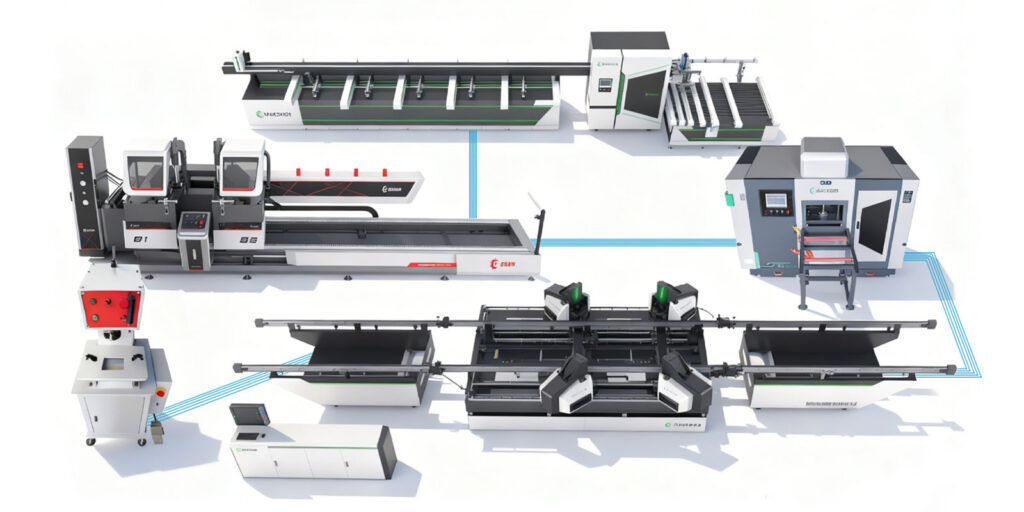
From Standalone Drilling to Automated Profile Processing
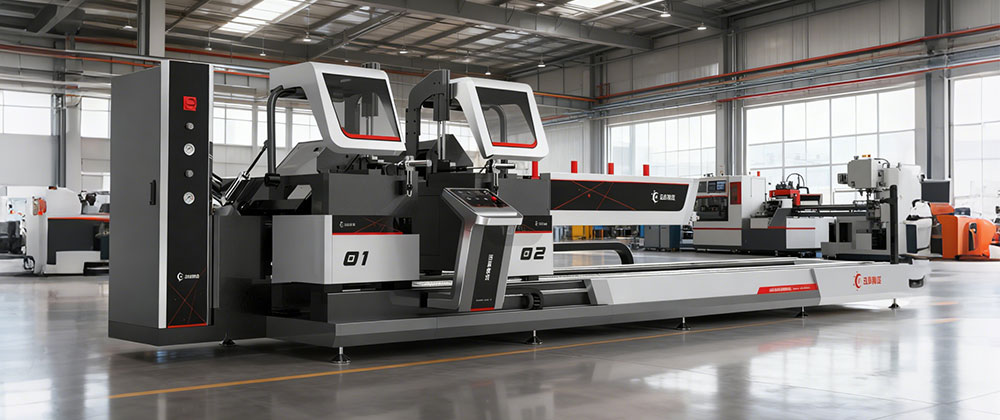
CNC drilling can operate as an individual manufacturing stage, but its value increases when machining data is connected with surrounding processes.
For example, cutting establishes profile length, drilling and milling create hardware and assembly features, and later operations complete joining and frame construction. Coordinating these processes around consistent production data can reduce unnecessary manual interpretation between stages.
More advanced profile-processing systems may also use barcode-based program identification or automatically generated machining instructions. These functions show how CNC drilling is gradually becoming part of a broader digital manufacturing workflow rather than remaining only a replacement for manual hole making.
Conclusion
A cnc drilling machine provides aluminum profile manufacturers with a controlled method for producing accurate and repeatable machining features. Its effectiveness depends not only on CNC programming but also on machine rigidity, profile positioning, tooling, clamping, chip management, machining parameters, and the ability to handle the required profile surfaces.
For door and window manufacturing, the strongest application is often not drilling alone but coordinated drilling and milling of holes, grooves, slots, and hardware positions. By matching equipment configuration with actual profile geometry and production requirements, manufacturers can build a more consistent and adaptable machining process.
FAQ
What is a CNC drilling machine used for in aluminum processing?
It is used to create accurately positioned holes and related machined features in aluminum profiles according to programmed coordinates. Applications include door, window, curtain wall, and industrial profile components.
Can CNC drilling equipment process different aluminum profiles?
Yes. CNC programs and machining parameters can be adjusted for different profile geometries and processing patterns, provided the workpiece remains within the equipment’s supported processing range.
Why combine drilling and milling on one CNC machine?
Door and window profiles frequently require holes, slots, grooves, and irregular openings. Combining drilling and milling allows these features to be processed within a coordinated CNC workflow.
What affects CNC drilling accuracy?
Important factors include machine rigidity, spindle stability, workpiece positioning, clamping, cutting-tool condition, machining parameters, profile geometry, and correct programming.
Is multi-side machining useful for aluminum profiles?
Yes. When machining features are distributed across several profile surfaces, multi-side processing can reduce repeated repositioning and help maintain consistent relationships between machined features.