Aluminium Profile Cutting Machine: The Ultimate Guide for Window Manufacturers
When you’re running a window manufacturing business, the efficiency of your production line directly impacts your bottom line. Every cut you make on an aluminium profile affects the quality of your final product, the speed of your assembly process, and ultimately, your customer satisfaction. This is where an aluminium profile cutting machine becomes not just equipment, but a strategic investment in your manufacturing future.
Whether you’re transitioning from manual cutting methods or upgrading your existing equipment, understanding the technology, capabilities, and selection criteria for aluminium cutting equipment is essential for making informed decisions that will serve your business for years to come.
Table of Contents
What is an Aluminium Profile Cutting Machine?
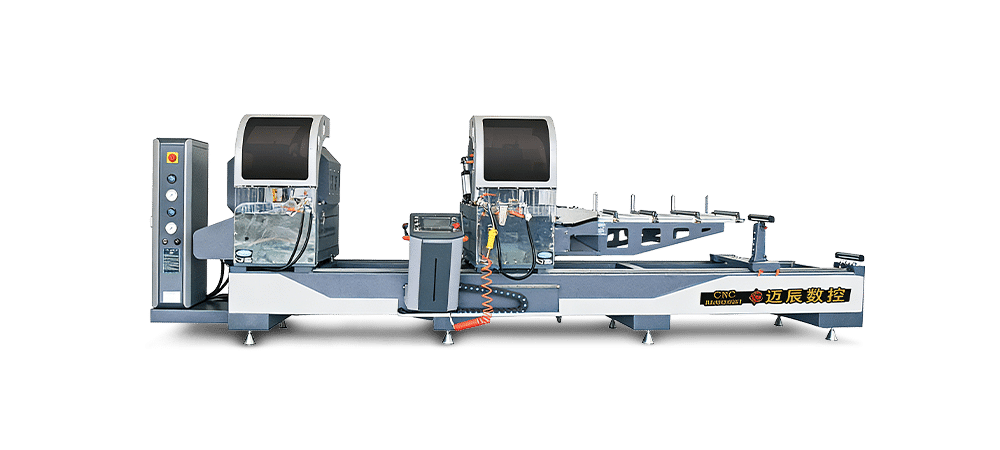
An aluminium profile cutting machine is specialized industrial equipment designed to cut aluminium extrusions with high precision and efficiency. Unlike conventional saws, these machines are engineered specifically for the unique properties of aluminium profiles used in window frames, door frames, and curtain wall systems.
At its core, an aluminium profile cutting machine consists of several key components working in harmony: a high-speed circular saw blade optimized for aluminium, a precision feeding system that moves the profile into position, a clamping mechanism that holds the material firmly during cutting, and a control panel that allows operators to program and adjust cutting parameters.
The cutting process itself is remarkably straightforward yet precisely controlled. The operator loads the aluminium profile into the machine, where it’s automatically positioned and clamped. The saw blade then makes the cut at the programmed angle, typically 45 degrees or 90 degrees for window frame corners, though advanced machines can handle virtually any angle requirement. Modern CNC-controlled machines can store hundreds of cutting programs, allowing quick changeovers between different profile types and cutting specifications.
There are several types of aluminium profile cutting machines available, each suited to different production scenarios. Manual machines require the operator to position and clamp the profile manually, making them suitable for low-volume operations or workshops with limited budgets. Semi-automatic machines handle some functions automatically while requiring operator oversight for others. Fully automatic CNC machines represent the most advanced option, capable of running complex cutting sequences with minimal operator intervention.
The distinction between single-head and double-head machines is particularly important for window manufacturers. Single-head machines offer flexibility for varied cutting requirements and are often sufficient for smaller operations. Double-head machines, featuring two saw blades working simultaneously, can dramatically increase production speed for standard angle cuts, making them ideal for high-volume manufacturing environments.
Why Window Manufacturers Need Aluminium Profile Cutting Machines
Traditional manual cutting methods present significant challenges that can hold your business back. When you’re cutting aluminium profiles by hand with a basic saw, you’re limited by human precision and speed. Even skilled operators struggle to achieve consistent accuracy beyond plus or minus 1-2 millimeters. This variability creates downstream problems during assembly, as window frames that don’t fit together perfectly require additional work or result in quality defects.
The productivity bottleneck is equally concerning. Manual cutting typically produces 20-30 profile cuts per hour, depending on the complexity of the cut and the operator’s skill level. When you consider that a standard residential window might require 8-12 profile cuts, a single operator working manually can only support the production of 2-3 windows per hour. This limitation becomes increasingly problematic as your business grows and order volumes increase.
Labor costs compound these challenges. Skilled operators command higher wages, and the physical demands of manual cutting lead to fatigue and potential workplace injuries. Finding and training qualified workers becomes an ongoing struggle, particularly in regions where manufacturing talent is scarce.
Material waste is another hidden cost that many manufacturers overlook. Inaccurate cuts mean profiles must be recut, consuming additional material. Over time, this waste accumulates significantly. Industry research indicates that manual cutting operations typically experience material waste rates of 5-8 percent, compared to 1-2 percent for automated cutting systems.
Automated aluminium profile cutting equipment addresses these challenges comprehensively. Modern machines achieve cutting precision of plus or minus 0.1 millimeters, a tenfold improvement over manual methods. This precision translates directly to better-fitting window frames, faster assembly times, and fewer quality issues reaching your customers.
The productivity gains are equally dramatic. CNC aluminium cutting machines routinely process 100-150 profiles per hour, while double-head configurations can exceed 200 profiles per hour under optimal conditions. This represents a 5-7x improvement over manual cutting, allowing you to scale production without proportionally increasing labor costs.
Material waste reduction provides ongoing cost savings that compound over time. By achieving precise cuts consistently, automated systems reduce waste to 1-2 percent of material consumption. For a workshop processing significant aluminium volume annually, this reduction can translate to substantial savings in material costs alone.
Aluminium Profile Cutting Machine vs Manual Cutting: A Complete Comparison
Understanding the practical differences between automated and manual cutting helps you make informed decisions about when and how to upgrade your equipment. The comparison extends beyond simple speed measurements to encompass quality, costs, and operational considerations that affect your entire manufacturing process.
The following table provides a comprehensive comparison of key performance factors:
| Performance Factor | Manual Cutting | CNC Aluminium Cutting Machine | Double-Head Cutting Machine |
|---|---|---|---|
| Cutting Speed (profiles/hour) | 20-30 | 100-150 | 200+ |
| Cutting Tolerance | ±1-2mm | ±0.1-0.2mm | ±0.1-0.2mm |
| Material Waste Rate | 5-8% | 1-2% | 1-2% |
| Operator Skill Required | High | Moderate | Moderate |
| Changeover Time | 5-10 minutes | 1-2 minutes | 2-3 minutes |
| Safety Risk Level | Higher | Lower | Lower |
Speed and efficiency improvements represent the most immediately visible benefit of automated cutting. The jump from 25 profiles per hour to 150 profiles per hour means a single CNC machine can accomplish in one hour what would take a manual operator an entire workday. This efficiency gain doesn’t just increase output—it fundamentally changes your production capabilities and allows you to take on larger orders that would have been impossible with manual methods.
Cutting accuracy improvements have far-reaching implications for your manufacturing quality. When profiles are cut to within 0.1 millimeters of specification, window frame assembly becomes faster and more reliable. Corners fit precisely without gaps or misalignment. Hardware mounts correctly the first time. The need for rework decreases dramatically, freeing your team to focus on productive work rather than fixing problems.
Surface finish quality also improves with automated cutting. Manual cutting often produces rough edges or burrs that require additional finishing work. Quality aluminium cutting machines, particularly those with optimized blade speeds and lubrication systems, produce clean cuts that require minimal or no secondary finishing.
The long-term cost analysis favors automated equipment more strongly than many manufacturers initially realize. While the upfront investment is higher, the operational savings accumulate steadily over time. Labor cost savings alone can represent a 40-60 percent reduction compared to manual cutting operations of equivalent output. When you factor in material waste reduction, quality improvements, and increased production capacity, the total cost of ownership over a five-year period typically favors automated systems significantly.
Knowing when to upgrade requires honest assessment of your current situation and future goals. If your production volume has grown to the point where manual cutting creates bottlenecks, if quality inconsistencies are affecting customer satisfaction, or if you’re turning away orders because you can’t meet delivery timelines, these are clear indicators that it’s time to consider automated cutting equipment.
CNC vs Manual Aluminium Profile Cutting Machines: Which is Right for You?
CNC technology has revolutionized aluminium profile cutting by bringing computer-controlled precision to what was once a manual craft. Understanding what CNC systems offer—and when they’re worth the investment—helps you make decisions aligned with your specific circumstances.
At its heart, CNC (Computer Numerical Control) technology uses programmed instructions to control the cutting machine’s movements with extraordinary precision. Rather than relying on an operator’s hand and eye to position cuts, the computer executes programmed coordinates, ensuring each cut is exactly where it should be. This consistency eliminates the variability inherent in manual positioning.
The automation extends beyond simple positioning. Modern CNC aluminium cutting machines can automatically adjust cutting angles, change between stored programs in seconds, and even optimize cutting sequences for material efficiency. Some systems can import cutting requirements directly from design software, eliminating manual data entry and reducing the potential for errors.
Programmability offers significant advantages for window manufacturers who produce various profile types and sizes. Rather than manually setting up the machine for each different cut, operators simply select the appropriate program from the control panel. A library of stored programs means you can switch between cutting specifications for different window styles almost instantly, dramatically reducing changeover time between jobs.
The reduced operator skill requirement might seem counterintuitive—how can a more sophisticated machine require less skill to operate? The answer lies in the way CNC systems encapsulate expertise. While programming the machine initially requires technical knowledge, day-to-day operation becomes straightforward. An operator can produce perfect cuts by selecting the right program and monitoring the process, without needing the years of practice required to cut accurately by hand.
However, manual and semi-automatic machines still have their place in certain manufacturing scenarios. Small workshops producing under 50 windows per day may find that manual cutting equipment meets their needs adequately. Operations with simple cutting requirements—primarily basic 45 and 90-degree cuts—might not benefit enough from CNC capabilities to justify the additional investment. Businesses with limited capital or uncertain production volumes might prefer to start with manual equipment and upgrade as they grow.
Making the right choice requires evaluating several factors systematically. Consider your current production volume and how it might grow over the next 3-5 years. Assess the complexity of your cutting requirements—do you need multiple angles, custom cuts, or specialized profiles? Think about your labor situation—is skilled operator talent available and affordable in your area? Finally, calculate the potential return on investment based on realistic projections of productivity gains and cost savings.
Double-Head vs Single-Head Aluminium Cutting Machines
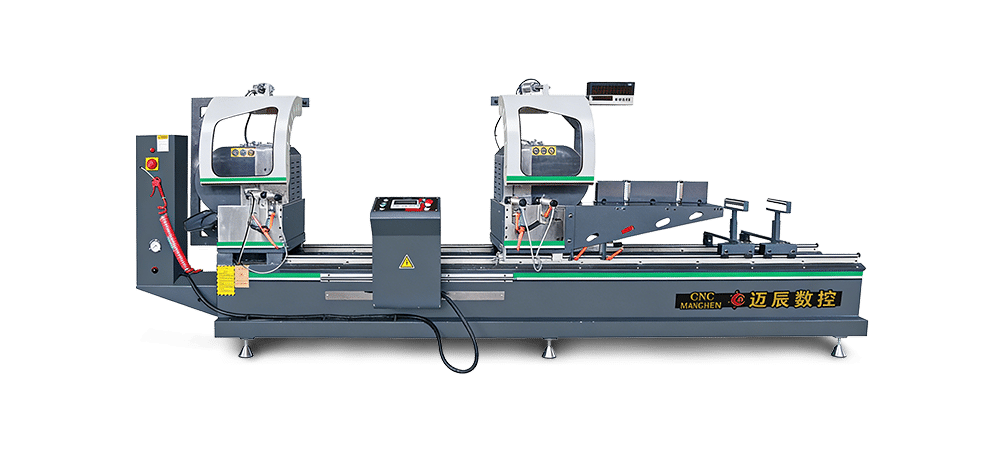
The choice between single-head and double-head configurations significantly impacts both your production capabilities and your investment requirements. Understanding the operational differences helps you select the configuration that matches your manufacturing needs.
A double-head aluminium cutting machine features two independent saw heads positioned to cut both ends of a profile simultaneously. This configuration excels at producing profile pieces for rectangular window frames, where both ends typically need 45-degree cuts. By cutting both ends in a single operation, a double-head machine essentially doubles the effective cutting speed for these common applications.
The simultaneous cutting action also ensures that both ends of a profile piece are cut at precisely complementary angles. When you’re assembling a rectangular frame, having both corners cut at exactly 45 degrees is critical for achieving tight, gap-free joints. Double-head machines inherently produce this consistency because both cuts happen in the same setup.
Single-head machines offer different advantages that make them preferable in certain situations. The lower initial investment makes single-head configurations more accessible for smaller operations or businesses just beginning to automate their cutting processes. The flexibility to cut at any angle along the profile length enables more varied cutting patterns, which can be valuable for custom window designs or non-standard frame geometries.
For workshops with limited floor space, single-head machines typically require less room while still delivering significant productivity improvements over manual cutting. The simpler mechanical design also translates to lower maintenance requirements and easier troubleshooting.
Your production volume and the types of windows you manufacture should drive this decision. If your primary product is standard rectangular windows in high volumes, a double-head machine’s speed advantage for 45-degree cutting makes it compelling. If you produce varied window styles, custom shapes, or operate at lower volumes, a single-head machine’s flexibility and lower cost might be more appropriate.
Consider future growth when making this decision as well. Many manufacturers start with single-head machines and add double-head capacity as volumes increase. Alternatively, some workshops operate both types—a double-head machine for high-volume standard production and a single-head machine for custom and specialty work.
How to Choose the Right Aluminium Profile Cutting Machine
Selecting the right equipment requires a systematic approach that considers your current needs while anticipating future growth. This decision affects your production capabilities for years to come, making thorough evaluation essential.
Start by assessing your production requirements honestly and comprehensively. What is your daily or weekly cutting volume today, and how do you expect it to grow over the next several years? What types of profiles do you process—are you working primarily with standard window profiles, or do you handle specialized shapes and thicknesses? What cutting angles do you need most frequently? Understanding these fundamentals provides the foundation for all subsequent decisions.
Technical specifications should align with your production needs. Maximum cutting length capacity must accommodate your longest profile requirements with some margin for flexibility. The cutting angle range should include all the angles you currently use and potentially others you might need in the future. Saw blade specifications affect both cutting quality and the range of profile sizes you can process efficiently.
Feeding speed and positioning accuracy directly impact your production rate and quality. Look for machines with precision linear guide rails and servo motor systems that deliver consistent, repeatable positioning. The clamping system should provide firm, stable holding for your profile types without damaging surface finishes.
Automation level selection requires balancing capability against investment. Manual machines offer the lowest entry cost but require skilled operators and deliver lower productivity. Semi-automatic machines provide a middle ground, automating some functions while keeping operators engaged in the process. Fully automatic CNC machines deliver maximum productivity and precision but require the highest investment and more sophisticated maintenance capabilities.
Installation and space requirements often get overlooked during the selection process but can significantly impact your operations. Machine dimensions must fit your available floor space with adequate clearance for operation and maintenance. Electrical power requirements—voltage, phase, and amperage—must match your facility’s capabilities or require electrical upgrades. Compressed air supply is needed for pneumatic clamping and feeding systems on most machines.
Budget planning should encompass more than just the purchase price. Include installation costs, operator training, initial consumable supplies, and any facility modifications required. Consider financing options and how the timing of payments aligns with your cash flow. Most importantly, project your expected return on investment based on realistic assumptions about productivity gains, labor savings, and quality improvements.
Supplier evaluation is equally important as machine selection. Look for manufacturers with established reputations in the window and door industry. Verify that technical support and spare parts will be readily available when you need them. Ask about warranty terms and what’s included in after-sales service packages. Customer references from similar operations provide valuable insights into real-world performance and support quality.
Essential Features to Look for in Quality Aluminium Cutting Equipment
Understanding which features genuinely impact performance helps you evaluate different machines and make informed comparisons. Some features provide real operational benefits, while others add cost without delivering proportional value.
Cutting precision depends on several mechanical and technological elements working together. High-precision linear guide rails ensure smooth, accurate movement of the cutting head along its intended path. Unlike conventional sliding mechanisms that can develop play and wear over time, linear guide rails maintain their precision through years of operation. Servo motor feeding systems provide computer-controlled positioning that’s more accurate and repeatable than pneumatic or hydraulic alternatives.
Digital angle display and adjustment systems eliminate the guesswork from angle setting. Rather than relying on mechanical gauges or protractors, digital systems show the exact angle and allow precise adjustments in small increments. This capability is particularly valuable when you’re setting up for non-standard angles or fine-tuning for optimal fit.
Automatic blade lubrication systems might seem like a minor convenience, but they significantly impact both cutting quality and blade life. Proper lubrication keeps the blade cool during cutting, preventing aluminium from adhering to the teeth and producing rough cuts. Automatic systems deliver the right amount of lubricant consistently, removing operator variability from this critical function.
Automation and smart features transform a cutting machine from a tool into an integrated production system. Touchscreen control panels with intuitive interfaces reduce training time and minimize programming errors. The ability to store and name cutting programs allows quick recall of standard setups. Barcode scanning capabilities can link cutting instructions directly to production orders, eliminating manual data entry and ensuring accuracy.
Safety systems protect both your operators and your business. Emergency stop buttons should be prominently located and easily accessible from any operating position. Safety guards should prevent accidental contact with moving parts while still allowing visibility for monitoring the cutting process. Two-hand operation requirements ensure operators keep their hands away from the cutting zone during operation. Effective dust collection systems protect air quality and reduce cleanup requirements.
Ease of maintenance features reduce your total cost of ownership over the machine’s lifespan. Look for machines where routine maintenance tasks—blade changes, lubrication, cleaning—are straightforward and don’t require special tools or extensive disassembly. Clear maintenance indicators and self-diagnostic systems help identify issues before they become serious problems.
Aluminium Profile Cutting Machine Maintenance: Complete Guide
Proper maintenance ensures your cutting equipment continues to perform at its best while maximizing its operational lifespan. A systematic approach to maintenance prevents unexpected breakdowns and maintains cutting quality over time.
Daily maintenance should become a routine part of your production operations. Before each shift, operators should clean accumulated sawdust and aluminium chips from the machine, particularly around the cutting area and moving components. Check the blade for visible damage or wear, and verify that clamping mechanisms operate smoothly without hesitation. Safety guards and emergency stop buttons should be tested to ensure they function properly. Lubrication oil levels should be checked and topped up as needed.
Weekly maintenance tasks address areas that don’t require daily attention but still need regular care. The blade should be examined more thoroughly for sharpness—dull blades produce rough cuts and require more power, accelerating wear on other components. Linear guide rails should be cleaned and lubricated according to manufacturer specifications. Electrical connections should be inspected for signs of loosening or wear.
Monthly maintenance might include blade sharpening or replacement, depending on your usage volume. The pneumatic system should be checked for leaks, and air filters cleaned or replaced. Software updates should be installed if available, and backup copies of your cutting programs should be made and stored securely.
Common maintenance issues often have straightforward solutions if addressed promptly. Blade wear is the most frequent concern—signs include rough cut surfaces, increased cutting time, and higher power consumption. Replacing or sharpening blades at appropriate intervals prevents quality degradation and protects the machine’s motor and drive systems.
Accuracy drift can occur gradually over time as components wear or settings shift. Regular calibration using precision measurement tools helps identify and correct these issues before they affect production quality. Most manufacturers provide calibration procedures that can be performed by trained operators.
The lifespan of a well-maintained aluminium profile cutting machine typically exceeds 15-20 years. This longevity requires proper operation, regular maintenance, and appropriate environmental conditions. Machines operated in clean, climate-controlled environments generally last longer than those exposed to temperature extremes, humidity, or excessive dust.
How to Maximize ROI from Your Aluminium Profile Cutting Machine
Investing in cutting equipment is just the beginning—optimizing your operations to realize the full potential of that investment requires ongoing attention and strategic management.
Production optimization starts with understanding how your machine performs across different types of work. Batching similar cuts together reduces changeover time and setup complexity. When possible, standardizing profile sizes and cutting specifications across your product line enables longer production runs with fewer interruptions.
Cutting sequence optimization can significantly reduce material waste. Modern machines with optimization software can nest cuts to minimize the offcuts and leftover pieces. Even without sophisticated software, thoughtful planning of cutting sequences—cutting longer pieces first, then using the remainder for shorter requirements—can reduce waste substantially.
Labor efficiency extends beyond simply reducing headcount. Cross-training operators so they can run multiple machines provides scheduling flexibility and ensures production continuity when operators are absent. Implementing standard operating procedures ensures consistent performance regardless of which operator is running the machine. Taking full advantage of automation features—from programmable cutting to automatic material handling—maximizes the productivity each operator can achieve.
Quality control integration prevents defective products from reaching your customers while identifying process issues early. Implementing in-process quality checks—verifying the first piece after each setup, periodic measurement of sample pieces—catches problems before they affect large production quantities. Statistical process control methods help identify trends that might indicate developing issues before they become serious.
Material waste reduction deserves focused attention because the savings compound over time. Track your waste rates and set improvement targets. Investigate the causes of waste—whether from inaccurate cuts, damaged profiles, or inefficient cutting plans—and address root causes systematically. Many manufacturers find that reducing waste from 5 percent to 1-2 percent generates significant annual savings.
Aluminium Profile Cutting Machine Safety Guidelines
Safety isn’t just a regulatory requirement—it’s a fundamental aspect of professional manufacturing operations that protects your team and your business.
Essential safety features should be present on any aluminium cutting equipment you consider. Emergency stop buttons must be positioned for easy access from normal operating positions and should be tested regularly to ensure they function properly. Safety guards should enclose the cutting area during operation, with interlock systems that prevent the machine from running when guards are open. Blade braking systems should stop the saw quickly when operation stops or an emergency stop is activated.
Personal protective equipment requirements for operators include safety glasses or face shields to protect against flying chips and debris. Hearing protection is necessary given the noise levels generated by high-speed cutting. Cut-resistant gloves protect hands when handling profiles, which may have sharp edges from the extrusion process. Appropriate footwear protects against dropped materials and provides stability on workshop floors.
Safe operating procedures should be documented, trained, and consistently enforced. A pre-operation checklist ensures the machine is ready for safe operation before each use. Correct material loading techniques prevent profiles from shifting or falling during cutting. Blade change procedures must include steps for ensuring the machine is powered off and can’t be accidentally started. Emergency response protocols ensure everyone knows what to do if an incident occurs.
Creating a safety culture goes beyond rules and equipment. Regular safety training keeps awareness high and reinforces proper procedures. Incident reporting and investigation—without blame—helps identify hazards before they cause injuries. Safety audits and inspections catch issues that daily routines might overlook. Recognizing and rewarding safe behavior reinforces its importance to your team.
Integrating Aluminium Cutting Machines into Your Production Line
The way your aluminium cutting machine fits into your overall production process affects both efficiency and quality. Thoughtful integration considers material flow, information flow, and the connections between operations.
Production flow design should position the cutting machine to receive raw materials efficiently and deliver cut profiles to downstream operations without unnecessary handling or transportation. Consider where incoming aluminium profiles will be stored before cutting, how cut pieces will be sorted and staged for the next operation, and how the layout affects operator movement and material handling.
Software integration offers significant opportunities for efficiency gains, particularly for CNC machines. Connecting your cutting equipment to CAD systems allows design data to flow directly to the cutting program, eliminating manual data entry and the errors it can introduce. Production management software can schedule cutting operations, track material usage, and coordinate with other manufacturing processes. For larger operations, ERP system integration ensures cutting operations align with overall production planning and order management.
Automation and material handling can extend the productivity gains from your cutting machine throughout your production line. Automatic loading systems can feed raw profiles into the aluminium cutting machine, extending unattended operation time. Conveyor systems or automated guided vehicles can move cut profiles to drilling, milling, or assembly stations without manual handling. These systems require additional investment but can dramatically increase throughput for high-volume operations.
Creating a smart manufacturing environment involves connecting your cutting equipment to broader information systems. IoT sensors can monitor machine performance, track usage patterns, and predict maintenance needs before failures occur. Energy monitoring helps identify opportunities for efficiency improvements. Quality data collection enables continuous improvement based on actual performance rather than assumptions.
Why Choose Maichen CNC for Your Aluminium Profile Cutting Machine
When evaluating equipment suppliers, considering the full scope of what they offer—from initial consultation through years of operation—helps ensure a positive long-term experience.
Maichen CNC brings focused expertise in aluminium processing equipment specifically for window, door, and curtain wall manufacturing. This specialization means their equipment is designed for the specific requirements of these applications, rather than being adapted from general-purpose metalworking equipment. Years of experience in this sector have informed design decisions that address the real needs of window manufacturers.
Technical features of Maichen CNC cutting machines reflect this specialized focus. High-precision cutting technology delivers tolerance levels appropriate for window frame applications where joint quality directly affects product performance. Advanced CNC control systems provide the programmability and automation capabilities modern manufacturing requires. Robust construction ensures machines perform reliably through years of production demands.
Customization capabilities allow equipment to be tailored to your specific requirements. Different production volumes, profile types, and integration needs can be accommodated through appropriate configuration choices. Future upgrade possibilities mean your investment can grow with your business rather than becoming obsolete as your needs evolve.
After-sales support determines how well your equipment performs over its operational life. Installation and commissioning services ensure your machine is set up correctly from the start. Comprehensive operator training programs prepare your team to use the equipment effectively. Technical support—both remote and on-site—provides help when issues arise. Spare parts availability ensures repairs can be completed promptly without extended downtime.
Customer success stories demonstrate real-world performance across different manufacturing scenarios. Small workshops have increased productivity while maintaining quality. Large manufacturers have achieved efficiency gains that transformed their operations. These examples provide concrete evidence of what’s possible when the right equipment is properly implemented and supported.
Conclusion
Selecting and implementing an aluminium profile cutting machine represents a significant decision that will influence your production capabilities for years to come. The right aluminium cutting machine equipment, properly integrated and operated, transforms your manufacturing efficiency, quality consistency, and competitive position.
Key takeaways from this guide should inform your decision process. Aluminium profile cutting machines address fundamental challenges in window manufacturing—productivity bottlenecks, quality inconsistency, labor costs, and material waste. CNC technology offers precision and automation that manual methods simply cannot match. Your selection should be based on your specific production requirements, considering both current needs and future growth.
The return on investment for quality cutting equipment typically materializes within 12-24 months for most operations, through labor savings, waste reduction, quality improvements, and increased production capacity. However, realizing this return requires proper implementation—appropriate installation, thorough operator training, and systematic maintenance.
Moving forward, assess your current cutting operations honestly. Identify the specific challenges and limitations that affect your productivity and quality. Calculate potential improvements based on realistic projections rather than optimistic assumptions. Consult with equipment suppliers who understand your industry and can provide guidance specific to your situation.
Maichen CNC offers expertise in aluminium processing equipment for window and door manufacturing, with comprehensive support from initial consultation through years of operation. Whether you’re taking your first step into automated cutting or upgrading existing equipment, professional guidance helps ensure your investment delivers the results your business needs.
FAQ
What is an aluminium profile cutting machine?
An aluminium profile cutting machine is specialized industrial equipment designed to cut aluminium extrusions used in window frames, door frames, and curtain wall systems with high precision and efficiency.
How does CNC aluminium cutting machine work?
CNC aluminium cutting uses computer-controlled positioning to guide the cutting head to precise locations on the profile. The operator programs cutting parameters—lengths, angles, quantities—into the control system, which then executes the cuts automatically with consistent accuracy.
What’s the difference between single-head and double-head machines?
Single-head machines have one cutting head and offer flexibility for various cutting requirements. Double-head machines have two cutting heads that cut both ends of a profile simultaneously, dramatically increasing speed for standard window frame production.
Can aluminium cutting machines handle different profile thicknesses?
Yes, modern aluminium profile cutting machines can accommodate a range of profile sizes and thicknesses. Blade selection and machine settings may need adjustment for optimal performance with different profiles.
What precision can aluminium cutting machines achieve?
Quality CNC aluminium cutting machines typically achieve cutting tolerance of plus or minus 0.1 to 0.2 millimeters, compared to plus or minus 1-2 millimeters for manual cutting methods.
How long does it take to learn machine operation?
Basic operation of CNC cutting machines can typically be learned in 1-2 days. Programming and advanced features require additional training, usually 2-3 days for comprehensive operator preparation.
What maintenance does an aluminium cutting machine require?
Daily maintenance includes cleaning, checking blade condition, and verifying lubrication. Weekly maintenance involves more thorough inspection and cleaning. Monthly maintenance may include blade sharpening or replacement and system calibration.
What’s the typical lifespan of an aluminium cutting machine?
With proper maintenance and operation, quality aluminium profile cutting machines typically provide 15-20 years or more of productive service life.