How Corner Crimping & Punching Transforms Your Window and Door Manufacturing
Table of Contents
Understanding the Evolution of Corner Assembly Technology
The Traditional Corner Joining Challenge
Window and door manufacturing has traditionally relied on mechanical fasteners, welding, or manual corner assembly methods that present significant challenges in terms of consistency, efficiency, and quality. Mechanical connections using screws, bolts, or corner brackets require precise alignment and labor-intensive installation, often resulting in variations between assemblies. While welding provides strong connections, it introduces thermal distortion that affects accuracy and requires skilled operators with specialized equipment. Manual assembly methods depend heavily on operator skill, leading to inconsistent quality and limited production capacity.
The aluminum window and door industry faces increasing pressure to improve production efficiency while maintaining or enhancing quality standards. Traditional corner joining methods typically require 3-5 minutes per corner assembly, including positioning, fastening, and quality verification. At this rate, producing 100 windows per day demands significant labor investment and creates production bottlenecks. Furthermore, traditional methods often yield corner strength inconsistencies that can compromise window performance and customer satisfaction, particularly in demanding applications requiring high structural integrity.
The Corner Crimping & Punching Revolution
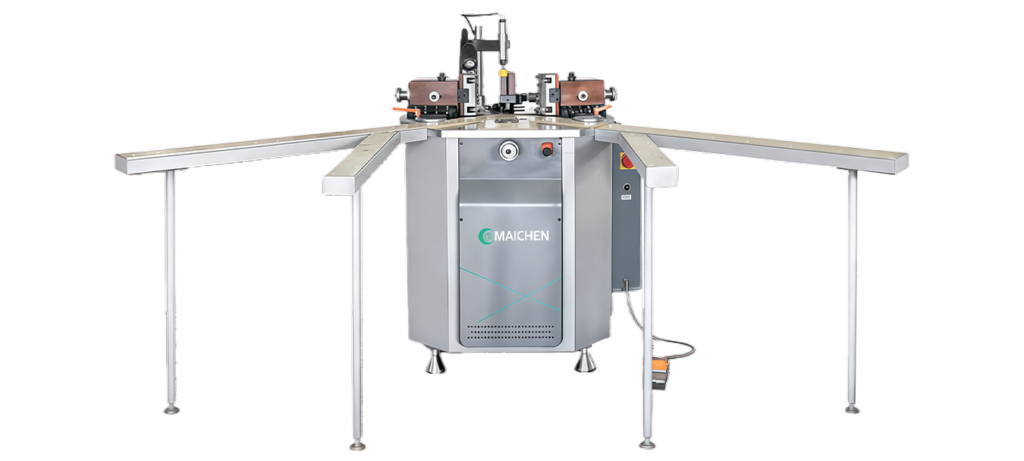
Corner crimping & punching technology represents a fundamental shift in aluminum window and door assembly methodology. This approach combines precision crimping with integrated punching capabilities to create strong, consistent corner connections in seconds rather than minutes. The Aluminum Door & Window Heavy-Duty Synchronous Corner Crimping Machine exemplifies this transformation, utilizing imported hydraulic systems for stable, reliable operation while left and right punches are driven by the same hydraulic cylinder through mechanical linkage mechanisms, achieving rigid synchronous feed of both punches.
The CNC Four-Head Corner Crimping Line further demonstrates technological advancement through servo motor operation that provides exceptional synchronization, eliminating misalignment during movement. This technology enables numerical adjustment to compensate for mechanical errors, significantly extending equipment lifespan while maintaining precision. The ability to store over 100 different profile parameters makes this equipment highly practical for diverse production requirements, enabling rapid changeover between different window and door configurations without lengthy setup processes.
Why Modern Manufacturers Are Embracing Corner Crimping Technology
Several compelling factors drive the adoption of corner crimping & punching technology in modern manufacturing environments. Labor cost increases of 25-35% in most manufacturing regions make automation increasingly essential for competitiveness. Traditional manual assembly methods require skilled operators and generate variable quality, while automated corner crimping systems deliver consistent results with minimal operator intervention. According to industry research from the International Window and Door Manufacturers Association, manufacturers implementing corner crimping technology report 40-60% productivity improvements while reducing labor requirements by 50-70%.
Quality consistency represents another critical driver. Corner crimping technology ensures uniform compression across corner connections, eliminating variations that plague manual assembly methods. The Heavy-Duty Synchronous Corner Crimping Machine’s hydraulic system drive provides stable, reliable operation with mechanical synchronization that makes adjustment simple and convenient. This consistency translates directly to improved product quality, fewer customer returns, and enhanced reputation in quality-conscious markets where window performance and reliability are non-negotiable.
The Fundamentals of Corner Crimping & Punching Technology
Understanding Corner Crimping Mechanics
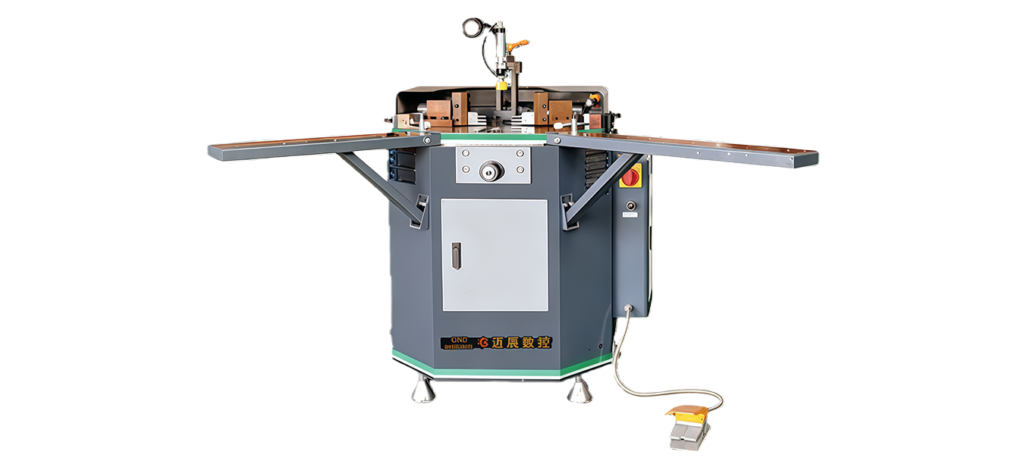
Corner crimping technology relies on precisely controlled compression of aluminum profile corners to create strong, permanent connections without additional fasteners. The Aluminum Door & Window Sink-Type Corner Crimping Machine employs hydraulic systems for stable, reliable operation, with left and right punches utilizing mechanical synchronization for simpler, more convenient adjustments. This approach ensures uniform pressure distribution across corner surfaces, creating connections that often exceed the strength of the base material itself.
The crimping process involves positioning prepared profiles in precision fixtures, then applying controlled pressure through synchronized punches that compress the corner region. The Aluminum Door & Window Heavy-Duty Synchronous Corner Crimping Machine’s synchronous feed mechanism prevents unnecessary deformation during corner assembly, improving window corner connection strength. This precise control is particularly important for wide, thick aluminum profiles where uneven pressure could cause distortion or weak spots in the assembly.
Punching Integration Benefits
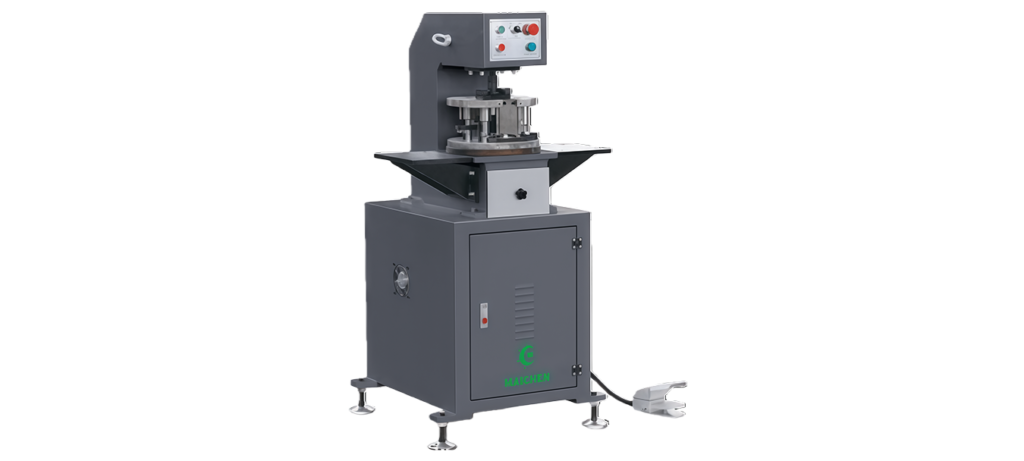
The integration of punching capabilities with corner crimping creates additional efficiency gains by eliminating separate processing steps. The Single-Head Hydraulic Punching Machine utilizes hydraulic power systems for stable, reliable operation, employing punching and shearing mechanical principles to create V-shaped grooves and installation holes for handles, locks, and other hardware components. This integration enables complete corner preparation and assembly in single equipment, reducing material handling and setup times.
The Six-Spindle Aluminum Profile Drilling Machine further enhances processing capabilities through six independent drill bits that can operate simultaneously, enabling flexible concurrent processing of multiple holes. This equipment features precision-guided drilling with adjustable depth ensuring consistent drilling results, making it ideal for batch processing of aluminum profiles, metal plates, and other materials. User-friendly control systems with programmable settings accommodate different drilling patterns, enhancing flexibility for diverse production requirements.
Material Compatibility and Processing Range
Modern corner crimping & punching equipment must accommodate diverse aluminum profile types and configurations. The Aluminum Door & Window Heavy-Duty Synchronous Corner Crimping Machine is specifically designed for 90-degree corner connections of aluminum windows and doors, with particular suitability for extra-wide and extra-thick aluminum profile corner assembly. This versatility enables manufacturers to address diverse market requirements without requiring multiple specialized machines.
The Aluminum Profile Composite Machine addresses thermal break requirements through three sets of six roller components that compress heat insulation strips inserted into aluminum profile grooves, ensuring high connection strength. This equipment adopts three sets of high-precision digital detection systems to precisely measure pressure during rolling processes for each group. Each roller group can be independently adjusted for precise control, while variable frequency drive control enables adjustable speeds for optimal processing results, accommodating diverse thermal break profile configurations.
Key Performance Metrics and Technical Specifications
Precision and Accuracy Standards
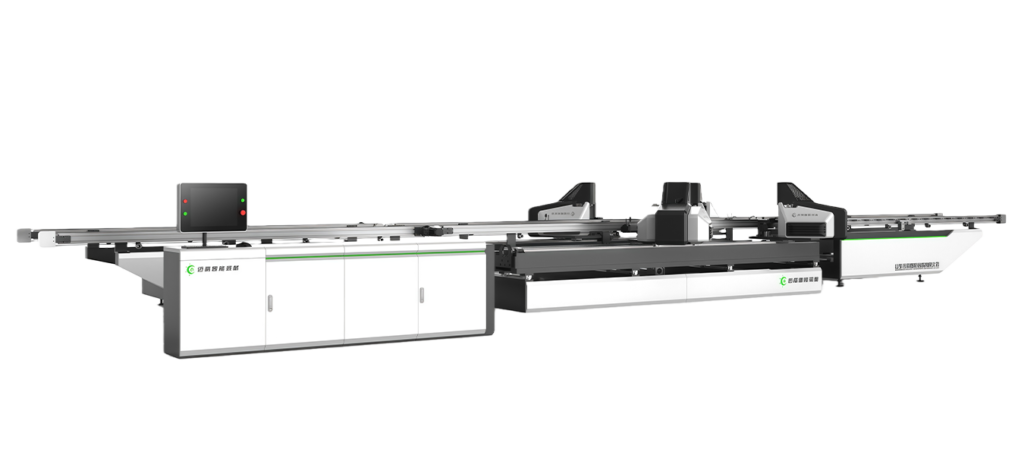
Corner crimping & punching equipment must achieve exceptional precision to ensure consistent quality across production runs. Modern equipment typically achieves positioning accuracy within 0.1mm and crimping force consistency within 5%, ensuring uniform corner connections across thousands of assemblies. The CNC Four-Head Corner Crimping Line utilizes linear square guides that provide higher precision and more reliable performance compared to hydraulic cylinders, while CNC technology enables numerical adjustment to compensate for mechanical errors.
Precision requirements vary based on application specifications. Standard residential windows may tolerate variations of 0.2-0.3mm, while high-end architectural applications often require precision within 0.1mm to ensure proper fit and weather tightness. The Heavy-Duty Synchronous Corner Crimping Machine’s mechanical synchronization ensures consistent pressure application, while adjustable punch feed distance via thread adjustment facilitates convenient tooling setup and precise control, accommodating various precision requirements.
Production Capacity and Throughput
Production capacity represents a critical consideration for corner crimping & punching equipment selection. Manual corner assembly typically requires 3-5 minutes per corner, while automated corner crimping systems can complete processing in 15-30 seconds per corner. The CNC Four-Head Corner Crimping Line features rapid operation with stepper motors enabling convenient speed adjustment and very stable transmission effects, enabling high-throughput production environments.
Equipment selection should match production volume requirements. Small workshops producing fewer than 50 windows daily may benefit from single-station equipment like the Single-Station Hydraulic Punching Machine, which utilizes hydraulic power systems for stable, reliable operation with punching and shearing capabilities. Medium-sized operations producing 50-200 windows daily typically benefit from CNC equipment like the CNC Four-Head Corner Crimping Line that balances automation investment with enhanced productivity. Large facilities producing over 200 windows daily require fully automated systems to maintain competitiveness.
Automation and Control Capabilities
Automation levels significantly impact equipment capabilities, labor requirements, and operational complexity. The CNC Four-Head Corner Crimping Line represents advanced automation with servo motor operation providing exceptional synchronization that eliminates misalignment during movement. This equipment enables numerical adjustment of tool height, position, and depth through simple numerical input, while memory functions enable direct parameter recall when using the same profile configuration.
Simpler equipment like the Aluminum Door & Window Sink-Type Corner Crimping Machine provides essential automation with hydraulic systems and mechanical synchronization while maintaining simpler operation and lower initial investment. This equipment suits operations with moderate production volumes where advanced features may represent overinvestment. The Single-Head Hydraulic Punching Machine provides basic automation with hydraulic power systems and limit switches controlling mold opening and closing heights, offering reliable operation with minimal complexity.
Comparing Corner Crimping & Punching Equipment Types
Single-Station Hydraulic Systems
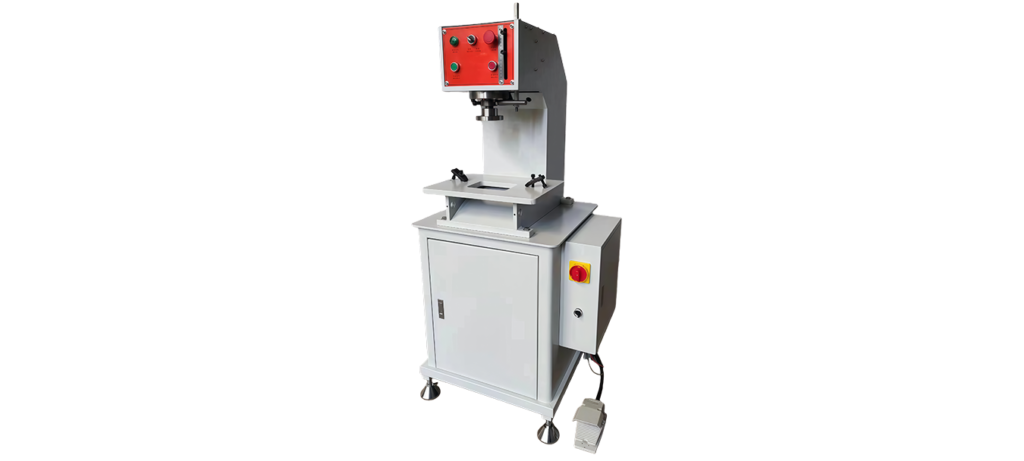
Single-station hydraulic corner crimping & punching equipment provides essential capabilities at accessible price points. The Single-Head Hydraulic Punching Machine and Single-Station Hydraulic Punching Machine both utilize hydraulic power systems for stable, reliable operation, employing punching and shearing mechanical principles to create V-shaped grooves and installation holes for handles, locks, and other hardware components. Mold opening heights are controlled by limit switches on machine panels, with lower limit switches controlling mold closing height and upper limit switches controlling mold opening height.
These machines feature simple operation with high working efficiency, making them suitable for small to medium production volumes. Stroke height adjustment through M8 bolts on panels enables convenient operation, while adjustable blocks on both sides of lower blades of steel lining molds serve as shear width adjustment blocks. By adjusting these positioning blocks, operators can regulate steel lining shear depth, providing flexibility for various processing requirements. These systems typically offer the lowest initial investment while providing substantial improvements over manual assembly methods.
Synchronous Corner Crimping Machines
Synchronous corner crimping machines represent the middle tier, offering enhanced precision and consistency through synchronized punch operation. The Aluminum Door & Window Heavy-Duty Synchronous Corner Crimping Machine utilizes left and right punches that can be independently adjusted for simple operation, employing imported hydraulic systems for stable, reliable operation. Air cooling systems ensure smooth machine operation while left and right punches are driven by the same hydraulic cylinder through mechanical linkage mechanisms, achieving rigid synchronous feed of both punches.
This synchronous approach prevents unnecessary deformation during corner assembly, improving window corner connection strength. The Heavy-Duty Synchronous Corner Crimping Machine is specifically designed for 90-degree corner connections of aluminum windows and doors, with particular suitability for extra-wide and extra-thick aluminum profile corner assembly. These machines typically offer better precision and consistency than single-station alternatives while representing moderate investment levels suitable for growing operations.
Advanced CNC Corner Crimping Lines
The most sophisticated corner crimping & punching equipment incorporates CNC technology with advanced control systems and automation capabilities. The CNC Four-Head Corner Crimping Line distinguishes itself from similar products through servo motor operation that provides numerous advantages. First, servo motor synchronization is excellent, ensuring no misalignment occurs during movement. Second, adjustment is extremely convenient, simply input values to adjust tool height, position, and depth.
This advanced equipment features impressive memory capabilities. Once parameters are set for a specific profile configuration, these parameters can be directly recalled when using the same profile configuration. Its rapid operation utilizes stepper motors for convenient speed adjustment with very stable transmission effects. Compared with traditional hydraulic equipment, servo motors provide better synchronization, higher stability, and are unaffected by temperature changes. Additionally, it can store parameters for over 100 different profiles, making it highly practical for diverse production requirements.
Integration with Production Workflows
Material Preparation and Pre-Processing
Corner crimping & punching equipment integrates most effectively when material preparation processes are properly optimized. Profile cutting must achieve precise angles and dimensions to ensure proper corner fit during crimping operations. The Six-Spindle Aluminum Profile Drilling Machine enhances preparation capabilities through six independent drill bits that can operate simultaneously for flexible concurrent processing of multiple holes, enabling complete corner preparation before final assembly.
The Aluminum Profile Composite Machine addresses thermal break profile requirements through three sets of six roller components that compress heat insulation strips inserted into aluminum profile grooves. This equipment employs three sets of high-precision digital detection systems to precisely measure pressure during rolling processes for each group, ensuring consistent thermal break performance that affects corner crimping quality. Proper material preparation ensures that corner crimping operations achieve optimal results without requiring additional processing steps.
Production Line Integration
Corner crimping & punching equipment rarely operates in isolation but rather as components of broader production systems. Effective integration requires consideration of material flow, equipment positioning, and automation connections. The CNC Four-Head Corner Crimping Line’s ability to store parameters for over 100 different profiles facilitates rapid changeover between different production runs, enabling flexible manufacturing approaches that can accommodate diverse product mixes.
Consider upstream processes including profile cutting, drilling, and thermal break processing when planning corner crimping integration. Downstream processes including sealing, hardware installation, and quality inspection must accommodate corner crimped assembly characteristics. The Aluminum Door & Window Heavy-Duty Synchronous Corner Crimping Machine’s air cooling system ensures smooth operation during continuous production cycles, supporting integration with automated production lines requiring consistent operation.
Quality Control Integration
Corner crimping & punching equipment should incorporate quality control features that ensure consistent output while providing feedback for process optimization. The CNC Four-Head Corner Crimping Line’s numerical adjustment capabilities compensate for mechanical errors through CNC technology, significantly extending equipment lifespan while maintaining precision. This approach enables continuous quality improvement without requiring equipment replacement or major modifications.
Process monitoring capabilities enable real-time quality assessment and early detection of potential issues. The Aluminum Profile Composite Machine’s three sets of high-precision digital detection systems precisely measure pressure during rolling processes for each group, providing data that can inform quality decisions and process adjustments. Integrated quality control reduces inspection requirements while ensuring consistent output, supporting continuous improvement initiatives and reducing waste.
Cost Analysis and ROI Considerations
Initial Investment Comparison
Corner crimping & punching equipment investments vary significantly based on capabilities, automation levels, and precision specifications. Beyond equipment purchase price, consider installation costs, facility modifications, training requirements, and initial tooling inventory. The CNC Four-Head Corner Crimping Line’s advanced servo motor system requires professional installation and calibration to achieve specified performance, representing additional investment. However, these initial costs should be evaluated against long-term value, as more capable equipment often provides superior return on investment through enhanced productivity and lower operating costs.
Operational Cost Savings
Operational costs represent significant savings opportunities through corner crimping & punching automation. Labor costs typically decrease by 50-70% as automated systems reduce operator requirements and dependency on skilled manual assemblers. The Single-Station Hydraulic Punching Machine’s simple operation with high working efficiency reduces labor requirements compared to manual assembly while maintaining accessible investment levels. Material waste decreases by 30-50% as precise punching and crimping reduces errors and rework requirements.
Energy consumption varies between equipment types. Hydraulic systems like those employed in the Aluminum Door & Window Heavy-Duty Synchronous Corner Crimping Machine provide stable operation through air cooling systems that optimize energy efficiency. The CNC Four-Head Corner Crimping Line’s servo motor operation provides better synchronization, higher stability, and is unaffected by temperature changes, often resulting in lower energy consumption compared to traditional hydraulic equipment while providing superior performance.
ROI Calculation and Payback Period
Return on investment analysis should consider productivity improvements, labor savings, quality enhancements, and competitive advantages enabled by corner crimping & punching technology. Manufacturers implementing automated corner crimping systems typically report 40-60% productivity improvements, 50-70% labor reduction, and 60-80% quality improvement compared to manual assembly methods. According to manufacturing technology studies, these improvements typically generate ROI within 1.5-3 years for most manufacturing operations.
The following table illustrates typical ROI metrics for different categories of corner crimping & punching equipment based on industry data:
| Equipment Category | Annual Labor Savings | Quality Improvement | Payback Period | 5-Year Total Savings |
|---|---|---|---|---|
| Single-Station Hydraulic Systems | 15,000-25,000 | 40-60% | 1.5-2.5 years | 75,000-125,000 |
| Synchronous Corner Crimping Machines | 25,000-40,000 | 60-70% | 1.5-2.5 years | 125,000-200,000 |
| Advanced CNC Corner Crimping Lines | 40,000-70,000 | 70-90% | 1.5-2 years | 200,000-350,000 |
The CNC Four-Head Corner Crimping Line’s ability to store parameters for over 100 different profiles and its memory functions for direct parameter recall significantly reduce setup times and changeover costs, directly contributing to improved ROI. Additionally, CNC technology enabling numerical adjustment to compensate for mechanical errors extends equipment lifespan, providing long-term value beyond initial productivity gains.
Implementation and Best Practices
Equipment Selection Framework
Selecting appropriate corner crimping & punching equipment requires systematic evaluation of production requirements, constraints, and objectives. Begin by thoroughly documenting current production volumes, product mix, quality requirements, and operational challenges. Analyze your corner assembly bottlenecks, quality issues, and labor constraints to identify specific improvement opportunities. The Aluminum Door & Window Heavy-Duty Synchronous Corner Crimping Machine’s particular suitability for extra-wide and extra-thick aluminum profile corner assembly makes it ideal for manufacturers serving commercial and high-end residential markets.
Project future growth and diversification plans to ensure selected equipment can accommodate evolving requirements. Consider the range of profile types, corner configurations, and production volumes you may need to address in the future. The CNC Four-Head Corner Crimping Line’s ability to store parameters for over 100 different profiles provides inherent flexibility, accommodating diverse production requirements as your product line evolves. Equipment selection should balance current needs with future capabilities to avoid premature replacement or obsolescence.
Installation and Setup Considerations
Proper installation and setup significantly impact equipment performance and time-to-benefit. Corner crimping & punching equipment requires careful foundation preparation, utility connections, and calibration to achieve specified performance. The CNC Four-Head Corner Crimping Line’s linear square guides require precise installation and alignment to achieve superior precision compared to hydraulic cylinders, making professional installation essential for optimal performance.
Training represents another critical implementation consideration. The CNC Four-Head Corner Crimping Line’s advanced control capabilities require comprehensive training for optimal utilization, particularly for parameter programming and profile configuration management. Even simpler equipment like the Single-Station Hydraulic Punching Machine benefits from structured training on proper operation, maintenance, and troubleshooting to maximize equipment value and ensure operator safety.
Operator Training and Skill Development
Operator training requirements vary based on equipment complexity and automation levels. Basic hydraulic systems like the Single-Head Hydraulic Punching Machine require 1-2 weeks of training for proficiency, while advanced CNC systems like the CNC Four-Head Corner Crimping Line may require 3-4 weeks for comprehensive understanding of programming, parameter management, and troubleshooting. Plan for initial training sessions, ongoing skill development, and cross-training to ensure production continuity.
Training should cover equipment operation, programming capabilities, maintenance procedures, and quality control processes. The CNC Four-Head Corner Crimping Line’s numerical adjustment capabilities and memory functions require operators to understand parameter relationships and configuration management. Document training procedures and create reference materials to support knowledge retention and reduce dependency on individual operators, ensuring sustainable performance improvement.
Maintenance and Reliability Considerations
Routine Maintenance Requirements
Corner crimping & punching equipment requires regular maintenance to maintain optimal performance and extend equipment lifespan. Daily maintenance should include hydraulic system inspection, lubrication of moving components, and verification of safety systems. The Aluminum Door & Window Heavy-Duty Synchronous Corner Crimping Machine’s imported hydraulic system requires regular fluid checks and filter replacements to maintain stable, reliable operation.
Weekly maintenance tasks typically include more comprehensive inspections of mechanical components, alignment verification, and calibration checks. The CNC Four-Head Corner Crimping Line’s servo motor systems and linear square guides require periodic inspection and calibration to maintain precision. Monthly maintenance should include comprehensive system checks, preventive component replacement, and performance testing to identify developing issues before they cause failures.
Extending Equipment Lifespan
Several practices significantly extend corner crimping & punching equipment lifespan and maintain precision over years of operation. Use high-quality replacement components from reputable suppliers rather than inferior alternatives that may offer immediate cost savings but result in reduced precision and premature failure. The CNC Four-Head Corner Crimping Line’s ability to compensate for mechanical errors through numerical adjustment extends equipment lifespan, but this capability requires regular calibration and proper maintenance.
Implement preventive maintenance schedules that address potential issues before they cause failures. Replace components according to usage metrics rather than waiting for failure, particularly for wear items such as seals, bearings, and guide systems. The Heavy-Duty Synchronous Corner Crimping Machine’s mechanical synchronization requires periodic inspection and adjustment to maintain precision. Document maintenance activities and track component lifespans to optimize replacement intervals and minimize unplanned downtime.
Common Issues and Troubleshooting
Corner crimping & punching equipment may experience several common issues that operators should understand and address promptly. Inconsistent crimping quality typically results from improper alignment, worn tooling, or hydraulic pressure variations. The CNC Four-Head Corner Crimping Line’s numerical adjustment capabilities can compensate for mechanical errors, but operators must understand proper adjustment procedures and when adjustment is appropriate versus when component replacement is required.
Hydraulic system issues represent another common challenge, particularly for equipment like the Aluminum Door & Window Heavy-Duty Synchronous Corner Crimping Machine that relies on hydraulic power. Leaks, pressure fluctuations, and contamination can affect performance and quality. Regular fluid analysis, filter replacement, and system inspection prevent most hydraulic issues. The Single-Head Hydraulic Punching Machine’s limit switches controlling mold opening and closing heights require periodic adjustment and calibration to maintain consistent operation.
Future Trends and Technology Advancements
Industry 4.0 Integration
Corner crimping a& punching technology continues evolving toward greater integration with Industry 4.0 principles and smart manufacturing capabilities. The CNC Four-Head Corner Crimping Line’s advanced servo motor operation and parameter storage capabilities represent current integration capabilities that will continue evolving. Future systems will feature enhanced connectivity, real-time monitoring, and data-driven optimization across multiple facilities.
Internet of Things technology will enable real-time performance monitoring, predictive maintenance, and remote diagnostics. Advanced analytics capabilities will provide actionable insights for continuous improvement and process optimization. Equipment selected today should provide upgrade paths for enhanced connectivity and integration capabilities as these technologies mature, ensuring continued relevance and value as manufacturing evolves.
Enhanced Automation and Robotics
Automation and robotics integration will increasingly enhance corner crimping & punching capabilities through automated material handling, tool change, and quality inspection. The CNC Four-Head Corner Crimping Line’s rapid operation with stepper motors and convenient speed adjustment provides foundation for further automation integration. Future systems will feature automated profile loading and unloading, automatic tool change, and integrated quality inspection without operator intervention.
Robotics integration will reduce operator skill requirements while improving consistency and throughput. Collaborative robots will work alongside operators to handle repetitive tasks while humans focus on higher-value activities. When selecting equipment today, consider upgrade paths for enhanced automation and robotics integration as these technologies mature and become commercially viable, ensuring long-term competitiveness.
Sustainability and Energy Efficiency
Sustainability considerations will increasingly influence corner crimping & punching equipment design and selection. Energy-efficient designs, waste reduction features, and sustainable manufacturing practices will become standard requirements. The CNC Four-Head Corner Crimping Line’s servo motor operation provides better synchronization, higher stability, and is unaffected by temperature changes, often resulting in lower energy consumption compared to traditional hydraulic equipment.
Regulatory pressures and customer expectations will drive adoption of sustainable manufacturing practices. Equipment selection should consider energy consumption, waste generation, and efficiency metrics. Corner crimping & punching equipment with advanced control systems that optimize energy usage and reduce material waste will provide increasing competitive advantages as sustainability becomes more important to customers and regulators.
Conclusion
Key Benefits Recap
Corner crimping & punching technology delivers substantial benefits across multiple dimensions of window and door manufacturing operations. Productivity improvements of 40-60% enable manufacturers to increase output without proportional increases in labor or facility investments. The CNC Four-Head Corner Crimping Line’s rapid operation with convenient speed adjustment and very stable transmission effects supports high-throughput production environments while maintaining consistent quality.
Quality enhancements represent another critical benefit, with corner crimping technology delivering 60-90% quality improvement compared to manual assembly methods. The Aluminum Door & Window Heavy-Duty Synchronous Corner Crimping Machine’s rigid synchronous feed mechanism prevents unnecessary deformation during corner assembly, improving window corner connection strength. This consistency translates directly to improved product quality, fewer customer returns, and enhanced reputation in quality-conscious markets.
Making Your Selection Decision
Selecting appropriate corner crimping & punching equipment requires careful evaluation of your specific requirements, constraints, and objectives. Consider your production volumes, product mix, quality requirements, and growth projections. The Single-Head Hydraulic Punching Machine provides essential capabilities at accessible price points suitable for small to medium operations, while the CNC Four-Head Corner Crimping Line delivers advanced capabilities for high-volume, diverse production environments.
Evaluate total cost of ownership rather than initial investment alone, considering productivity gains, labor savings, quality improvements, and competitive advantages. The ROI analysis demonstrates that even substantial investments in advanced equipment typically generate returns within 1.5-3 years through operational improvements. Consider manufacturer support, spare parts availability, and technical capabilities when making selection decisions, ensuring long-term value and equipment reliability.
Implementation Path Forward
Begin your corner crimping & punching implementation by thoroughly assessing your current operations and identifying improvement opportunities. Document current production volumes, quality metrics, labor requirements, and operational challenges. Conduct comprehensive ROI analysis based on your specific circumstances, considering productivity improvements, labor savings, and quality enhancements achievable through automation.
Engage with experienced equipment suppliers who understand your industry and can provide appropriate solutions for your specific requirements. Request demonstrations and reference visits to observe equipment operation under real-world conditions. Develop detailed implementation plans including installation, training, and startup support. The CNC Four-Head Corner Crimping Line’s advanced capabilities require comprehensive training for optimal utilization, so plan accordingly to ensure maximum value from your investment.
Corner crimping & punching technology continues transforming window and door manufacturing by delivering unprecedented combinations of productivity, quality, and efficiency. Manufacturers who strategically implement this technology today position themselves for sustained success in increasingly competitive markets. By carefully evaluating your requirements, selecting appropriate equipment, and implementing with proper planning and training, you ensure your investment delivers maximum value throughout its operational life while positioning your operation for continued growth and competitiveness in the evolving manufacturing landscape.
FAQ
What is corner crimping & punching?
Corner crimping & punching is an automated assembly process that compresses aluminum profile corners while creating installation holes in single operation. This technology creates strong, permanent connections without additional fasteners, replacing traditional mechanical fasteners or welding for window and door manufacturing.
What are the benefits of corner crimping vs traditional assembly?
Corner crimping & punching provides 40-60% productivity improvements, 50-70% labor reduction, and 60-90% quality enhancement compared to manual assembly methods. Automated systems complete corner assembly in 15-30 seconds versus 3-5 minutes for manual methods while ensuring consistent quality.
What types of profiles can corner crimping machines process?
Corner crimping machines process various aluminum profiles including standard residential windows, commercial doors, curtain wall systems, and extra-wide or extra-thick profiles. Advanced equipment like CNC Four-Head Corner Crimping Lines can store parameters for over 100 different profile configurations, enabling rapid changeover.
Need Help Choosing the Right Corner Crimping & Punching Equipment?
If you’re unsure about which corner crimping & punching machine is best for your aluminum window and door production, our experts are here to help. Contact us today for a personalized consultation, and ensure your manufacturing operation achieves maximum productivity and quality. Don’t wait until your competitors get ahead—get in touch now to upgrade your corner assembly capabilities and boost your profitability!