Cutting and Drilling-Milling Center Selection Guide: What to Look for in 2026
Table of Contents
Understanding the Evolution of Cutting and Drilling-Milling Centers
The Manufacturing Landscape in 2026
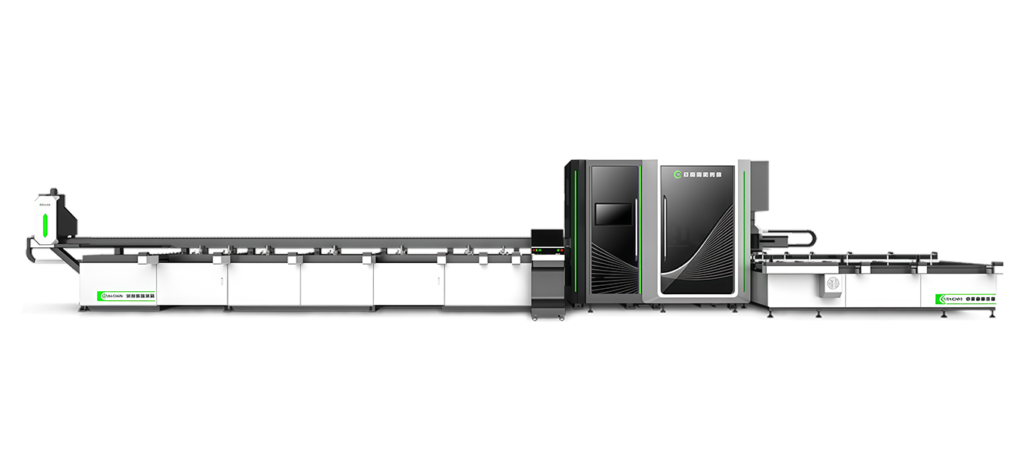
Modern aluminum fabrication has undergone dramatic transformation over the past five years, driven by increasing demand for precision, efficiency, and automation in window, door, and curtain wall manufacturing. The global market for aluminum processing equipment continues expanding, with compound annual growth rates exceeding 7% as construction projects demand more complex architectural profiles and tighter tolerances. Traditional single-function equipment no longer meets contemporary production requirements, prompting manufacturers to seek integrated solutions that combine cutting, drilling, and milling capabilities in single platforms.
The shift toward integrated processing centers represents not merely an equipment upgrade but a fundamental reimagining of production workflows. Contemporary cutting and drilling-milling centers incorporate advanced CNC systems, multi-axis control, and intelligent automation features that were unimaginable in previous generations. These machines enable manufacturers to process complete profile components in single setups, dramatically reducing material handling, setup times, and accumulated errors across multiple machining operations.
Why 2026 Marks a Turning Point
Several converging factors make 2026 particularly significant for cutting and drilling-milling center adoption. Labor costs have increased by 25-35% in most manufacturing regions, making automation increasingly essential for competitiveness. Simultaneously, customer specifications demand precision within ±0.1mm tolerances for high-end architectural applications, requirements that single-function equipment struggles to consistently meet. Energy efficiency regulations have also tightened, favoring integrated systems that optimize power consumption across multiple operations.
Industry research indicates that manufacturers using integrated cutting and drilling-milling centers report 40-60% productivity improvements compared to traditional multi-machine approaches. These gains stem from reduced changeover times, continuous operation capabilities, and significantly lower labor requirements. As equipment technology continues advancing, 2026 represents an optimal entry point for manufacturers seeking to upgrade their production capabilities while future-proofing their investments.
Core Functions and Capabilities of Modern Cutting and Drilling-Milling Centers
Essential Machining Operations
Contemporary cutting and drilling-milling centers must provide comprehensive processing capabilities that cover the complete range of aluminum profile fabrication requirements. Primary functions include precise cutting at 45-degree, 90-degree, and arbitrary angles to accommodate diverse frame configurations. Drilling capabilities must encompass various hole types including support holes, glue injection holes, lock holes, handle holes, and installation holes, all with positioning accuracy within 0.1mm tolerances.
Milling operations form another critical capability, addressing requirements for hardware slots, corner cuts, and complex surface features. Advanced machines like the Intelligent Sawing & Milling Machining Center feature 13 axes and three specialized feed cutting methods, with front, rear, left, right, upper, and lower side spindle milling holes distributed across five groups. This comprehensive approach enables processing of complex profiles without multiple machine transfers, dramatically improving precision and reducing cycle times.
Advanced Processing Features
Beyond basic cutting, drilling, and milling, modern cutting and drilling-milling centers incorporate specialized capabilities that differentiate premium equipment from basic alternatives. Laser marking and labeling functions enable automated part identification and traceability, critical for quality control and project management. The Intelligent Sawing & Milling Machining Center includes two aligned laser marking devices on the right side, enabling simultaneous corner brace hole processing and laser mullion marking.
Corner cutting capabilities represent another advanced feature, with specialized mechanisms for processing complex corner configurations while maintaining precision. The Super CNC Saw & Milling Integrated Workstation features independent corner cutting devices with separate tail edge cutting devices, providing capabilities that extend beyond simple speed enhancement. These features enable manufacturers to address sophisticated architectural requirements that would be impossible or extremely costly with conventional equipment.
Multi-Channel Processing Systems
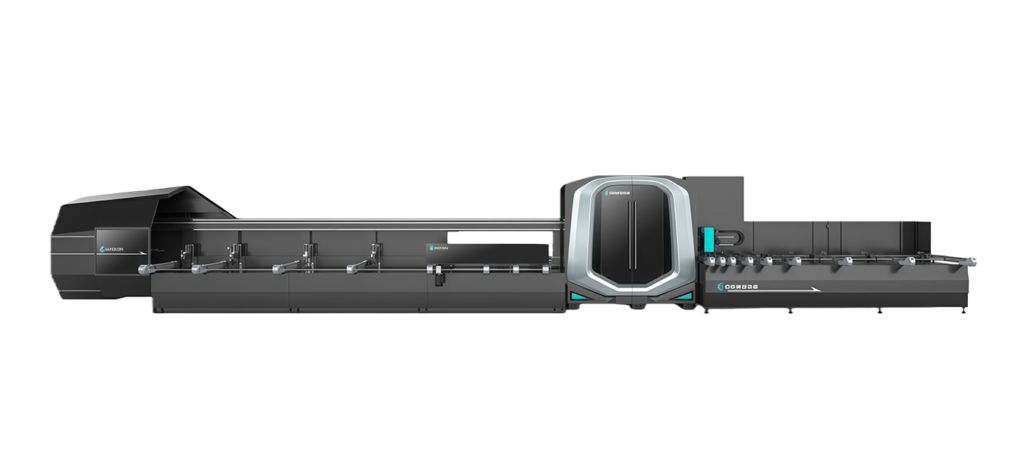
The most advanced cutting and drilling-milling centers incorporate multi-channel processing architectures that enable simultaneous operations across independent work zones. The Super CNC Saw & Milling Integrated Workstation exemplifies this approach with its five-channel system: Channel 1 featuring laser independent rails, Channel 2 with front spindle independent stations, Channel 3 incorporating rear lower spindle independent stations, Channel 4 with upper spindle independent stations, and Channel 5 featuring upper saw arbitrary angle cutting capabilities.
These multi-channel architectures eliminate interference between different processing operations, enabling highly efficient collaborative workflows. Independent processing areas allow different operations to proceed simultaneously without waiting for previous operations to complete, dramatically improving throughput. The integration of these channels through central control systems, such as the HAN five-channel system, ensures coordinated operation while maintaining the independence and efficiency of each processing zone.
Key Technical Specifications to Evaluate
Precision and Accuracy Metrics
Precision represents the most critical specification for cutting and drilling-milling centers, directly impacting product quality and customer satisfaction. Modern equipment should achieve cutting accuracy within ±0.1mm for dimensional tolerances, with angular precision ensuring 45-degree cuts maintain true 45-degree angles without deviation. The Engineering-Grade CNC Aluminum Profile Sawing Center exemplifies precision engineering through its cast integral structure for the sawing section, processed by horizontal machining centers in single operations to guarantee sawing precision and rotational concentricity.
Positioning accuracy for drilling and milling operations should achieve positioning within 0.05mm, ensuring holes and slots align perfectly during final assembly. The Upgraded Cutting Saw & Milling Integrated Workstation features double independent angle bracket drilling and milling units that complete hole processing during cutting operations using saw cutting as reference, ensuring higher hole position accuracy. Look for equipment featuring high-precision linear guides, ball screws, and servo systems that maintain accuracy across thousands of cycles.
Automation and Control Systems
Automation capabilities determine the labor requirements, consistency, and throughput potential of cutting and drilling-milling centers. Advanced CNC systems with multi-axis control enable complex processing operations without operator intervention. The Engineering-Grade CNC Aluminum Profile Sawing Center employs Inovance Technology operating systems compatible with optimization software and supporting multi-axis linkage, providing user-friendly interactive interfaces with intuitive operation.
Intelligent mechanical arms with automatic error correction, material clamping sensing, automatic rotation, and smart memory functions significantly reduce operator dependency. The Super CNC Saw & Milling Integrated Workstation features smart mechanical arms with automatic error correction, material clamping sensing, automatic rotation, and smart memory functions that enhance operational efficiency while reducing errors. These automation capabilities enable unattended operation for extended periods, maximizing equipment utilization and reducing labor costs.
Material Handling and Processing Capabilities
Effective material handling systems significantly impact productivity and ease of operation. Automatic feeding mechanisms that handle full-length profiles with automatic loading, fully automatic cutting, and automatic unloading after cutting completion streamline operations. The Engineering-Grade CNC Aluminum Profile Sawing Center supports full profile feeding with automatic material feeding, fully automatic cutting, and automatic unloading after cutting completion, creating coordinated, responsive, safe, and reliable processes.
Material waste reduction features provide substantial cost savings, particularly when working with expensive aluminum profiles. Automatic scrap length recognition and different processing based on remaining tail length prevent material blockage and waste. The Intelligent Sawing & Milling Machining Center supports ultra-short material processing with materials as short as 1.2 meters, preventing material waste. Material automatic error correction functions alert systems when materials are placed incorrectly, preventing processing errors that waste valuable materials.
Integration and Compatibility Considerations
Software Integration Capabilities
Modern cutting and drilling-milling centers must integrate seamlessly with design software and production management systems to maximize efficiency and reduce errors. Compatibility with mainstream door and window design software enables direct data transmission with immediate processing initiation after data transfer. The Engineering-Grade CNC Aluminum Profile Sawing Center’s CNC system adopts Inovance Technology operating systems that can interface with optimization software and support multi-axis linkage, enabling seamless workflow from design to production.
Software integration capabilities eliminate manual data entry errors, reduce programming time, and enable rapid changeover between different product configurations. Equipment that supports industry-standard file formats and communication protocols provides greater flexibility and future compatibility. Integrated control systems should offer user-friendly interfaces that enable easy switching between automatic and manual modes, support one-touch startup, and provide visual positioning through mechanical arm handwheels for convenient operation.
Production Line Integration
Cutting and drilling-milling centers rarely operate in isolation but rather as components of broader production systems. Equipment must integrate effectively with upstream and downstream processes, including material storage, assembly, and quality inspection operations. The Intelligent Sawing & Milling Machining Center features a circulation feeding platform supporting continuous workflow with automatic waste recovery, enabling integration with automated material handling systems.
Consider equipment that offers standardized interfaces and communication protocols for integration with automation systems, inventory management, and quality control systems. Modular designs that can be configured for different production layouts provide greater flexibility for facility design and future expansion. The Upgraded Cutting Saw & Milling Integrated Workstation features a right-side worktable transverse movement eliminating material head sticking concerns, with four-side, four drilling and milling spindles featuring independent servo control that eliminates spindle avoidance considerations.
Scalability and Upgrade Potential
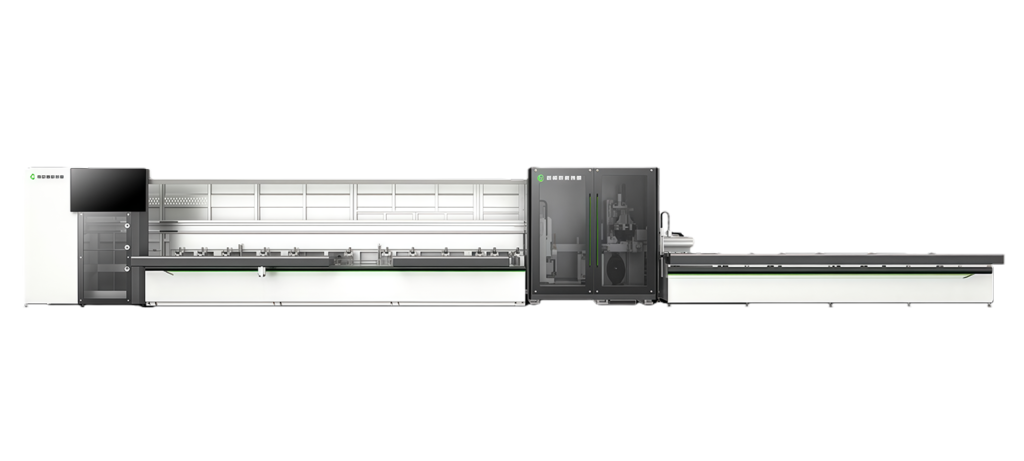
Manufacturing requirements evolve over time, making equipment scalability and upgrade potential critical considerations. Look for cutting and drilling-milling centers with modular architectures that enable additional capabilities to be added as requirements evolve. The Super CNC Saw & Milling Integrated Workstation’s five-channel system provides inherent scalability, with independent channels that can be optimized for different processing requirements as production needs change.
Software upgrade capabilities ensure equipment remains current with technological advances and industry standards. Equipment from established manufacturers typically provides long-term support for software updates and feature enhancements. The Intelligent Sawing & Milling Machining Center features machined parts with extended warranties, demonstrating manufacturer commitment to long-term support and reliability. Consider upgrade paths for additional spindles, laser systems, or automation features that can be added without complete equipment replacement.
Comparing Different Types of Cutting and Drilling-Milling Centers
Entry-Level Integrated Workstations
Entry-level cutting and drilling-milling centers provide essential integrated capabilities while maintaining accessible pricing. These machines typically combine basic cutting and drilling functions with limited automation, suitable for small to medium production volumes. While offering fewer advanced features than premium alternatives, entry-level integrated workstations still provide significant advantages over separate machines by reducing material handling and improving precision.
Manufacturers with limited budgets or moderate production requirements may find entry-level integrated workstations provide optimal value. These machines typically feature fewer processing channels, reduced automation, and basic CNC controls compared to premium alternatives. However, they still deliver substantial productivity improvements over conventional equipment while representing lower capital investments. Consider upgrade capabilities and scalability when evaluating entry-level options, ensuring equipment can grow with business requirements.
Engineering-Grade Precision Centers
Engineering-grade cutting and drilling-milling centers represent the middle tier, offering enhanced precision, reliability, and automation capabilities suitable for demanding production environments. The Engineering-Grade CNC Aluminum Profile Sawing Center exemplifies this category with its cast integral sawing section structure processed by horizontal machining centers, ensuring sawing precision and rotational concentricity through single-operation processing.
These machines typically incorporate advanced construction techniques, premium components, and sophisticated control systems that deliver consistent performance under demanding production conditions. The Engineering-Grade CNC Aluminum Profile Sawing Center employs welding structures and mechanical sawing structures that have undergone professional mechanical dynamics analysis and finite element analysis, optimizing geometric design. This category suits manufacturers serving quality-sensitive markets where precision and consistency are non-negotiable.
Advanced Multi-Channel Intelligent Centers
The most sophisticated cutting and drilling-milling centers feature multi-channel processing architectures, comprehensive automation, and advanced intelligent capabilities. The Super CNC Saw & Milling Integrated Workstation represents this category with its five-channel system including laser independent rails, front spindle independent stations, rear lower spindle independent stations, upper spindle independent stations, and upper saw arbitrary angle cutting capabilities.
These advanced machines typically incorporate independent processing zones that eliminate interference between operations, enabling highly efficient collaborative workflows. The Super CNC Saw & Milling Integrated Workstation features rail-type laser cutting devices with longer strokes for angle hole and glue hole processing without time loss, smart mechanical arms with automatic error correction and material clamping sensing, upper saw blade arbitrary angle cutting for any angle and corner cuts, and independent corner cutting devices. This category suits high-volume manufacturers with demanding quality requirements and complex processing needs.
Cost Considerations and ROI Analysis
Initial Investment Requirements
Cutting and drilling-milling center investments vary dramatically based on capabilities, automation levels, and precision specifications. Entry-level integrated workstations typically range from 50,000 to 100,000, offering essential integrated capabilities at accessible price points. Engineering-grade precision centers generally cost between 100,000 and 250,000, incorporating enhanced construction, precision components, and advanced control systems. Advanced multi-channel intelligent centers represent the highest investment category, typically ranging from 250,000 to 500,000 or more depending on configuration and capabilities.
Beyond equipment purchase price, consider installation costs, facility modifications, training requirements, and initial spare parts inventory. The Engineering-Grade CNC Aluminum Profile Sawing Center requires professional installation and calibration to achieve specified precision, representing additional investment. However, these initial costs should be evaluated against long-term value rather than considered in isolation, as more capable equipment often provides superior return on investment through enhanced productivity and lower operating costs.
Operational Cost Factors
Operational costs significantly impact total ownership costs over equipment lifespan. Labor costs represent major savings opportunities, with automated cutting and drilling-milling centers reducing labor requirements by 50-75% compared to conventional equipment. Energy consumption varies considerably between models, with more efficient designs providing substantial savings over continuous operation. The Intelligent Sawing & Milling Machining Center features industrial-grade fully enclosed metal plate housings that are both aesthetically appealing and safe, incorporating energy-efficient design principles.
Maintenance costs vary based on component quality, construction methods, and service support requirements. The Engineering-Grade CNC Aluminum Profile Sawing Center adopts PEK guides and racks as well as high-strength ball screws, providing shorter minimum travel, higher precision, and more stable material pressing modes that significantly improve processing accuracy and product consistency while reducing maintenance requirements. Consider total maintenance costs over five years when evaluating alternatives, including component replacement frequency, service availability, and downtime implications.
Return on Investment Calculations
Return on investment analysis should consider productivity improvements, labor savings, quality enhancements, and competitive advantages enabled by cutting and drilling-milling centers. Manufacturers using integrated centers typically report 40-60% productivity improvements, 50-75% labor reduction, and 80-90% quality improvement compared to conventional approaches. These improvements typically generate ROI within 2-4 years for most manufacturing operations.
The following table illustrates typical ROI metrics for different categories of cutting and drilling-milling centers based on industry data:
| Equipment Category | Annual Labor Savings | Quality Improvement | Payback Period |
|---|---|---|---|
| Entry-Level Integrated Workstation | 25,000-40,000 | 30-50% | 2.5-3.5 years |
| Engineering-Grade Precision Center | 40,000-70,000 | 50-70% | 2-3 years |
| Advanced Multi-Channel Intelligent Center | 70,000-120,000 | 70-90% | 1.5-2.5 years |
The Intelligent Sawing & Milling Machining Center features tool travel milling methods where materials remain clamped during milling hole/slot processes while milling tools move, avoiding mechanical arm movement errors caused by milling resistance. This approach significantly improves quality while reducing scrap rates, directly contributing to ROI through material savings and reduced rework. Calculate ROI based on your specific production volumes, labor costs, and quality requirements to determine appropriate investment levels for your operation.
Making the Final Decision: Selection Framework
Assessing Your Production Requirements
Begin selection by thoroughly documenting your current and projected production requirements. Analyze your product mix, volume requirements, precision specifications, and delivery lead times. Consider current challenges with existing equipment, including bottlenecks, quality issues, and labor constraints. The Upgraded Cutting Saw & Milling Integrated Workstation features three-zone layout including long-stroke drilling milling zones, double rear angle support drilling milling zones, and cutting zones, enabling diverse processing requirements to be addressed efficiently.
Project future growth and diversification plans to ensure selected equipment can accommodate evolving requirements. Consider the range of profile types, materials, and processing operations you may need to address in the future. The Super CNC Saw & Milling Integrated Workstation’s five-channel system provides inherent flexibility, with independent processing zones that can be optimized for different requirements as your product line evolves. Equipment selection should balance current needs with future capabilities to avoid premature replacement or obsolescence.
Evaluating Manufacturer Capabilities
Manufacturer capabilities significantly impact equipment quality, reliability, and long-term support. Consider manufacturing experience, technical capabilities, quality systems, and service infrastructure. The Intelligent Sawing & Milling Machining Center employs casting integral technology for machine bases and major components, minimizing deformation and improving stability through CNC machining center milling and drilling/tapping processing. This level of manufacturing sophistication indicates engineering excellence and quality commitment.
Service and support capabilities represent critical differentiators, particularly for complex equipment requiring specialized technical expertise. Evaluate manufacturer service networks, response times, spare parts availability, and technical support quality. The Engineering-Grade CNC Aluminum Profile Sawing Center’s CNC system employs Inovance Technology operating systems compatible with optimization software, indicating partnerships with established technology providers. Consider manufacturer financial stability and long-term commitment to the market, ensuring ongoing support throughout equipment lifespan.
Implementation and Training Considerations
Implementation planning significantly impacts project success and time-to-benefit. Consider installation requirements, facility preparation, operator training, and startup support. The Engineering-Grade CNC Aluminum Profile Sawing Center can transport full profiles with automatic feeding, fully automatic cutting, and automatic unloading after cutting completion, requiring careful facility planning for material flow optimization. Professional installation and calibration ensure equipment achieves specified performance.
Training requirements vary based on equipment complexity and operator expertise levels. The Super CNC Saw & Milling Integrated Workstation’s five-channel HAN intelligent control system integrates overall operations for smarter user experiences but requires comprehensive training for optimal utilization. Plan for initial training sessions, ongoing skill development, and cross-training to ensure multiple operators can maintain production continuity. Consider remote monitoring and diagnostic capabilities that enable manufacturer support without site visits, reducing downtime and support costs.
Common Mistakes to Avoid When Selecting Cutting and Drilling-Milling Centers
Underestimating Automation Requirements
One frequent mistake involves selecting cutting and drilling-milling centers with insufficient automation capabilities for actual production requirements. Many manufacturers underestimate the labor savings and consistency improvements achievable through appropriate automation. The Super CNC Saw & Milling Integrated Workstation’s five-channel system with independent processing zones eliminates manual material handling between operations, dramatically reducing labor requirements while improving consistency.
When evaluating automation capabilities, consider not only current production volumes but also future growth projections. Equipment that requires significant operator intervention may limit scalability and constrain growth. Calculate the total labor cost impact over equipment lifespan, recognizing that automated systems typically represent superior value over time despite higher initial investment.
Ignoring Software Integration Capabilities
Software integration capabilities represent another frequently underestimated factor. Modern cutting and drilling-milling centers must integrate seamlessly with design software and production management systems to maximize efficiency. The Engineering-Grade CNC Aluminum Profile Sawing Center’s CNC system employs Inovance Technology operating systems that can interface with optimization software, enabling seamless workflow from design to production.
Many manufacturers focus exclusively on hardware specifications while overlooking software integration capabilities. This approach limits productivity gains and increases error potential through manual data entry. Ensure selected equipment supports industry-standard file formats and communication protocols, providing flexibility and future compatibility as your software environment evolves.
Overlooking Maintenance and Support Requirements
Maintenance and support requirements significantly impact total ownership costs but are frequently overlooked during selection. The Engineering-Grade CNC Aluminum Profile Sawing Center adopts PEK guides and racks as well as high-strength ball screws, providing reduced maintenance requirements through premium components. Equipment with robust construction and quality components typically provides superior long-term value despite higher initial costs.
Evaluate manufacturer service capabilities, spare parts availability, and technical support quality before making purchasing decisions. Equipment from established manufacturers with strong service networks typically provides better long-term value through reduced downtime and faster issue resolution. Consider maintenance costs over five years when comparing alternatives, not just initial purchase price.
Future Trends in Cutting and Drilling-Milling Center Technology
Increased Integration and Connectivity
The future of cutting and drilling-milling centers involves deeper integration with broader manufacturing systems and enhanced connectivity capabilities. Internet of Things technology enables real-time monitoring, predictive maintenance, and remote diagnostics. The Intelligent Sawing & Milling Machining Center’s compatibility with mainstream door and window software enables immediate processing initiation after data transfer, representing current integration capabilities that will continue evolving.
Cloud-based systems will enable enhanced collaboration, real-time production monitoring, and data-driven optimization across multiple facilities. Advanced analytics capabilities will provide actionable insights for continuous improvement and predictive maintenance. Equipment selected today should provide upgrade paths for enhanced connectivity and integration capabilities as these technologies mature.
Enhanced Artificial Intelligence Capabilities
Artificial intelligence will increasingly enhance cutting and drilling-milling center capabilities through automated programming, predictive quality control, and adaptive processing. The Super CNC Saw & Milling Integrated Workstation’s smart mechanical arms with automatic error correction represent current AI applications that will become increasingly sophisticated. Future systems will feature self-optimizing capabilities, automatically adjusting parameters for optimal performance.
AI-powered systems will reduce operator skill requirements while improving consistency and quality. Predictive maintenance capabilities will anticipate component failures before they occur, reducing unplanned downtime. When selecting equipment today, consider upgrade paths for enhanced AI capabilities as these technologies mature and become commercially viable.
Sustainability and Energy Efficiency
Sustainability considerations will increasingly influence cutting and drilling-milling center design and selection. Energy-efficient designs, waste reduction features, and sustainable material handling approaches will become standard requirements. The Intelligent Sawing & Milling Machining Center’s industrial-grade fully enclosed metal plate housing incorporates energy-efficient design principles that will become increasingly important.
Regulatory pressures and customer expectations will drive adoption of sustainable manufacturing practices. Equipment selection should consider energy consumption, waste generation, and material efficiency metrics. Cutting and drilling-milling centers with advanced waste reduction features, such as automatic scrap length recognition and different processing based on remaining tail length, will provide increasing competitive advantages.
Conclusion
Key Selection Criteria Recap
Selecting the appropriate cutting and drilling-milling center requires comprehensive evaluation of technical capabilities, automation levels, integration potential, and total cost of ownership. Precision specifications should align with your quality requirements, with engineering-grade equipment offering ±0.1mm accuracy for demanding applications. Automation capabilities should match your production volumes and labor constraints, with advanced multi-channel systems providing maximum productivity for high-volume operations.
Integration capabilities ensure seamless operation with existing systems and future scalability. Software compatibility with mainstream design software, production management system integration, and modular upgrade paths provide long-term value. The Intelligent Sawing & Milling Machining Center is compatible with mainstream door and window software, enabling immediate processing initiation after data transfer. Consider total cost of ownership rather than initial investment alone, evaluating productivity gains, labor savings, and quality improvements over equipment lifespan.
Future-Proofing Your Investment
Manufacturing requirements will continue evolving, making future-proofing essential for cutting and drilling-milling center investments. Select equipment with scalable architectures that enable additional capabilities to be added as requirements evolve. The Upgraded Cutting Saw & Milling Integrated Workstation features upgraded cutting saw and milling integrated workstation capabilities with double independent angle bracket drilling and milling units that can be optimized for different processing requirements.
Software upgrade capabilities ensure equipment remains current with technological advances. Equipment from established manufacturers with strong research and development capabilities typically provides long-term support for software updates and feature enhancements. The Engineering-Grade CNC Aluminum Profile Sawing Center’s CNC system employs Inovance Technology operating systems with upgrade potential. Consider industry trends toward increased automation, tighter tolerances, and enhanced connectivity when selecting equipment to ensure continued relevance as manufacturing evolves.
Next Steps for Your Selection Process
Begin your selection process by thoroughly documenting your current and projected production requirements, including product mix, volumes, precision specifications, and operational challenges. Conduct comprehensive ROI analysis based on your specific circumstances, considering productivity improvements, labor savings, and quality enhancements. Engage with multiple manufacturers to understand available options and evaluate their capabilities, service support, and total cost proposals.
Request demonstrations and reference visits to observe equipment operation under real-world conditions. Schedule on-site evaluations to understand facility requirements and integration considerations. Develop detailed implementation plans including installation, training, and startup support. The Super CNC Saw & Milling Integrated Workstation’s five-channel HAN intelligent control system requires comprehensive training for optimal utilization. Select partners who demonstrate understanding of your specific requirements and commitment to long-term success, ensuring your cutting and drilling-milling center investment delivers maximum value throughout its operational life.
The cutting and drilling-milling center market will continue evolving through 2026 and beyond, with increasing capabilities, automation, and integration defining competitive advantage. Manufacturers who invest strategically in appropriate technology today will position themselves for sustained success in an increasingly competitive marketplace. By carefully evaluating your requirements, understanding available options, and selecting equipment that balances current needs with future capabilities, you ensure your investment delivers maximum value throughout its operational life while positioning your operation for continued growth and competitiveness.
FAQ
What is a cutting and drilling-milling center?
A cutting and drilling-milling center is an integrated CNC machine that combines cutting, drilling, and milling operations in single equipment. It processes aluminum profiles for windows, doors, and curtain walls with precision automation, reducing setup times and improving accuracy compared to using separate machines.
What are the main benefits of cutting and drilling-milling centers?
Cutting and drilling-milling centers provide 40-60% productivity improvements, 50-75% labor reduction, and 80-90% quality enhancement compared to traditional equipment. They eliminate material handling between operations, reduce setup times, and maintain consistent ±0.1mm precision across production batches.
How to choose the right cutting and drilling-milling center?
Select cutting and drilling-milling centers based on your production volume, precision requirements, automation needs, and integration capabilities. Consider your current challenges and future growth plans, evaluate manufacturer support and total cost of ownership, and ensure compatibility with existing design software and production systems.
What ROI can I expect from cutting and drilling-milling centers?
Cutting and drilling-milling centers typically generate ROI within 1.5-3.5 years. Entry-level systems pay back in 2.5-3.5 years, engineering-grade centers in 2-3 years, while advanced multi-channel systems achieve ROI in 1.5-2.5 years through productivity gains, labor savings, and quality improvements that reduce rework and material waste.
Need Help Choosing the Right Cutting and Drilling-Milling Center?
If you’re unsure about which cutting and drilling-milling center is best for your aluminum processing requirements, our experts are here to help. Contact us today for a personalized consultation, and ensure your manufacturing operation achieves maximum productivity and precision. Don’t wait until your competitors get ahead—get in touch now to upgrade your production capabilities and boost your profitability!