CNC Profile Bending Machine Guide: Precision Shaping for Modern Aluminium Manufacturing
Table of Contents
Introduction
In modern aluminium door and window manufacturing, straight profiles are no longer enough. Architects and designers are increasingly demanding curved facades, arched windows, circular frames, and custom-shaped structures. This shift has made bending accuracy just as important as cutting precision.
This is where a CNC profile bending machine becomes a critical production asset. Instead of relying on manual bending or traditional hydraulic rollers, CNC-controlled systems allow you to shape aluminium profiles with consistent radius control, minimal deformation, and repeatable accuracy.
Industry studies in metal forming show that CNC-based bending systems can reduce material waste by up to 15% and significantly improve geometric consistency compared to manual bending methods. More importantly, they enable you to take on high-value architectural projects that require precision curves and repeatable shaping.
In this guide, you will learn how CNC profile bending technology works, where it is used, how it compares with traditional methods, and how you can integrate it into your production line for maximum efficiency.
What Is a CNC Profile Bending Machine
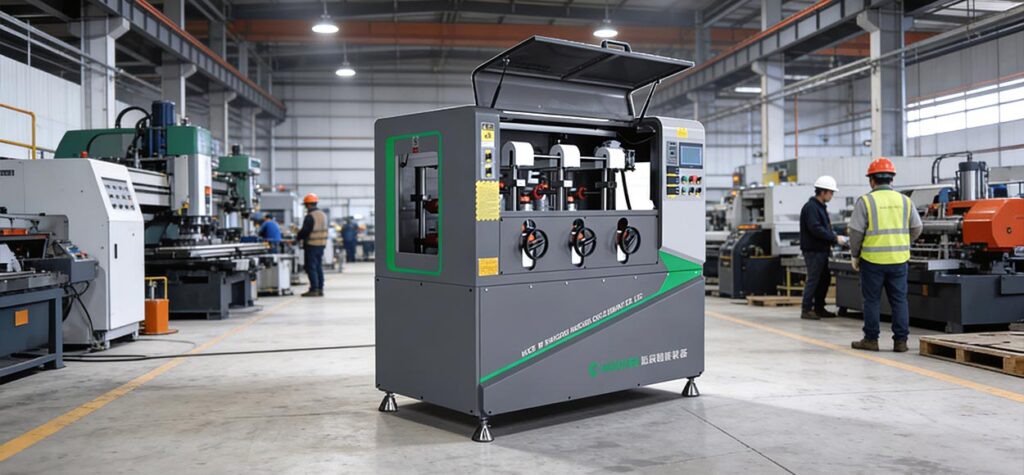
A CNC profile bending machine is a computer-controlled system designed to bend aluminium, copper, and other metal profiles into precise curves and shapes. It uses programmable rollers and controlled feeding systems to gradually deform the material without damaging its structural integrity.
Unlike manual or semi-automatic bending equipment, CNC systems calculate bending parameters automatically based on input data such as radius, angle, and material thickness. This ensures repeatable accuracy across large production batches.
Typical functions include:
- Circular and arc bending
- Multi-radius shaping
- Profile forming for curtain walls and windows
- Complex architectural curve creation
You are not just shaping metal—you are controlling geometry at a digital level.
Why Traditional Bending Methods Limit Your Production
Inconsistent Radius Accuracy
Manual bending often depends on operator experience, which leads to variations in curvature. Even small deviations can cause alignment issues during installation.
Material Deformation Risks
Without controlled pressure distribution, traditional methods can flatten or twist profiles, reducing structural integrity.
Low Repeatability
Reproducing identical curved profiles is extremely difficult without CNC control.
High Rework Rates
Incorrect bends often require reprocessing or material replacement, increasing costs and delays.
These limitations become more obvious when you handle customized architectural projects.
How CNC Profile Bending Machines Improve Your Workflow
Digital Precision Control
You input bending parameters into the control system, and the machine automatically calculates roller positions and pressure adjustments. This eliminates guesswork and ensures consistent results.
Stable Material Handling
Controlled feeding systems ensure that the profile is guided smoothly through the bending rollers, reducing stress and deformation.
High Repeatability for Mass Production
Once a bending program is saved, it can be reused indefinitely, ensuring identical output across multiple production batches.
Reduced Material Waste
Precise bending reduces scrap caused by over-bending or incorrect shaping.
Real Case: Producing Curved Curtain Wall Frames
A fabrication workshop specializing in aluminium curtain wall systems faced repeated challenges when producing large curved frames. Manual bending resulted in inconsistent radii, which caused installation gaps and alignment issues on site.
After adopting a CNC profile bending machine, the production process changed significantly:
- Curvature consistency improved across all batches
- Rework rates dropped noticeably
- Complex curved designs became easier to produce
- Installation time on-site was reduced due to better fit accuracy
The key improvement was not just automation—it was geometric control. Every curve could now be reproduced with exact digital precision.
Key Features You Should Look For
CNC Multi-Axis Control System
Allows precise adjustment of roller positions and bending angles for complex shapes.
High-Precision Roller System
Ensures smooth bending without surface damage or profile distortion.
Programmable Radius Storage
You can store multiple bending programs for different project requirements.
Stable Frame Structure
A rigid machine structure reduces vibration and improves long-term accuracy.
Automatic Feeding and Alignment
Ensures consistent positioning of profiles before bending begins.
Comparison: Manual vs CNC Profile Bending Machine
| Feature | Manual Bending | CNC Profile Bending Machine |
|---|---|---|
| Accuracy | Low–Medium | High |
| Repeatability | Poor | Excellent |
| Labor Requirement | High | Low |
| Design Flexibility | Limited | High |
| Material Waste | Higher | Lower |
| Production Speed | Slower | Faster |
The difference becomes especially clear when you work with architectural-grade projects.
How CNC Bending Fits Into Your Production Line
Integration with Cutting Systems
Profiles can be cut first and then directly transferred into bending operations for seamless workflow.
Connection with Design Software
Modern systems allow direct import of CAD data, reducing manual programming time.
Downstream Assembly Optimization
Accurate bending improves fit quality during final assembly, reducing adjustment time.
Industries That Benefit Most from CNC Profile Bending
Architectural Curtain Walls
Curved facades require precise and repeatable bending.
Custom Window Systems
Arched windows and circular frames depend on accurate profile shaping.
Interior Design Structures
Decorative aluminium elements require complex curvature control.
Transport and Infrastructure Projects
Large-scale structural bending applications require high repeatability.
Common Mistakes You Should Avoid
Ignoring Material Properties
Different aluminium alloys behave differently under stress. Not accounting for this can lead to deformation.
Over-Bending Profiles
Excessive pressure can damage structural integrity.
Skipping Calibration
Without regular calibration, bending accuracy gradually decreases.
Using Non-Optimized Programs
Poorly configured CNC programs can lead to inconsistent curvature.
Maintenance Tips for Long-Term Performance
- Regularly clean roller surfaces
- Inspect hydraulic or servo systems
- Calibrate bending parameters periodically
- Check alignment accuracy before production runs
- Lubricate moving components as required
Proper maintenance ensures consistent bending accuracy over time.
Industry Trend: Digitalization of Profile Bending
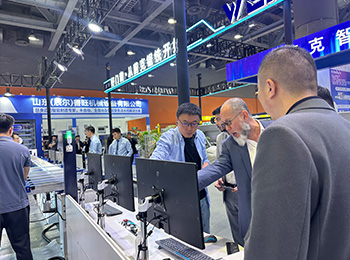
The global manufacturing trend is moving toward fully digitalized production lines. CNC bending machines are increasingly being integrated with ERP and MES systems, allowing real-time production tracking and automated order processing.
You are no longer just operating a machine—you are managing a data-driven shaping process.
Conclusion
A CNC profile bending machine is not just a forming tool—it is a precision geometry system that allows you to expand your design capabilities and improve manufacturing consistency.
If you are working on architectural-grade aluminium projects or custom window systems, CNC bending gives you the control, repeatability, and flexibility needed to stay competitive in a demanding market.
FAQ
What materials can a CNC profile bending machine process?
It is commonly used for aluminum and copper profiles, depending on machine configuration.
Can it produce complex curves?
Yes, modern CNC systems can handle multi-radius and complex geometric bending.
Is CNC bending suitable for mass production?
Yes, it is designed for repeatable and high-volume production.
How accurate is CNC profile bending?
High-end systems can maintain very tight radius consistency across batches.
Does it reduce material waste?
Yes, precise control significantly reduces deformation and scrap rates.