Door Machining Centres That Transform Your Factory
Table of Contents
Introduction
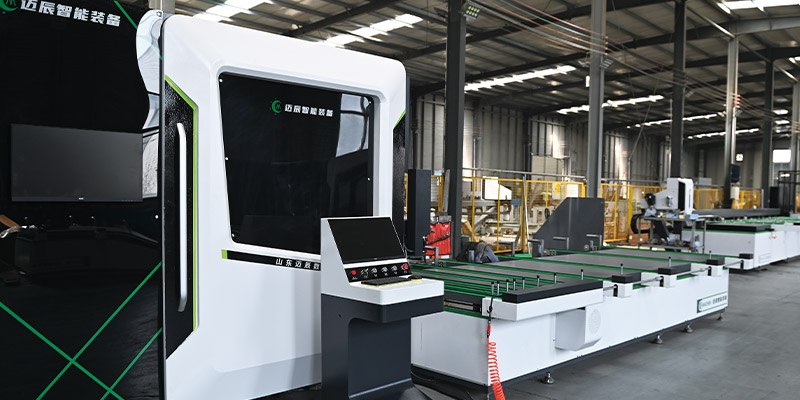
If you are manufacturing doors or window systems today, you are no longer competing only on price—you are competing on precision, speed, customization, and consistency. The challenge is that traditional production setups, built around separate machines and manual coordination, simply cannot keep up with these demands.
This is where door machining centres are changing the game. Instead of relying on multiple standalone machines for drilling, cutting, slotting, and marking, you can now integrate all these processes into one intelligent system.
According to general industry automation benchmarks, integrated machining centres can improve production efficiency by 30–50% while reducing error rates by more than 20%. More importantly, they give you control over your production process in a way that traditional workflows never could.
If you are looking to scale your business, reduce labor dependency, and improve product quality, understanding how door machining centres work—and how to implement them effectively—is essential.
What Are Door Machining Centres and How Do They Work
A door machining centre is an advanced CNC system that integrates multiple machining functions into a single platform. Instead of moving materials between different machines, the system performs operations such as:
- Drilling and slotting
- Cutting and angle processing
- Hardware hole machining
- Corner protection cutting
- Laser marking and labeling
These centres are typically equipped with multi-axis control systems, allowing precise movement in multiple directions. With integrated software, you can input production data once, and the machine automatically executes the required processes.
For you, this means fewer manual steps, reduced handling errors, and significantly improved production efficiency.
Why Traditional Production Setups Limit Your Growth
Before moving forward, it’s important to understand why older systems create bottlenecks.
Fragmented Workflow
Separate machines require manual transfer of materials, increasing handling time and error risk.
Inconsistent Accuracy
Each setup introduces potential alignment errors, affecting final product quality.
High Labor Dependency
Operators are required at multiple stages, increasing labor costs and reducing efficiency.
Slow Production Cycles
Frequent adjustments and material movement slow down overall throughput.
These limitations make it difficult for your factory to scale or handle complex, customized orders.
How Door Machining Centres Transform Your Production
Multi-Process Integration
Instead of performing one task at a time, machining centres combine drilling, milling, cutting, and marking into a single workflow. This reduces setup time and improves consistency.
High-Precision Multi-Axis Control
With systems that include multiple axes and spindle configurations, you achieve precise positioning and machining across all operations.
Automated Workflow Execution
Once production data is loaded, the system automatically completes all processes without manual intervention.
Continuous Production Capability
With features like cyclic feeding platforms and automated waste collection, your production can run continuously with minimal interruption.
Real Case: From Bottlenecks to Continuous Production
A door manufacturing company producing customized aluminum doors struggled with production delays due to frequent machine changeovers and manual coordination.
After implementing a door machining centre, the factory experienced:
- A 45% increase in production efficiency
- A significant reduction in manual handling
- Improved machining accuracy across all product lines
- Faster order processing for customized designs
The biggest improvement came from eliminating workflow fragmentation. By integrating multiple processes into one system, the factory achieved stable and predictable output.
Key Features You Should Look for in Door Machining Centres
Integrated Multi-Function Capability
A high-quality system should handle drilling, slotting, cutting, and marking within one machine.
High Structural Stability
A one-piece cast structure reduces deformation and ensures long-term precision.
Advanced Feeding and Positioning Systems
Automated feeding platforms and robotic arms improve efficiency and reduce manual work.
Intelligent Software Compatibility
The system should integrate with your production software, allowing seamless data transfer and processing.
Comparison: Traditional Machines vs Machining Centres
| Feature | Traditional Machines | Door Machining Centres |
|---|---|---|
| Workflow | Fragmented | Integrated |
| Precision | Medium | High |
| Efficiency | Low | High |
| Labor Requirement | High | Low |
| Flexibility | Limited | Strong |
This comparison clearly shows why machining centres are becoming the preferred choice for modern manufacturers.
How You Can Integrate Door Machining Centres Into Your Factory
Step 1: Analyze Your Current Workflow
Identify inefficiencies, bottlenecks, and areas where manual processes slow down production.
Step 2: Define Your Production Goals
Decide whether your focus is on increasing output, improving quality, or handling customization.
Step 3: Plan System Integration
Ensure the machining centre connects smoothly with upstream and downstream processes.
Step 4: Train Your Team
Operators should understand both machine operation and system logic to maximize efficiency.
Advanced Technologies Driving Door Machining Centres
Multi-Axis CNC Systems
These systems allow precise movement and complex machining operations in multiple directions.
Laser Marking and Labeling
Integrated marking systems improve traceability and reduce manual labeling errors.
Intelligent Error Detection
Sensors detect incorrect material placement and prevent processing errors.
Automated Data Processing
Compatible software systems allow seamless data transfer and real-time control.
Common Mistakes You Should Avoid
Choosing Based Only on Price
Lower-cost machines may lack stability and integration capabilities.
Ignoring Software Integration
Without digital control, you lose efficiency and flexibility.
Underestimating Production Needs
Your system should support future growth and increased demand.
Maintenance and Optimization Tips
- Regularly inspect mechanical components
- Keep systems clean and properly lubricated
- Monitor spindle and tool conditions
- Update software for optimal performance
Proper maintenance ensures consistent performance and extends machine lifespan.
Future Trends in Door Machining Centres
Full Automation Integration
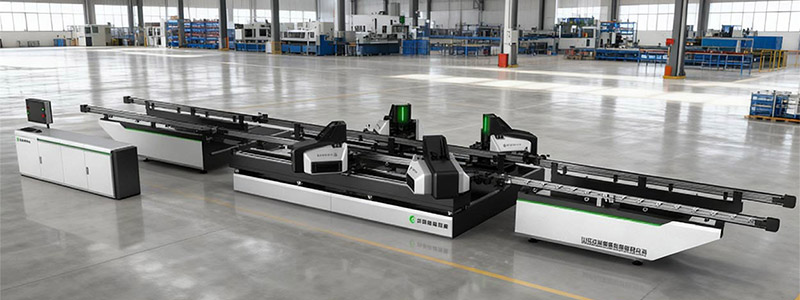
Future systems will connect seamlessly with entire production lines.
Increased Precision Standards
Advancements in CNC technology will push accuracy to new levels.
Data-Driven Manufacturing
Real-time monitoring and predictive maintenance will become standard.
Conclusion
Door machining centres are not just an upgrade—they represent a fundamental shift in how manufacturing is done.
By combining multiple processes into a single, intelligent system, you can improve efficiency, reduce costs, and deliver higher-quality products with greater consistency.
If you want to stay competitive in a rapidly evolving market, investing in the right machining centre is one of the most important decisions you can make.
FAQ
What are door machining centres used for?
They are used for integrated processing of door profiles, including drilling, cutting, and slotting.
Are they suitable for customized production?
Yes, they are designed to handle flexible and complex production requirements.
How much efficiency improvement can I expect?
Efficiency gains vary but are typically significant compared to traditional setups.
Do they require skilled operators?
Basic training is required, but automation reduces dependency on manual skills.
How do I choose the right system?
Focus on integration, precision, scalability, and software compatibility.