Door Production Lines: How You Can Build a Smarter, High-Efficiency Factory
Table of Contents
Introduction
If you are still relying on fragmented machines and manual workflows to produce doors, you are likely facing rising costs, inconsistent quality, and increasing pressure from customers demanding faster delivery and customization. The truth is simple: traditional production methods are no longer aligned with how modern manufacturing operates.
Over the past decade, the door manufacturing industry has undergone a quiet but powerful transformation. According to a report by McKinsey on Industry 4.0 adoption, manufacturers that implement integrated automation and digital production systems can increase productivity by 20–30% while reducing operational costs by up to 25%. At the same time, a study from Deloitte highlights that smart factories can improve overall equipment effectiveness (OEE) by 10–20% and reduce downtime by nearly 30%.
What does this mean for you? It means that upgrading to the modern door production lines are not just about efficiency—it is about survival, scalability, and long-term competitiveness.
This article will walk you through not only what the door production lines are, but how you can design, evaluate, and implement one that actually delivers measurable results. You will also see real operational logic, technical insights, and practical considerations you can apply directly in your factory.
What Is The Door Production Lines and Why It Matters to You
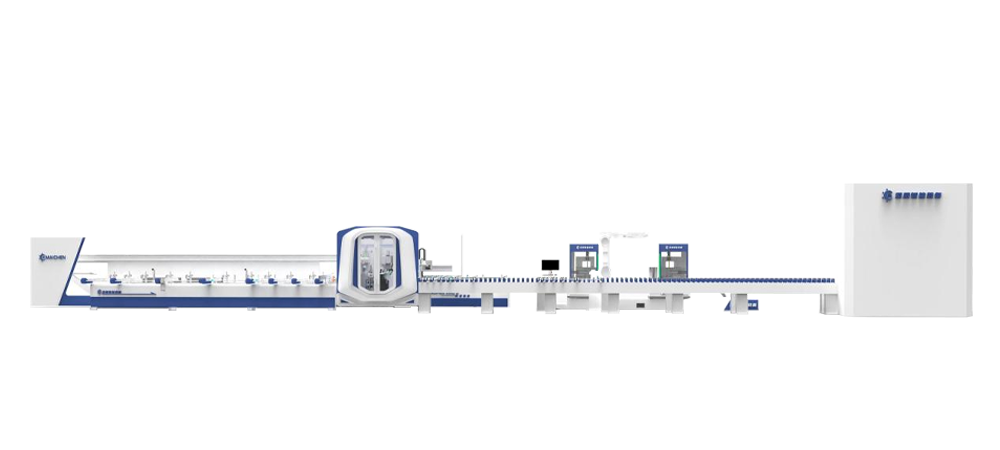
The door production lines are fully integrated manufacturing system that connects multiple processes—cutting, drilling, milling, assembly, and sorting—into a continuous and coordinated workflow.
In traditional workshops, each process is isolated. Materials are moved manually from one station to another, increasing handling time and introducing human error. In contrast, a modern production line synchronizes every step using automation and digital control systems.
For example, in a well-designed production line:
- Raw profiles are automatically loaded and identified
- Cutting parameters are optimized based on order data
- Machining operations are completed in a single cycle
- Finished components are automatically sorted and tracked
This level of integration transforms your factory from a labor-driven operation into a system-driven one.
The Biggest Challenges You’re Facing Without Automation
Before understanding the benefits, it’s important to recognize the limitations of traditional manufacturing systems.
Inconsistent Product Quality
When your production still relies heavily on manual operation, quality consistency becomes one of the most difficult issues to control. Even experienced workers can produce slight variations in measurement, cutting angles, or drilling positions due to fatigue, interpretation differences, or tool wear. These small deviations may seem minor at first, but in door manufacturing, they often lead to misalignment during assembly, poor sealing performance, or rework requirements. Over time, inconsistent quality not only increases rejection rates but also affects your reputation and long-term customer trust.
High Labor Dependency
Without automation, your production efficiency is tightly linked to human labor availability and skill level. This creates a structural limitation for scaling your business. Skilled operators are becoming harder to find and more expensive to retain, while training new workers takes time and resources. In addition, manual operations introduce variability in speed and output stability. When labor shifts change or key workers are absent, production capacity can drop significantly, creating bottlenecks that disrupt delivery schedules and reduce overall competitiveness.
Production Bottlenecks
In traditional workflows, each stage of production depends on the previous one being completed manually. If one machine slows down or one operator falls behind, the entire line is affected. This lack of synchronization creates bottlenecks that reduce overall efficiency. For example, cutting may finish quickly, but waiting for manual transfer to drilling or milling stations creates idle time. These inefficiencies accumulate across shifts, leading to lower equipment utilization and longer order completion cycles than expected.
Material Waste
Material waste is another hidden cost that often goes unnoticed in manual or semi-manual production systems. Without optimized cutting paths and digital nesting calculations, material usage is often based on experience rather than precision planning. This leads to offcuts, miscalculations, and unnecessary scrap. Over time, even a small percentage of waste can significantly impact profitability, especially when working with high-value aluminum profiles. Automation helps reduce these losses by ensuring every cut is calculated for maximum material utilization before production begins.
How Door Production Lines Transform Your Manufacturing Process
End-to-End Automation
Modern door production lines fundamentally change how your factory operates by connecting every stage of manufacturing into a continuous automated workflow. Instead of relying on manual transfer between machines, the system coordinates material loading, positioning, cutting, machining, and sorting in a unified process. This reduces idle time between operations and minimizes human intervention. As a result, production becomes more stable and predictable, even during high-demand periods. End-to-end automation also helps standardize output quality, ensuring every component follows the same processing logic from start to finish.
Digital Control and Smart Scheduling
With intelligent production systems, you are no longer limited to manual planning or operator experience. Digital control systems allow you to import production orders directly into the line, where software automatically generates optimized machining paths and processing sequences. Smart scheduling ensures that machine usage is balanced and production flow is continuous, reducing unnecessary waiting time. This level of control gives you full visibility over your factory operations, allowing you to adjust priorities in real time based on order urgency or material availability, which significantly improves overall responsiveness.
Integrated Machining Processes
One of the most powerful changes brought by modern production lines is the integration of multiple machining functions into a single system. Instead of moving materials between separate cutting, drilling, and milling machines, integrated systems complete several operations in one setup. This reduces handling errors and improves alignment accuracy between different processing stages. It also shortens production cycles because materials no longer need to be repositioned multiple times. By combining processes, you not only increase efficiency but also achieve higher consistency in final product quality.
Real-Time Feedback and Optimization
Advanced production lines continuously collect operational data during manufacturing. Sensors and monitoring systems track machine performance, cutting accuracy, tool wear, and energy consumption in real time. This data is then used to optimize workflows and prevent potential issues before they affect production. For example, predictive alerts can notify you when a tool is nearing wear limits, allowing timely replacement without unexpected downtime. Over time, this feedback loop helps you refine production efficiency, reduce waste, and maintain stable long-term performance across your entire factory system.
Real Case: How One Factory Increased Output by 3X
A mid-sized manufacturer specializing in aluminum doors faced increasing demand but struggled with long production cycles and inconsistent quality.
After upgrading to the intelligent door production lines, the results were significant:
- Daily output increased from 800 units to over 2,400 units
- Labor requirements decreased by 40%
- Material utilization improved by 12%
- Defect rate dropped below 1%
The most important change was not just automation, but the integration of digital scheduling and process control. The factory could now respond quickly to new orders and maintain consistent quality across all products.
Key Components You Should Look for in The Door Production Lines
CNC Cutting Systems
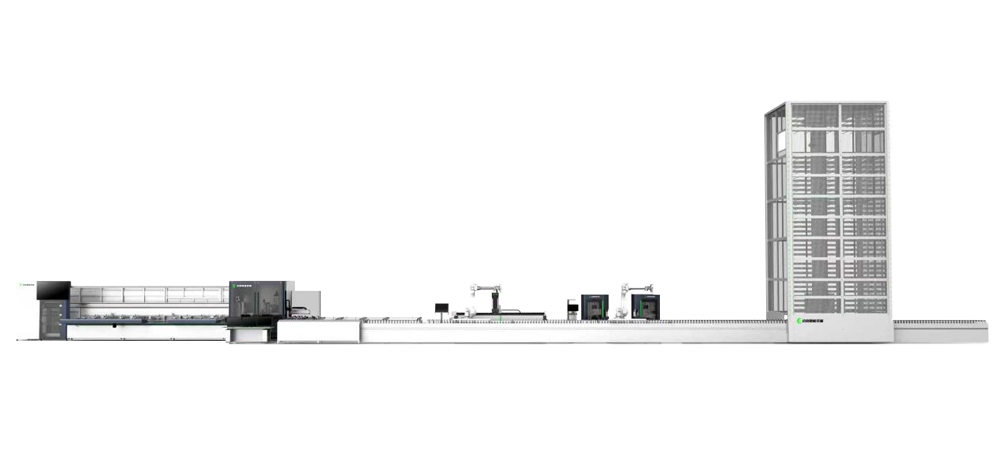
The high-performance door production lines must start with a reliable CNC cutting system, as cutting accuracy directly determines the quality of the final product. You should look for equipment capable of maintaining tight tolerances, ideally within ±0.1mm, to ensure precise assembly of door and window profiles. Modern CNC systems use servo motors, linear guide rails, and intelligent control algorithms to maintain stability during high-speed operation. This not only improves cutting consistency but also reduces material waste caused by errors or misalignment. In long-term production, a stable cutting system becomes the foundation for both efficiency and product reliability.
Automated Feeding Systems
Automated feeding systems play a critical role in reducing manual handling and ensuring smooth material flow throughout the production process. These systems are designed to automatically load, position, and transfer raw materials into the machining area with high accuracy. By eliminating manual lifting and positioning, you reduce the risk of human error and improve workplace safety. At the same time, automated feeding ensures that each profile is aligned correctly before processing, which increases consistency and reduces downtime between production cycles. For high-volume manufacturing, this component is essential for maintaining continuous and stable output.
Multi-Process Machining Units
Modern production efficiency depends heavily on the ability to complete multiple operations in a single workflow. Multi-process machining units integrate cutting, drilling, milling, and sometimes tapping functions into one system. This reduces the need to move materials between different machines, significantly shortening production time. It also improves accuracy because the material remains in a fixed position throughout the entire machining process. By combining multiple functions, these units help you achieve higher throughput while maintaining consistent quality standards, especially in complex door and window frame production.
Intelligent Software Integration
Software integration is the “brain” of the modern door production lines. Without it, even the most advanced machines cannot reach their full potential. A strong system should support ERP or MES connectivity, allowing production orders to be imported directly and converted into machining instructions automatically. Intelligent software also provides real-time monitoring of machine status, production progress, and tool conditions. This enables you to make faster, data-driven decisions and optimize workflow efficiency. In addition, advanced systems help reduce material waste through automated nesting and improve scheduling accuracy across the entire factory operation.
Comparison: Traditional vs Smart Door Production Lines
| Feature | Traditional Production | Smart Production Line |
|---|---|---|
| Precision | ±0.5–1mm | ±0.1mm |
| Labor Requirement | High | Low |
| Efficiency | Moderate | High |
| Automation Level | Low | Fully Integrated |
| Production Flexibility | Limited | Highly Flexible |
| Data Monitoring | None | Real-time |
Advanced Technologies Driving Modern Door Production Lines
Servo Motor Systems
Servo motor systems are one of the core technologies behind modern high-precision door production lines. Unlike traditional motor drives, servo systems provide closed-loop control, which allows real-time adjustment of speed, position, and torque. This ensures that every cutting or machining movement is executed with high stability and accuracy. In practical production, this means smoother operation, reduced vibration, and significantly improved cutting consistency. Servo systems also respond quickly to software instructions, making them essential for high-speed automated workflows where precision and timing must work together seamlessly.
Linear Guide Rail Technology
Linear guide rail systems are critical for maintaining structural stability and machining accuracy in door production equipment. These components ensure that moving parts operate along a perfectly controlled path with minimal friction and deviation. In high-speed cutting and milling processes, even small mechanical vibrations can affect product quality, so rigid guide rail systems play a key role in maintaining precision. High-quality linear guides also extend equipment lifespan by reducing wear on mechanical components. As a result, they contribute not only to accuracy but also to long-term operational reliability and lower maintenance costs.
Intelligent Tool Management
Intelligent tool management systems are designed to optimize tool usage, reduce downtime, and improve production efficiency. In modern production lines, tools are automatically monitored for wear and performance conditions through sensors and software analysis. When a tool reaches its usage limit, the system can trigger alerts or even automatic replacement sequences. This prevents unexpected breakdowns and ensures consistent machining quality. Additionally, intelligent tool systems help organize tool changes efficiently, reducing idle time between operations. Over time, this technology significantly improves productivity while maintaining stable and predictable output quality across continuous production cycles.
How You Can Handle Custom Orders Without Slowing Down
Customization is becoming the norm rather than the exception. Customers expect doors in different sizes, designs, and materials.
A smart production line allows you to:
- Store thousands of design parameters
- Switch between orders in minutes
- Automatically adjust machining processes
This flexibility enables you to accept more orders without increasing production complexity.
The Role of Data in Optimizing Your Door Production Lines
Data-driven manufacturing is one of the most important trends in modern industry.
By collecting and analyzing production data, you can:
- Predict equipment failures before they occur
- Optimize energy consumption
- Improve scheduling accuracy
According to Deloitte, predictive maintenance can reduce maintenance costs by up to 30% and decrease unplanned downtime by 45%.
Sustainability: A Strategic Advantage
Sustainability is no longer just a regulatory requirement—it is a competitive advantage.
Modern production lines incorporate:
- Energy-efficient motors
- Dust and noise reduction systems
- Optimized material usage
These features reduce environmental impact while lowering operational costs.
ROI Analysis: Is The Door Production Lines Worth the Investment?
When evaluating investment, you should consider both direct and indirect benefits.
Cost Savings
- Reduced labor costs
- Lower material waste
- Decreased maintenance expenses
Revenue Growth
- Increased production capacity
- Faster delivery times
- Ability to handle custom orders
Most manufacturers achieve ROI within 18–36 months, depending on production scale and efficiency improvements.
Common Mistakes You Should Avoid When Investing
Focusing Only on Initial Cost
One of the most frequent mistakes you can make when investing in the door production lines are prioritizing the initial purchase price over long-term value. At first glance, a lower-cost solution may seem attractive, especially when trying to control capital expenditure. However, this short-term thinking often leads to significantly higher operational costs over time.
Lower-priced equipment may lack precision stability, advanced automation features, or durable mechanical components. As a result, you may experience frequent calibration issues, inconsistent cutting accuracy, and higher maintenance frequency. These problems not only increase downtime but also directly affect product quality and customer satisfaction.
In many manufacturing environments, the true cost of equipment is not the purchase price but the total lifecycle cost, including maintenance, energy consumption, spare parts, and productivity loss. A well-designed production system may cost more initially but often delivers a much lower cost per unit over its operational lifespan.
Ignoring Software Capabilities
Another critical mistake is underestimating the importance of software in a modern production environment. Today’s door production lines are no longer purely mechanical systems—they are digital manufacturing platforms that rely heavily on data coordination and intelligent control.
If you overlook software capabilities, you limit your ability to optimize production workflows, track machine performance, and respond dynamically to order changes. Without integration into ERP or MES systems, production planning becomes fragmented, and manual coordination increases the risk of delays and errors.
Advanced production software allows you to automate order processing, generate cutting and machining paths, and monitor real-time production data such as output, tool wear, and machine status. This level of visibility enables better decision-making and helps you identify inefficiencies before they become costly problems.
In practice, factories that adopt intelligent software systems often experience smoother workflow transitions, higher material utilization rates, and significantly improved scheduling accuracy compared to those relying on manual control methods.
Overlooking Scalability
Scalability is often underestimated during the initial investment decision, yet it becomes one of the most important factors as your business grows. A production line that perfectly fits your current needs may quickly become a limitation when demand increases or product variety expands.
If your system is not scalable, you may face challenges such as insufficient machine capacity, longer production cycles, or incompatibility with new product specifications. These limitations can force you into expensive system upgrades or even partial equipment replacement, disrupting production continuity.
The truly scalable door production lines should allow you to expand capacity without redesigning the entire system. This includes the ability to add additional machining modules, integrate new automation units, and upgrade software functionality without interrupting ongoing production.
By planning for scalability from the beginning, you ensure that your investment remains flexible and future-proof, allowing your factory to adapt smoothly to market changes and long-term growth requirements.
Implementation Strategy: How to Upgrade Your Factory
Step 1: Evaluate Your Current Production System in Detail
Before making any investment, you need to clearly understand how your current factory is actually performing. This means going beyond surface-level observations and analyzing real production data such as output per day, defect rate, machine downtime, and labor dependency.
You should map out your entire workflow—from raw material storage to final product delivery—and identify where delays or inefficiencies occur. For example, you may discover that material handling between machines is causing more time loss than the cutting process itself.
A practical way to do this is to create a simple production audit report. This helps you quantify problems instead of relying on assumptions, making it easier to justify upgrades and choose the right configuration for your new door production lines.
Step 2: Define Clear Production and Business Goals
Once you understand your current situation, the next step is to define what you actually want to achieve with the upgrade. Without clear goals, even the best equipment will not deliver meaningful results.
Your goals may include increasing daily output, improving cutting precision, reducing labor costs, or expanding your ability to handle customized orders. Each goal will directly influence the type of production line you choose.
For instance, if your priority is high-volume standardized production, you may focus on multi-head cutting and automation speed. If customization is more important, flexibility and fast changeover capability should be your priority.
Setting measurable targets—such as increasing output by 30% or reducing waste by 10%—will also help you evaluate whether your investment is successful after implementation.
Step 3: Select the Right Equipment and System Configuration
After defining your goals, you can begin selecting the appropriate equipment. This is not just about choosing individual machines, but about designing a complete system that works as a unified production line.
You should consider factors such as machining accuracy, automation level, material compatibility, and software integration. The modern door production lines typically includes CNC cutting systems, automated feeding units, multi-process machining modules, and intelligent control software.
At this stage, it is also important to think in terms of system compatibility rather than isolated performance. A high-precision machine that cannot integrate with your software or workflow will still create bottlenecks.
The best approach is to design the production line as a scalable system, where each component supports future expansion and upgrades without requiring a full replacement.
Step 4: Train Your Team and Optimize Operational Workflow
Even the most advanced production line will not perform well if your team is not properly trained. Human operation and system automation must work together to achieve optimal results.
Training should cover not only machine operation, but also basic understanding of system logic, software usage, and daily maintenance routines. Operators should be able to interpret system feedback, identify early warning signals, and perform basic troubleshooting.
At the same time, you should also optimize your internal workflow to match the new system. This includes adjusting production schedules, redefining roles, and establishing clear maintenance procedures.
A well-trained team combined with a properly structured workflow ensures that your upgraded door production lines operates at maximum efficiency from day one, rather than going through a long adjustment period.
Conclusion
If you want to stay competitive in today’s market, upgrading to the modern door production lines are no longer optional—it’s essential.
By investing in automation, precision, and digital integration, you can transform your factory into a high-efficiency, scalable operation. The result is not just higher output, but better quality, lower costs, and the ability to adapt to changing market demands.
The question is no longer whether you need a smart production line—but how soon you’re ready to implement one.
FAQ
What is the main advantage of the door production lines?
It improves efficiency, precision, and consistency while reducing labor costs and production errors.
How much does the door production lines cost?
Costs vary depending on automation level and features, but higher-end systems typically offer better long-term ROI.
Can a production line handle custom door designs?
Yes, modern systems are designed to handle multiple configurations and quick changeovers.
How long does it take to see ROI?
Most manufacturers see returns within 1–3 years, depending on production scale and efficiency improvements.
Is automation difficult to implement?
With modern systems, implementation is straightforward, especially when supported by integrated software and training.