Hydraulic Punch Press Guide for Precision Door Manufacturing
Table of Contents
Introduction
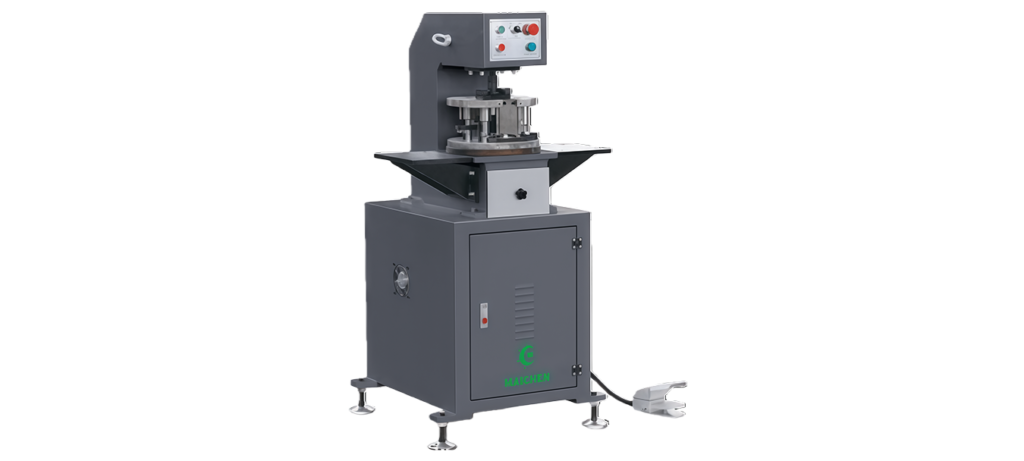
If you are manufacturing aluminum doors, windows, or steel-reinforced profiles, you already know that precision punching is not just a secondary process—it directly affects assembly accuracy, hardware installation quality, and overall product reliability. This is where a hydraulic punch press becomes a critical part of your production system.
In modern door and window manufacturing, demand is shifting toward higher customization, faster delivery, and tighter tolerances. Traditional drilling or manual punching methods often struggle to keep up. According to general industrial automation studies, hydraulic systems can deliver up to 20–35% more stable force output compared to mechanical punching systems, which directly improves consistency and reduces defect rates.
In this guide, you will learn how a hydraulic punch press works, how it fits into your production workflow, and how you can use it to improve efficiency, accuracy, and scalability in your factory.
What Is a Hydraulic Punch Press and Why It Matters to You
A hydraulic punch press is a machine that uses hydraulic power to generate controlled force for punching, shearing, and forming operations. In door and window manufacturing, it is mainly used to create:
- Installation holes for handles and locks
- V-shaped grooves for structural fitting
- Steel reinforcement cutting and shaping
Unlike mechanical systems that rely on fixed motion cycles, hydraulic systems provide adjustable force and stroke control. This means you can process different materials and thicknesses without changing the entire machine setup.
For you, this flexibility is essential when dealing with multiple product types in a single production environment.
Why Traditional Punching Methods Are No Longer Enough
Before upgrading, it is important to understand the limitations of older or manual systems.
Inconsistent Hole Accuracy
Manual drilling or mechanical punching often leads to slight misalignment. Even a 0.5mm deviation can cause hardware installation issues or assembly failure.
Limited Material Compatibility
Traditional systems struggle with varying thicknesses or reinforced materials, forcing you to adjust tools frequently.
High Operator Dependency
Production quality depends heavily on operator skill, which introduces inconsistency across shifts.
Slow Changeover Time
Switching between different punch sizes or profiles often requires manual adjustments, reducing efficiency.
These challenges directly impact productivity and increase hidden production costs over time.
How a Hydraulic Punch Press Improves Your Production
Stable Hydraulic Power for Consistent Output
The hydraulic system ensures stable force distribution during punching and shearing operations. This eliminates fluctuations that often occur in mechanical systems and ensures consistent hole quality.
Multi-Function Processing Capability
A single machine can perform multiple tasks such as punching, V-groove forming, and steel reinforcement cutting. This reduces the need for multiple machines and simplifies workflow.
Adjustable Stroke and Height Control
With limit switch control and adjustable stroke settings, you can easily adapt the machine to different material sizes and processing requirements.
Improved Operational Efficiency
Because adjustments can be made quickly through control panels and mechanical stops, downtime between production cycles is significantly reduced.
Real Case: Improving Hardware Installation Accuracy in Production
A door manufacturing workshop producing aluminum window frames faced recurring issues with misaligned lock and handle holes. This caused assembly delays and increased rework rates.
After introducing a hydraulic punch press, the results were noticeable:
- Installation accuracy improved significantly
- Rework rate dropped by nearly 30%
- Production speed increased by approximately 25%
- Operator workload was reduced due to simplified setup
The key improvement came from stable hydraulic force and precise positioning control, which eliminated inconsistencies in hole placement.
Key Features You Should Look for in a Hydraulic Punch Press
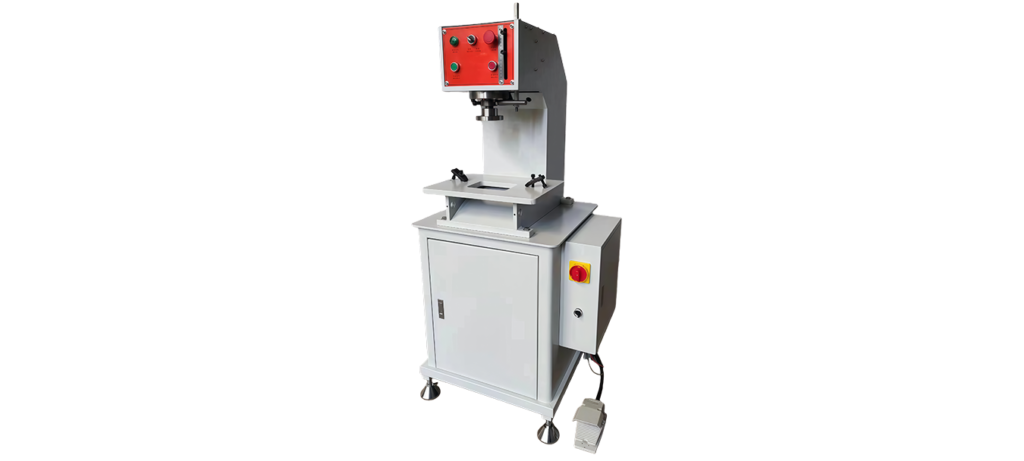
Hydraulic Stability System
A reliable hydraulic system ensures consistent pressure output, which directly affects punching accuracy and material deformation control.
Adjustable Limit Switch Control
Upper and lower limit switches allow precise control of mold opening and closing height, improving operational safety and repeatability.
Stroke Adjustment Mechanism
A mechanical adjustment system allows you to fine-tune stroke height based on material thickness and processing requirements.
Flexible Cutting and Shearing Design
Adjustable side blocks allow control over cutting width and depth, making the machine suitable for steel reinforcement processing.
Comparison: Hydraulic Punch Press vs Mechanical Punch System
| Feature | Mechanical Punch System | Hydraulic Punch Press |
|---|---|---|
| Force Control | Fixed | Adjustable |
| Precision | Medium | High |
| Material Flexibility | Limited | High |
| Maintenance Needs | Moderate | Lower |
| Noise Level | High | Lower |
| Application Range | Narrow | Wide |
From this comparison, it becomes clear that hydraulic systems offer better flexibility and long-term production stability.
How You Can Integrate a Hydraulic Punch Press into Your Production Line
Upstream Integration
The machine can be connected directly after cutting or profile preparation stages, ensuring smooth material flow.
Downstream Integration
Processed profiles can be directly transferred to assembly or finishing stations without additional handling.
Workflow Synchronization
By aligning punching operations with cutting and assembly schedules, you can reduce idle time and improve overall production balance.
Common Mistakes You Should Avoid When Using a Hydraulic Punch Press
Ignoring Pressure Calibration
Incorrect pressure settings can damage materials or reduce punching accuracy.
Overlooking Mold Maintenance
Worn molds lead to inconsistent hole shapes and reduced product quality.
Improper Stroke Adjustment
Incorrect stroke settings can cause incomplete punching or excessive material deformation.
Lack of Regular System Checks
Hydraulic systems require periodic inspection to maintain stable performance.
Maintenance Tips to Extend Machine Lifespan
- Regularly check hydraulic oil levels and quality
- Inspect seals and cylinders for leakage
- Clean molds and cutting areas after production
- Calibrate limit switches periodically
- Monitor pressure consistency during operation
Proper maintenance ensures long-term stability and reduces unexpected downtime.
Future Trends in Hydraulic Punch Press Technology
Increased Automation Integration
Future systems are expected to integrate with digital production lines for fully automated workflows.
Smarter Hydraulic Control Systems
Advanced sensors will allow real-time pressure adjustment based on material feedback.
Energy Efficiency Improvements
New hydraulic designs aim to reduce energy consumption while maintaining high force output.
Conclusion
A hydraulic punch press is more than just a punching machine—it is a critical component in achieving precision, efficiency, and flexibility in modern door and window manufacturing.
By integrating stable hydraulic control, adjustable operation settings, and multi-function processing capabilities, you can significantly improve production quality while reducing operational inefficiencies.
If your goal is to build a more reliable, scalable, and efficient production system, investing in the right hydraulic punch press can make a measurable difference in your long-term manufacturing performance.
FAQ
What is a hydraulic punch press used for?
It is used for punching holes, forming grooves, and cutting reinforcement materials in door and window manufacturing.
Is a hydraulic punch press suitable for aluminum profiles?
Yes, it is widely used for aluminum door and window production due to its precision and flexibility.
How accurate is a hydraulic punch press?
Modern systems can achieve high positioning accuracy when properly calibrated.
Can it handle different material thicknesses?
Yes, hydraulic systems are designed to adapt to varying material thicknesses.
How often does it require maintenance?
Regular maintenance is recommended depending on production intensity, typically including hydraulic system checks and mold inspection.
Need Help Choosing the Right Hydraulic Punch Press?
If you’re unsure which hydraulic punch press best fits your production needs, material types, or factory layout, our experts are here to help. Contact us today for a personalized consultation, and ensure your punching process is accurate, efficient, and stable. Don’t wait to upgrade your production—get in touch now to improve quality and productivity!