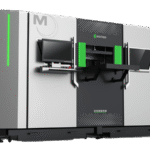
New Type CNC Aluminum Profile End Milling Center: Precision Redefined for Modern Fabrication
Table of Contents
Introduction
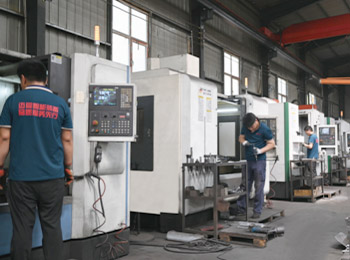
In aluminum door and window manufacturing, end milling is one of the most important processes because it determines how well profiles connect, align, and seal during final assembly. Poor end milling accuracy can lead to frame misalignment, weak structural joints, and installation problems that appear only at the final stage—when correction is expensive and time-consuming.
This is why advanced manufacturers are moving toward the new type CNC aluminum profile end milling center, which integrates high-precision milling, automated positioning, and digital control into a single intelligent system.
Industry machining reports from precision fabrication sectors show that CNC-controlled milling systems can improve end surface consistency by over 30% compared to conventional manual milling methods, especially in high-volume production environments.
In this article, you will learn how this new generation end milling center works, why it is different from traditional machines, and how it can improve your production efficiency and quality stability.
What Is the New Type CNC Aluminum Profile End Milling Center?
The new type CNC aluminum profile end milling center is a specialized machine designed to process the ends of aluminum profiles used in doors, windows, and curtain wall systems.
Its primary function is to ensure that profile ends are flat, smooth, and geometrically accurate so that they can be assembled precisely into frames.
Typical operations include:
- End face milling
- Angle surface machining
- Slot and joint preparation
- Profile alignment correction
Unlike traditional manual milling machines, this system uses CNC control, servo motors, and precision linear guides to ensure stable and repeatable accuracy across every production cycle.
Why Traditional End Milling Methods Are Holding You Back
Inconsistent Surface Flatness
Manual milling often results in uneven surfaces, which directly affects assembly accuracy.
Limited Precision Control
Without CNC systems, it is difficult to maintain consistent tolerances across batches.
Low Production Efficiency
Each adjustment requires manual setup, increasing downtime.
High Operator Dependency
Product quality varies depending on operator skill level.
These limitations become more serious when you scale production or handle customized door and window systems.
How the New Type CNC Aluminum Profile End Milling Center Transforms Your Workflow
High-Precision CNC Control System
The machine uses CNC programming to control milling depth, angle, and movement, ensuring consistent results across all profiles.
Stable Linear Motion System
High-precision linear guides and servo motors ensure smooth and accurate movement during machining.
Automated Parameter Storage
Once profile dimensions are entered, the system stores and reuses machining parameters for future production.
Multi-Angle Milling Capability
The machine supports 0°–90° adjustable milling angles, allowing flexible processing for different structural designs.
Real Case: Improving Frame Assembly Accuracy in Production
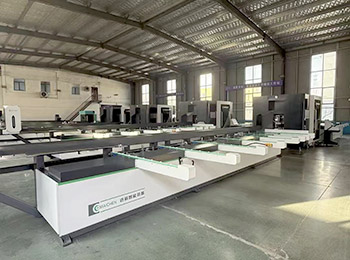
A door and window fabrication workshop faced recurring issues during frame assembly. Even though cutting accuracy was acceptable, end milling inconsistencies caused:
- Gaps between assembled profiles
- Weak corner connections
- Frequent manual adjustments during installation
After introducing a CNC aluminum profile end milling center, the production results changed significantly:
- End surface consistency improved noticeably
- Assembly fitting became more stable
- Rework rates decreased
- Production flow became more predictable
The key improvement was eliminating manual variability in the milling process.
Key Features You Should Focus On
High-Rigidity Machine Structure
A solid cast or welded frame reduces vibration and ensures machining stability.
Precision Linear Guide System
Ensures smooth motion and consistent milling accuracy.
High-Speed Spindle Motor
Provides stable cutting performance with reduced noise and vibration.
CNC Intelligent Control Panel
Allows easy programming, data storage, and repeatable machining operations.
Multi-Angle Adjustable Milling Head
Supports flexible machining for different profile designs.
Comparison: Traditional Milling vs New Type CNC Aluminum Profile End Milling Center
| Feature | Traditional Milling | CNC End Milling Center |
|---|---|---|
| Precision | Medium | High |
| Repeatability | Low | High |
| Efficiency | Low | High |
| Operator Dependency | High | Low |
| Surface Quality | Inconsistent | Stable |
| Flexibility | Limited | Strong |
This comparison clearly shows why new type CNC aluminum profile end milling centers are becoming essential in modern aluminum processing.
How It Fits Into Your Production Line
Integration with Cutting Systems
End milling is typically performed after profile cutting for precise joint preparation.
Integration with Assembly Systems
Accurate milling ensures better corner fitting and structural stability.
Integration with CNC Production Software
Digital parameter storage allows seamless production scheduling and repeatability.
Industry Trend: Digital Transformation in Milling Processes
The aluminum fabrication industry is rapidly shifting toward digital CNC systems. Industry reports and manufacturing forums highlight that automated machining centers are now standard in high-precision production environments.
Manufacturers adopting CNC end milling systems report improved consistency and reduced dependency on manual skills, especially in large-scale production environments.
Social media manufacturing communities also emphasize the importance of precision milling in improving final assembly quality in window and door systems.
Common Mistakes You Should Avoid
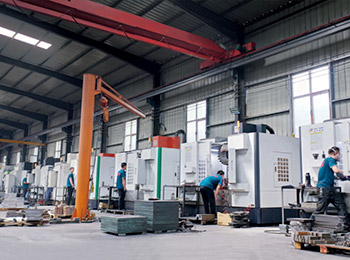
Ignoring Tool Wear
Worn milling tools reduce surface quality and accuracy.
Incorrect Parameter Setup
Wrong cutting depth or speed affects surface flatness.
Skipping Machine Calibration
Without calibration, precision gradually decreases.
Overloading Production Speed
Excessive speed can reduce machining stability.
Maintenance Tips for Long-Term Performance
- Regularly inspect spindle condition
- Clean guide rails and lubrication systems
- Replace worn cutting tools promptly
- Calibrate CNC parameters periodically
- Monitor vibration levels during operation
Proper maintenance ensures long-term stability and consistent machining quality.
Internal Resources You Can Explore
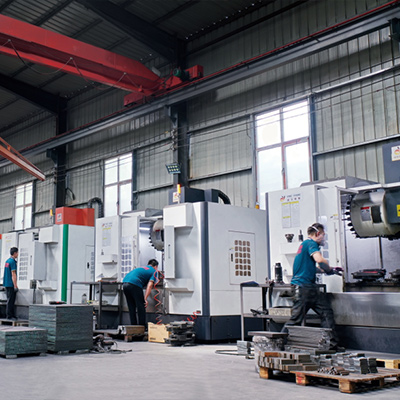
To understand how this machine fits into a full production system, you can also explore:
- CNC Profile Bending Machine
- Intelligent Sawing & Milling Machining Center
- CNC End Milling Machine
- Automatic Aluminum Corner Connector Cutting Saw
These systems together form a complete aluminum door and window manufacturing solution.
Conclusion
The new type CNC aluminum profile end milling center is not just a machining tool—it is a precision engineering system that directly impacts product quality, assembly efficiency, and production stability.
By integrating CNC control, high-precision mechanics, and automated parameter management, you can significantly improve consistency while reducing manual dependency.
For modern aluminum door and window manufacturers, this machine is a key step toward fully digital, high-efficiency production.
FAQ
What is the new type CNC aluminum profile end milling center used for?
It is used for precision machining of aluminum profile ends for doors, windows, and curtain wall systems.
Why is end milling important?
It ensures accurate profile connection and improves structural stability during assembly.
Can it handle different profile sizes?
Yes, it is designed for flexible aluminum profile processing.
How does CNC improve milling accuracy?
It automates movement control and ensures consistent machining parameters.
Is it suitable for mass production?
Yes, it is widely used in high-volume aluminum fabrication environments.