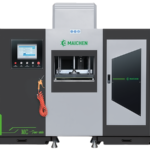
Five-Axis CNC End Milling Machine: Unlocking Next-Level Precision in Aluminum Processing
Table of Contents
Introduction
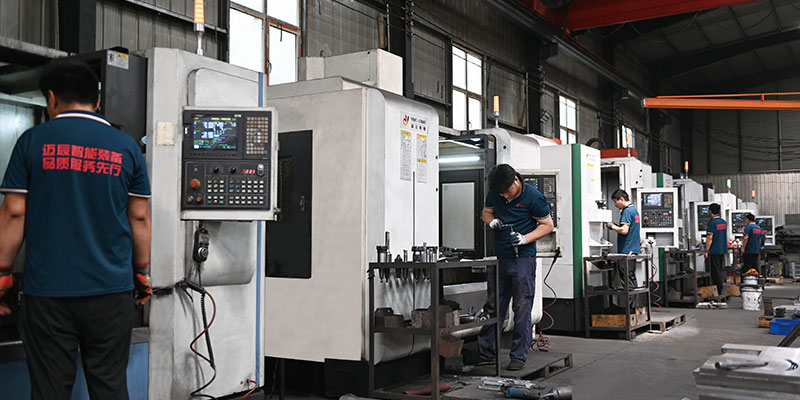
In modern aluminum door and window manufacturing, precision is no longer a competitive advantage—it is a baseline requirement. As architectural designs become more complex and structural tolerances become tighter, traditional end milling methods struggle to keep up.
Flat, linear machining is no longer sufficient when profiles require multi-angle cuts, complex joints, and high-precision alignment. This is where the five-axis CNC end milling machine becomes a transformative solution.
Unlike conventional milling systems, five-axis CNC technology allows simultaneous movement across multiple axes, enabling highly complex geometries with exceptional accuracy. Industry machining research shows that multi-axis CNC systems can improve machining flexibility by more than 40% while significantly reducing repositioning errors in precision components.
In this article, you will explore how a five-axis CNC end milling machine works, why it matters for modern fabrication, and how it reshapes aluminum profile production from the ground up.
What Is a Five-Axis CNC End Milling Machine?
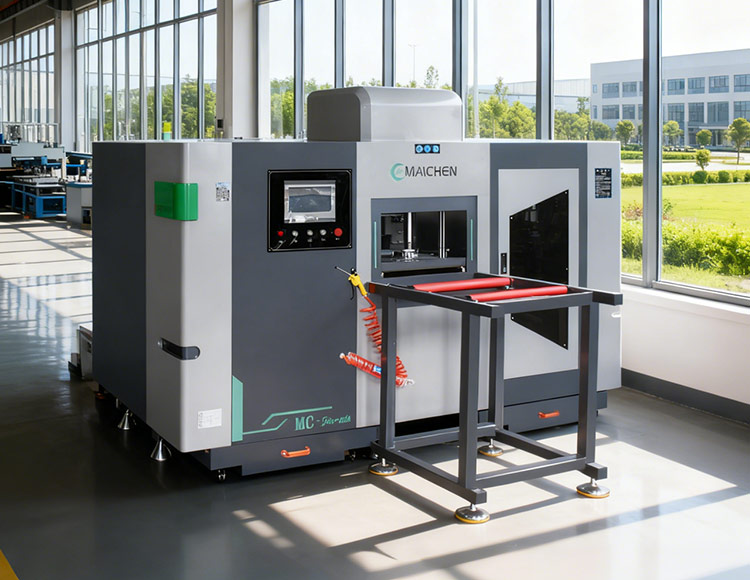
A five-axis CNC end milling machine is an advanced machining system designed to process aluminum profile ends using movement across five coordinated axes.
These axes typically include:
- X-axis (horizontal movement)
- Y-axis (vertical movement)
- Z-axis (depth movement)
- A-axis (rotation around X)
- B-axis (rotation around Y)
This multi-directional capability allows the tool to approach the workpiece from virtually any angle without requiring manual repositioning.
In aluminum profile manufacturing, this means:
- More complex joint preparation
- Higher precision for angled surfaces
- Reduced setup time
- Improved machining consistency
Why Traditional End Milling Systems Are No Longer Enough
Limited Machining Angles
Conventional systems are restricted to fixed or semi-fixed angles, limiting design flexibility.
Multiple Setup Requirements
Complex profiles require repeated repositioning, increasing errors.
Reduced Efficiency in Custom Orders
Frequent adjustments slow down production cycles.
Inconsistent Precision in Multi-Surface Machining
Each manual adjustment introduces potential deviation.
As demand for customized aluminum systems increases, these limitations become more visible and costly.
How Five-Axis CNC Technology Changes Everything
Simultaneous Multi-Axis Movement
The machine can cut from multiple angles in a single setup, eliminating repositioning errors.
High-Precision Servo Control System
Servo-driven axes ensure synchronized movement with micron-level accuracy.
Dynamic Tool Path Optimization
CNC software calculates optimal cutting paths for complex geometries.
Reduced Human Intervention
Once programmed, the machine operates continuously with minimal manual adjustment.
Real Case: Improving Complex Profile Assembly Accuracy
A fabrication workshop producing high-end architectural aluminum systems faced challenges with complex angled joints. Traditional milling required multiple setups, which led to:
- Small angular deviations between mating profiles
- Assembly misalignment in structural frames
- Increased correction time during installation
After adopting a five-axis CNC end milling approach, the production outcomes improved significantly:
- Multi-angle machining was completed in a single setup
- Joint consistency improved across batches
- Assembly fitting became more stable
- Rework rates decreased noticeably
The biggest improvement came from eliminating repeated repositioning steps.
Key Advantages of Five-Axis CNC End Milling Machine
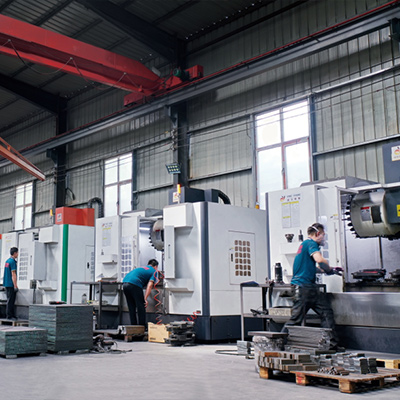
Extreme Machining Flexibility
Supports complex geometries and irregular profile ends.
High Dimensional Accuracy
Maintains precision even in multi-angle operations.
Reduced Setup Time
One-time clamping reduces production interruptions.
Improved Surface Quality
Continuous tool motion reduces vibration and surface defects.
Higher Automation Level
Integrated CNC control reduces operator dependency.
Technical Features You Should Pay Attention To
Multi-Axis Servo Drive System
Ensures smooth, synchronized motion across all axes.
High-Rigidity Machine Structure
Reduces vibration during complex machining operations.
Advanced CNC Control System
Supports 3D toolpath programming and simulation.
Precision Spindle Unit
Provides stable cutting performance across multiple angles.
Automatic Tool Compensation System
Adjusts for tool wear to maintain machining consistency.
Comparison: Traditional vs Five-Axis CNC End Milling Machine
| Feature | Traditional End Milling | Five-Axis CNC End Milling Machine |
|---|---|---|
| Machining Angles | Limited | Fully flexible |
| Setup Requirements | Multiple | Single |
| Precision Level | Medium | Very High |
| Efficiency | Moderate | High |
| Complex Geometry Capability | Low | Excellent |
| Operator Dependency | High | Low |
This comparison clearly shows why five-axis systems are becoming the future of precision aluminum machining.
How It Fits Into a Modern Production Line
Integration with Cutting Systems
Pre-machined profiles can be directly transferred for high-precision end milling.
Integration with Assembly Processes
Accurate machining ensures tight, stable structural connections.
Integration with CNC Production Software
Digital programming enables repeatable, scalable production workflows.
Industry Trend: The Shift Toward Multi-Axis Manufacturing
Across the metal fabrication industry, multi-axis CNC systems are increasingly replacing traditional machining setups. Industry discussions and engineering communities highlight that:
- Complex architectural designs require higher machining flexibility
- Automation reduces dependency on manual adjustments
- Digital manufacturing improves repeatability across production batches
Professional machining forums and industrial communities consistently emphasize the importance of multi-axis systems in achieving modern precision standards.
Common Mistakes You Should Avoid
Poor Toolpath Programming
Incorrect programming can lead to collision risks or inaccurate machining.
Ignoring Machine Calibration
Multi-axis systems require precise calibration to maintain accuracy.
Using Incorrect Cutting Parameters
Speed and feed must be optimized for multi-angle operations.
Overlooking Fixture Stability
Improper clamping reduces machining precision significantly.
Maintenance Tips for Long-Term Stability
- Regularly calibrate all five axes
- Inspect servo motor alignment
- Maintain spindle balance and lubrication
- Clean guide rails and motion systems
- Update CNC software and toolpath libraries
Proper maintenance ensures long-term precision and system reliability.
Internal Resources You Can Explore
To understand how this machine fits into a full production ecosystem, you may also explore:
- New Type CNC Aluminum Profile End Milling Center
- Heavy-Duty Automatic End Face Milling Machine
- CNC Profile Bending Machine
- Automatic Aluminum Corner Connector Cutting Saw
These systems together support a fully integrated aluminum door and window production line.
Conclusion
The five-axis CNC end milling machine represents a major evolution in aluminum profile machining. By combining multi-axis flexibility, CNC intelligence, and high-precision motion control, it enables manufacturers to produce complex components with greater accuracy and efficiency.
For modern fabrication environments, this technology is not just an upgrade—it is a strategic shift toward advanced, data-driven manufacturing.
FAQ
What is a five-axis CNC end milling machine used for?
It is used for high-precision machining of aluminum profile ends with complex geometries.
Why is five-axis machining better than traditional systems?
It allows multi-angle machining in a single setup, improving accuracy and efficiency.
Is it suitable for complex architectural profiles?
Yes, it is specifically designed for complex and irregular profile processing.
Does it reduce production time?
Yes, by eliminating multiple setup and repositioning steps.
Can it be integrated into automated production lines?
Yes, it is widely used in advanced CNC aluminum fabrication systems.